Best Mophead Hydrangea Varieties to Grow Beside Big Daddy
One July, an older neighbor walked us down a row of mixed hydrangeas they had been adding to for years, and what stood out was not any single bloom. It was how the heavy heads of one shrub sat beside the lighter, later ones of another, so the row never went a week without something worth stopping for.
Most people assume a mixed planting means picking a favorite color and repeating it. What we see instead is that the best rows are built on size and timing, with one large mophead as the anchor and neighbors chosen for how they differ from it.
That matters because a poorly matched neighbor either vanishes behind a big shrub or crowds it out. Read on for how Nikko Blue, Endless Summer, Penny Mac and Let's Dance compare with Big Daddy, how to size them in a bed, and how soil sets the color across all of them.
Choosing Companions for Big Daddy Hydrangea
A good neighbor for a large mophead has to match it on three things: scale, bloom timing and what it asks of the site. Here is how we weigh each one.
Match the Scale
Big Daddy is the large-flowered, large-plant end of the mophead range. NC State describes the species as generally 3 to 6 feet tall and wide at maturity, and a large-flowered cultivar like this one belongs toward the upper end of that span. Check your local extension service for what to expect in your climate.
A shrub that stays well under that size will sit in shadow unless you plant it in front. Treat Big Daddy as the back or center of the group, and pick everything else for how it fills the space below and beside it.
Match the Timing
Big Daddy puts on a show that lasts. Bigleaf flowers are mostly produced in June and July on old wood, and the plants then rebloom on new growth through the rest of summer and into fall, so a neighbor that adds a second flush later in summer extends the show the first flush starts.
That is the whole idea behind pairing a reblooming anchor with other rebloomers. The anchor gives you the heavy heads in early summer, and the others keep the bed from going flat afterward.
Match the Site
Every cultivar in this guide is a bigleaf hydrangea, so they share the same preferences. Virginia Tech lists the species for zones 6 to 9 and says it does best in part shade, and it also needs protection from afternoon sun.
Companions that want full, hot sun belong in a different bed. Deer are another shared trait, since the species is susceptible to deer damage, so a fence or repellent plan covers the whole row at once.
Nikko Blue for Deep Color Next to Big Daddy Hydrangea
Nikko Blue is the one most people picture when they think of a blue mophead, and it is the cultivar customers most often ask us to compare with Big Daddy.
Color Strength
Color is its strong suit. Like every bigleaf, it turns blue in acid soil, so in the right ground it gives you the deepest blue in the row to set against Big Daddy's larger heads. Where the soil runs sweeter, both shrubs drift toward pink together.
Bloom Habit and Hardiness
Nikko Blue is a classic once-a-year bloomer. It is not among the rebloomers the extension services list, so it flowers on the same schedule as Big Daddy and sets its buds on old wood in the same way.
That shared schedule is both the appeal and the limit. The two peak together, which makes a bold block of color in June and July, and the pruning window is the same for both: right after flowering. Nothing in a Nikko Blue planting covers the late-summer gap, though.
We will not put a hardiness number on it here, because we have no sourced figure to compare against Big Daddy. Our one-on-one comparison of Big Daddy and Nikko Blue sets the two side by side, and your extension office can confirm what survives winter in your zone.
Endless Summer When You Want Rebloom
If the thing that bothers you about a mophead is the long quiet stretch after July, Endless Summer is the cultivar that answers it.
How the Rebloom Works
Clemson reports that, if watered properly, Endless Summer will bloom on both old and new wood throughout the summer. Big Daddy blooms on old wood in June to July and then reblooms on new growth into fall, and Endless Summer keeps going alongside it, so the pair covers far more of the season than either alone.
Notice the condition in that quote. A reblooming plant that dries out in July will not push the new growth it needs, so the rebloom depends on a steady hand with the hose.
Size and Hardiness Compared
Endless Summer is smaller than Big Daddy. The original cultivar, introduced in 2004, matures at 3 to 5 feet tall and wide with a mounding habit. That makes it a natural front or middle plant beside Big Daddy, not a rival for the back row.
The rebloom is also a hedge against a hard winter. When cold kills the early buds on old wood, Big Daddy still forms flower buds on new wood, so you lose the first flush and not the whole year. That is a cushion a once-a-year bloomer simply does not have.
A Larger Rebloomer
If you want a rebloomer closer to Big Daddy in scale, Blushing Bride is a reblooming mophead that grows 3 to 6 feet tall and wide, according to Clemson. It suits the middle to back of the bed where Endless Summer would feel small.
Penny Mac as the Dependable Repeater
Penny Mac is the quiet performer of this group. It does not have the biggest heads or the boldest color, but it does the same job reliably each summer.
Why We Call It Steady
It reblooms on both old and new wood. In practice that means a first flush of flowers in early summer, close to Big Daddy's own timing, and then more heads on the new growth as the season wears on.
The steadiness is the point. A bed full of showpieces can look uneven when one of them skips a year, and a dependable repeater smooths that out because it has two chances to flower.
Where It Sits in the Bed
Penny Mac lands in the middle ground on size, between the compact types and Big Daddy, which is why it suits the middle of a mixed bed. Confirm its mature size on the plant tag before you set spacing, since we do not have a sourced figure to quote.
It blooms alongside Big Daddy in early summer and keeps flowering after Big Daddy has finished, so the bed never looks like it has run out. Think of it as the steady neighbor who is still there in August.
Let's Dance for Smaller Spaces
When the bed is short on room, a full-size mophead is the wrong tool, and a compact reblooming cultivar like Let's Dance is the better one.
Compact Beds and Edges
Let's Dance is sold as a reblooming mophead, so you can expect repeat flowers through the season, as with Endless Summer. Check the plant tag for its mature size, because that detail decides whether it suits your space.
Use it where Big Daddy would overwhelm: the front of a border, beside a path, or in a pot near a doorway. Its smaller scale also means it will not compete for light with the taller shrub behind it. A pot dries faster than a bed, so plan on watering it more often.
A Hardy Small Alternative
If winters are your worry, 'Todi' is compact and cold hardy. It is a good alternative in colder spots, where a second small mophead is worth having beside the rebloomers.
Sizing Each Cultivar Against Big Daddy Hydrangea
Here is how the cultivars compare, using the figures we can source. Where we have no sourced number, the table says so rather than guessing.
| Cultivar | Mature size | Place in the bed |
|---|---|---|
| Big Daddy | Upper end of the species range of 3 to 6 feet | Back or center |
| Blushing Bride | 3 to 6 feet tall and wide | Middle to back |
| Endless Summer | 3 to 5 feet tall and wide | Middle or front |
| Penny Mac | Check the tag | Middle |
| Nikko Blue | Check the tag | Middle to back |
| Let's Dance | Compact, check the tag | Front |
Turning Sizes Into Spacing
To turn those numbers into spacing, add half of each plant's mature width. If a Big Daddy reaches the top of the species range at 6 feet wide, and the Endless Summer beside it reaches 5 feet, the two want about 5.5 feet between centers.
Spacing by mature width feels extravagant the first year, when the young shrubs look lost. By the third summer the gaps close, and you will be glad you did not crowd them.
Layering Heights
Put the tallest at the back, or in the middle of an island bed, and step down from there. The rebloomers do their best work at the front, where their later flowers are close enough to see.
Our guide to Big Daddy's mature size covers how much room the large one needs.
Color and Soil Conditions Shared With Big Daddy Hydrangea
All of these cultivars are bigleaf hydrangeas, so soil chemistry steers their color in the same direction. What changes is the pH you start with.
Blue, Pink and the Middle
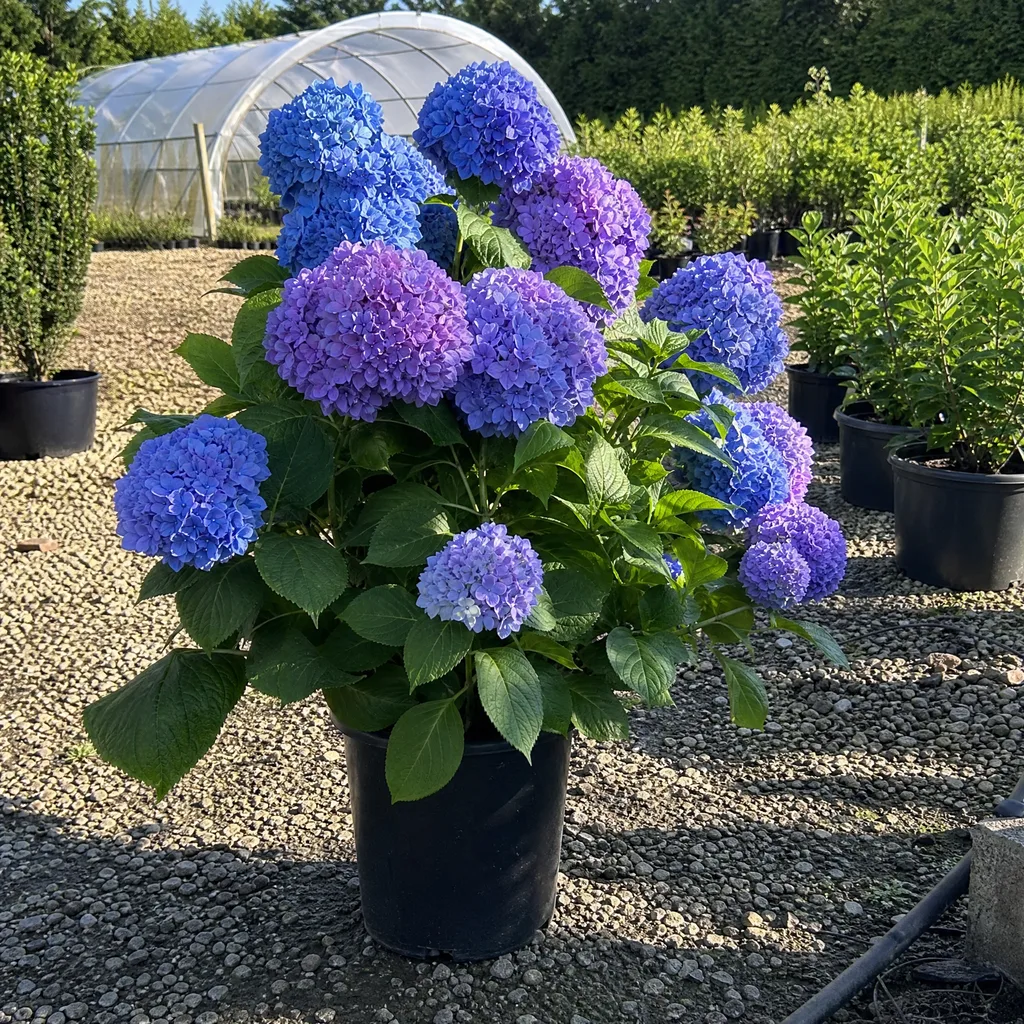
Virginia Tech says that in a relatively acid soil, about pH 5.0 to 5.5, flower color will be blue. Above roughly pH 6.0 to 6.5 the flowers lean pink.
In between, UMass notes that between pH 5.5 and pH 6.5 the flowers will be purple, or a mixture of blue and pink on the same plant. Many mixed beds land in this zone, and it is no failure. Purple and two-tone heads look good beside each other.
What It Means for a Mixed Bed
Neighbors planted close together share a root zone and a pH, so their colors move together. One shrub will not stay deep blue while the one beside it turns pink in the same soil.
Test the soil before you plant, and decide on blue, pink or purple as a whole-bed choice. Our guides to Big Daddy's bloom color and to soil and how to amend it cover the adjustments in detail.
A Planting Season to Remember With Big Daddy Hydrangea
A mixed planting changes through the year, and this is roughly how one unfolds when you pair a large mophead with rebloomers.
Spring. The shrubs leaf out together, and the bed is all green for a while. This is the time to check which stems came through winter, since the old-wood bloomers depend on them, and the rebloomers have new growth to fall back on.
Early summer. Big Daddy and any Nikko Blue open first, and the large heads dominate. The rebloomers have flowers too, but they are smaller and sit lower, so they read as a skirt around the big shrub.
Midsummer. This is when the bed changes hands. Big Daddy's heads begin to fade, and Endless Summer, Penny Mac and Let's Dance carry on with fresh flowers on new growth.
Prune right after the first flush finishes, because the plants flower on old wood. Our guide to pruning Big Daddy correctly explains how to do it without cutting next year's buds.
Room in the Row for One More Mophead
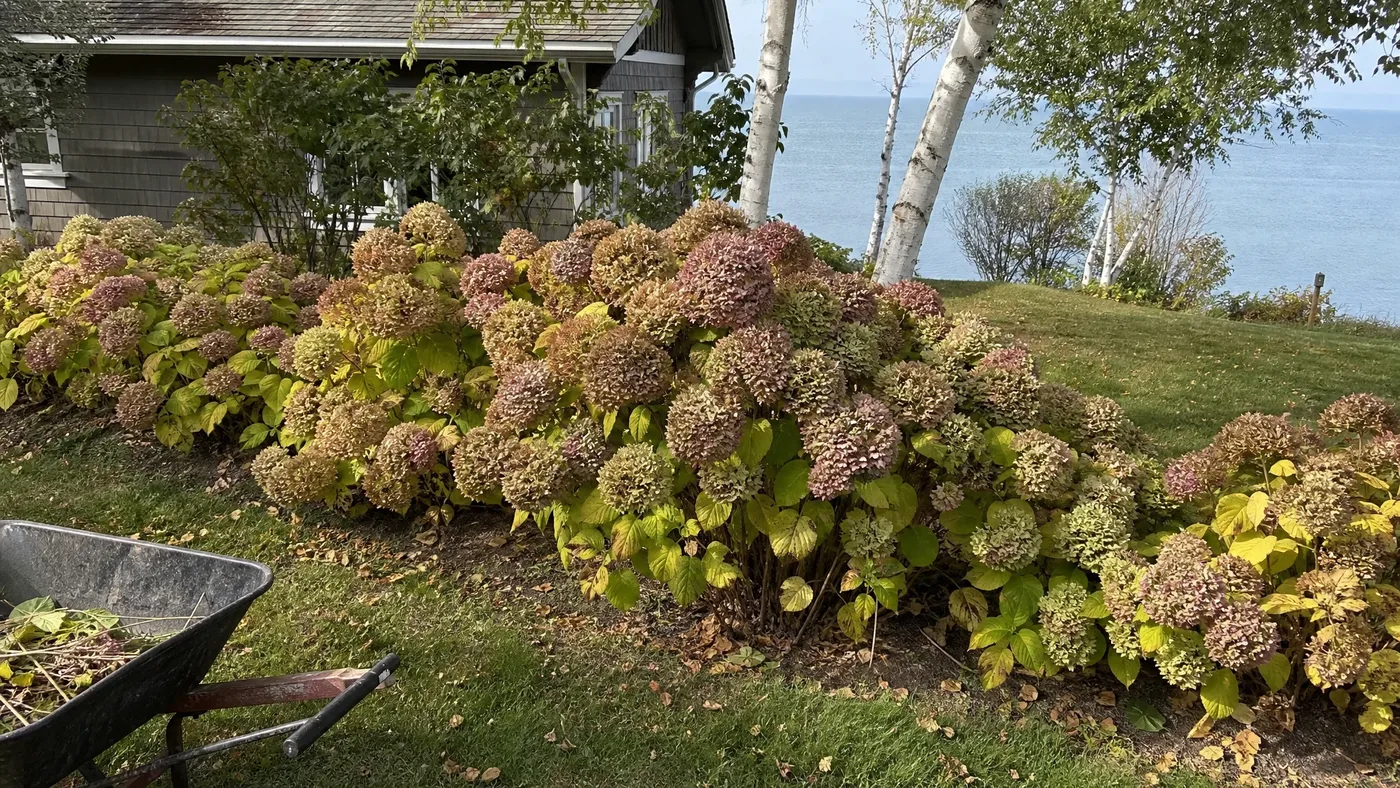
We remember a late-summer evening in our own rows when the biggest heads had gone to a soft parchment color while the rebloomers beside them were still putting out fresh flowers. The row looked better for having both. If you already grow Big Daddy, try adding one new cultivar next to it this year and see which part of the season it fills.
Big Daddy Hydrangea
Nursery-grown Big Daddy Hydrangea in sizes from 3 Gallon, shipped to your door.
From $65.85
Shop Now →Customers return to us each year for Big Daddy's large, steady heads, and many come back a season later asking what to plant beside it. We grow and sell top-quality hydrangeas on our own farms, and the neighbors in this guide are the ones we reach for first.