Best Soil for Big Daddy Hydrangea and How to Amend It
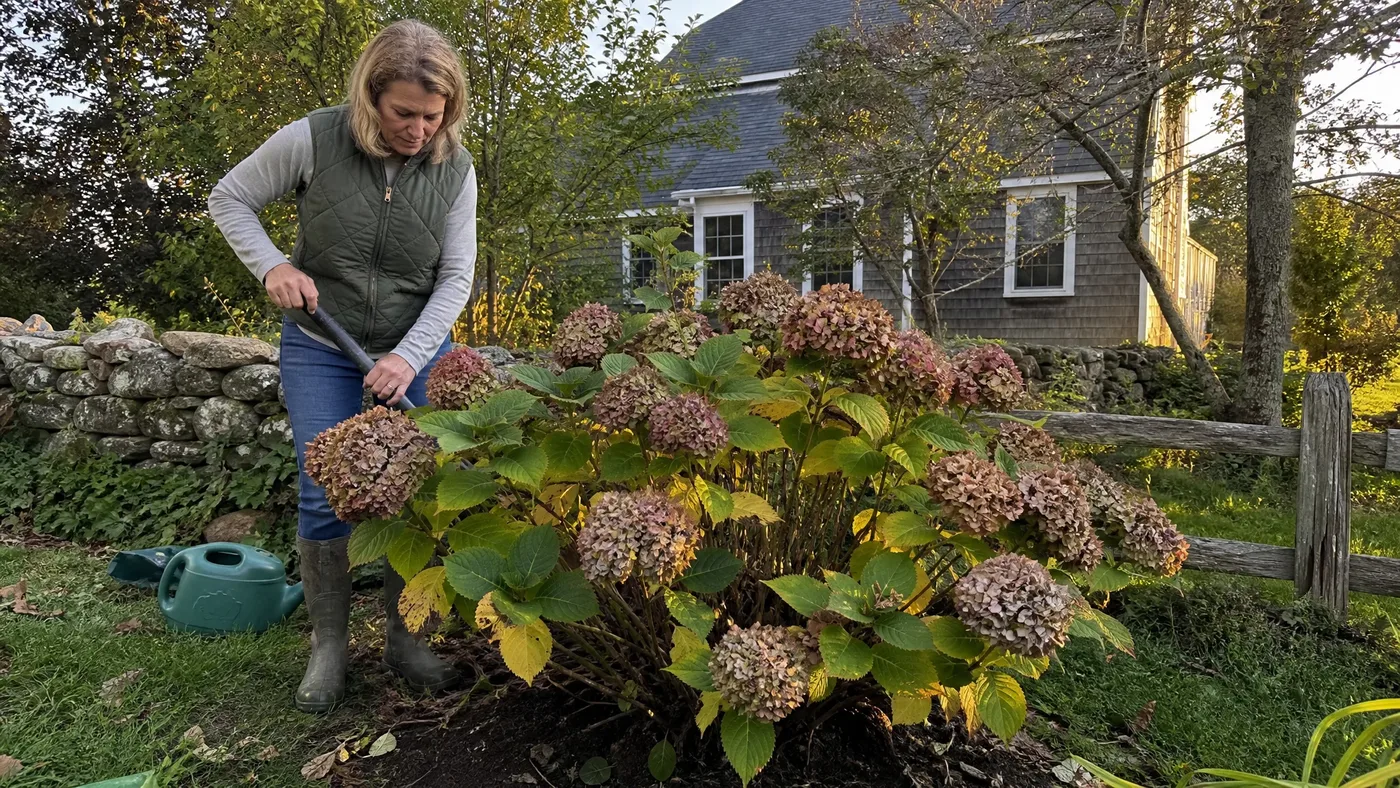
A Big Daddy has just arrived. The pot is damp, the leaves are still big and green, and the days are cooling toward autumn. This is a good moment to think about what it will stand in, because the soil you give it now decides how it flowers next June.
Below, you'll find out all about soil for Big Daddy Hydrangea, including how to test your pH, how to mix the planting soil step by step, how to push bloom color toward blue or pink, and the mistakes our growers see most often.
Get the soil right and the shrub rewards you with heavy flower heads through early summer. Get it wrong and you'll spend seasons with yellow leaves, floppy stems, and few blooms. Pair this guide with our planting guide when you're ready to dig.
What Big Daddy Hydrangea Needs in Its Soil
The short version: give Big Daddy loamy, humus-rich, well-drained soil that stays evenly moist, then use pH to choose your color. This suits you if your bed is clay, sandy, or something in between, because compost fixes all of them. It does not suit a spot that holds standing water.
Big Daddy Hydrangea thrives in rich, humusy, well-drained soil with good organic matter. This means your soil should hold moisture but not become waterlogged, and it should be full of decomposed plant material that feeds the plant over time.
Texture matters. Soil that's mostly clay compacts easily and drains poorly, leading to root rot. Soil that's mostly sand or gravel drains too fast and doesn't hold nutrients. The ideal texture is loamy, which is a balanced mix of clay, silt, and sand, enriched with organic matter. We see the fast-draining problem most in sandy Florida and Texas beds.
How Soil pH Shapes Bloom Color
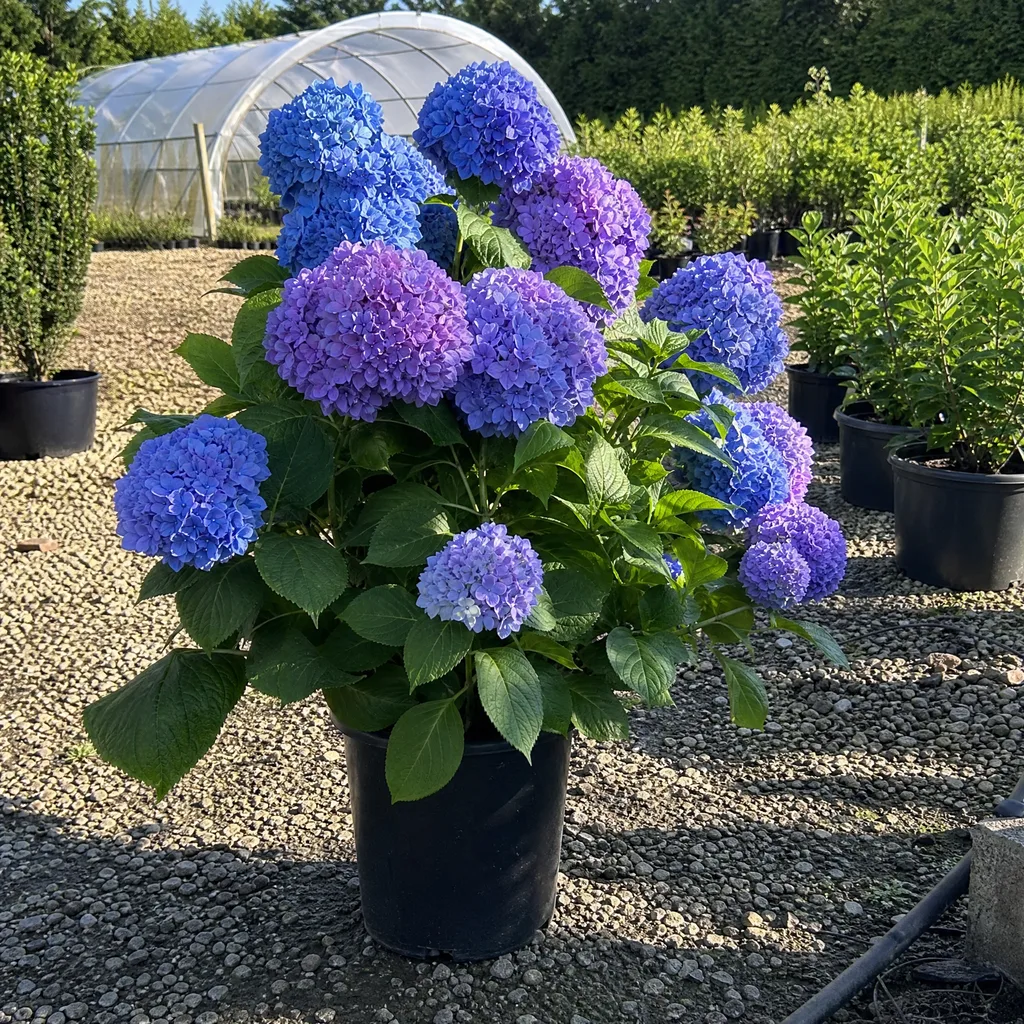
pH also matters enormously. Big Daddy Hydrangea flowers are blue or pink depending on soil aluminum availability, which is controlled by pH. Acidic soil (pH 5.5 or below) encourages blue blooms. Alkaline soil (pH 6.5 or higher) promotes pink blooms. In between, you'll see purple or lavender shades.
One of the most common questions we get is whether soil really changes the flower color. It does. In relatively acid soil (about pH 5.0 to 5.5) the flowers will be blue, and you can read more in our bloom color guide.
Big Daddy Hydrangea is demanding about soil, but it's not fussy about location or climate within its range of zones 6 to 9. The roots are shallow and fibrous, so they need easy access to moisture, nutrients, and air. Poor soil drains too fast or stays waterlogged. Either way, the roots suffer, and so does the plant.
Soil also controls your bloom color. This is not a minor detail. The same Big Daddy Hydrangea will produce true blue flowers in acidic soil or rich pink blooms in alkaline soil. If you want a specific color, soil pH is non-negotiable. More on that later.
Materials You'll Need
Before you start amending, gather these items:
This is a checklist, so gather everything before you dig. Note what is missing from it: peat moss. A lot of advice says to mix peat into the planting hole. We don't. Dry peat repels water and can leave the root ball sitting in a dry pocket, while coir and compost rewet easily.
- Soil pH test kit or meter (inexpensive at garden centers)
- Aged compost or well-rotted bark (enough to make up half of your backfill)
- Coconut coir (optional, for additional water retention)
- Coarse sand or perlite (if your soil is heavy clay)
- Garden sulfur (to lower pH for blue blooms)
- Garden lime or wood ash (to raise pH for pink blooms)
- Shovel and garden fork
- Gloves and safety glasses
Step-by-Step Amendment Process
Work through these five steps in order, ideally on planting day. Each one builds on the one before it.
Step 1: Test Your Current Soil
Before amending anything, test your soil pH. Inexpensive kits work fine at home. Collect soil samples from 3 to 4 spots in the planting area, mix them together, and test. Record the result. Most home soils fall between pH 5.5 and 8.0. If you're uncertain about results, contact your local extension service for a more detailed analysis. They can also measure organic matter content and nutrient levels.
Step 2: Prepare the Planting Area
Pick the spot first, then dig. Light and hole size both affect how the roots use your amended soil.
Choose a spot that gets morning sun and afternoon shade, because this shrub does best in part shade. Avoid full afternoon sun in hot climates, since consistent heat dries the soil faster than Big Daddy Hydrangea can handle. Our sun requirements guide goes deeper. Dig a hole twice as wide as your plant's root ball and just as deep. The wider hole gives roots room to spread into amended soil rather than struggling in native clay or sand.
Step 3: Amend the Removed Soil
This is the mix that fills the hole. Smell it as you blend: good backfill should smell sweet and earthy, not sour.
Take the native soil you removed from the hole and mix it with aged compost or well-rotted bark in roughly a 50:50 ratio. This creates a rich, organic-matter-packed medium that drains well but holds moisture. If your native soil is heavy clay, add perlite or coarse sand to the mix (up to 25 percent by volume) to improve drainage. If it's pure sand, increase the compost ratio to 60 percent compost and 40 percent sand.
Step 4: Backfill the Hole
Backfill in two stages so air pockets don't hide around the roots.
Set your Big Daddy Hydrangea in the hole so the top of the root ball is level with the ground. Do not plant deeper, because this invites root rot. Backfill halfway with your amended soil mix, water to settle it, then finish backfilling. Tamp gently so the soil is snug but not compacted. Water thoroughly.
Step 5: Mulch the Base
Mulch is the last layer of your soil work, and it keeps feeding the bed after you leave.
Apply 2 to 3 inches of aged wood chips or shredded bark around the base of the plant, leaving 4 inches clear around the stem. Mulch keeps soil moist, regulates temperature, and gradually breaks down to add more organic matter. Replenish mulch yearly.
Adjusting pH for Bloom Color
Once your Big Daddy Hydrangea is established, you can fine-tune soil pH to encourage specific bloom colors.
For Blue Blooms: If your soil tests above pH 5.5, add garden sulfur. Follow package directions. Typical rates are 1 to 2 pounds per 100 square feet of planting area. Sulfur works slowly, taking weeks or months to lower pH. You may need to reapply annually to maintain blue flowers, especially if your native soil is naturally alkaline.
For Pink Blooms: If your soil is acidic (below pH 6.5), apply garden lime or wood ash. Again, follow package rates. Lime works slowly and may require annual applications, particularly in rainy climates where acidity naturally returns.
Aim for the middle if you like mixed color. Between pH 5.5 and 6.5 the flowers will be purple, or a mixture of blue and pink on the same plant.
Do not expect instant results. Soil pH amendment is gradual. Expect the first noticeable shift in bloom color within one growing season, with full color expression by year two.
Common Mistakes to Avoid
These are the errors we see most often in customers' beds. Most are easy to avoid.
Planting too deep. The most frequent error. Even 2 inches deeper than the root ball's top can cause rot. Level is correct.
Using fresh mulch or bark directly from a tree service. Fresh bark pulls nitrogen from the soil as it decomposes, weakening the plant. Always use aged mulch (a year or older).
Applying pH-lowering or pH-raising amendments in a single heavy dose. Large amounts can shock the plant. Spread applications across the growing season. Pantry fixes like coffee grounds or vinegar rarely shift pH enough to matter.
Neglecting drainage. If your planting spot holds standing water after rain, your Big Daddy Hydrangea will suffer. Either choose a different location or build a raised bed.
Forgetting to water. Amended soil holds moisture better than native soil, but Big Daddy Hydrangea still needs consistent moisture. See our guide to watering Big Daddy Hydrangea for details.
Keeping the Soil Healthy Year After Year
Spring is the time to refresh the bed, when the mulch smells of damp bark and the first leaves are unfolding.
After the first year, you don't need to dig and amend again. Instead, refresh the soil by adding a 1-inch layer of aged compost or bark each spring as the plant's mulch settles. This keeps organic matter high, drainage steady, and nutrients available. Over time (3 to 5 years), this annual refresh builds soil so rich that Big Daddy Hydrangea will thrive with minimal extra feeding.
If your plant shows signs of chlorosis (yellowing leaves with green veins) in midseason, pH may be out of balance. Test the soil again and adjust as described above. This condition often signals that alkaline soil is blocking the plant's ability to take up iron.
For complete guidance on caring for Big Daddy Hydrangea year-round, refer to our complete growing guide.
Quick Reference: Soil Amendment Checklist
Use this table as a quick checklist when you plant or when you plan the season's soil work.
| Task | Timing | Details |
|---|---|---|
| Test soil pH | Before planting | Use kit or extension test, then record results |
| Prepare hole | Before planting | 2x wide, same depth as root ball |
| Mix amendments | Before planting | 50:50 native soil + compost (adjust for clay or sand) |
| Backfill and water | Planting day | No deeper than root ball top, tamp gently |
| Apply mulch | Planting day or week 1 | 2-3 inches aged wood chips, 4 inches from stem |
| Lower pH for blue | Early spring or after bloom | Apply garden sulfur per package directions |
| Raise pH for pink | Early spring or after bloom | Apply garden lime per package directions |
| Refresh mulch | Annual, early spring | Add 1 inch aged compost or bark |
| Monitor moisture | Growing season | Keep soil consistently moist, never soggy or dry |
Good Soil Is Where Big Daddy Hydrangea Starts
Test first, build a loose and humusy mix, plant level, mulch with aged material, and nudge pH only slowly. That is what we tell customers, and it works for most beds. Feed the soil each spring and Big Daddy repays you with big blooms from June and July. For feeding schedules, see our fertilizing guide.
Big Daddy Hydrangea
Nursery-grown Big Daddy Hydrangea in sizes from 3 Gallon, shipped to your door.
From $65.85
Shop Now →On our farms, we grow Big Daddy in loose, compost-rich beds with morning sun and afternoon shade, mulched deep and kept evenly moist. We are growers who sell top-quality shrubs raised that way.