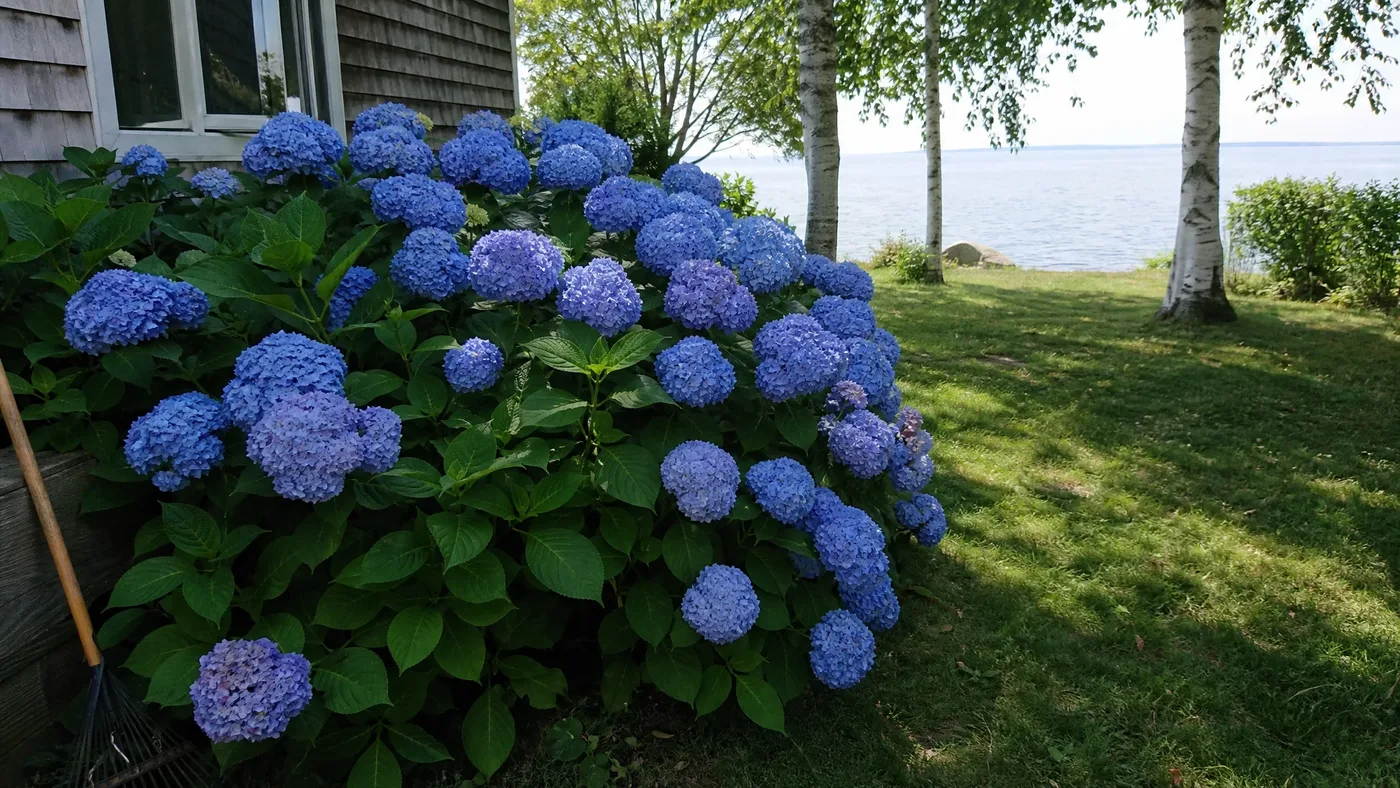
Big Daddy Hydrangea Sun Requirements: How Much Light?
Light decides whether Big Daddy gives you a shrub heavy with big mophead blooms or a sulking, wilted one. Put it in the wrong spot and the leaves scorch, the flowers shrink, and you spend every July afternoon with a hose. Put it in the right one and it rewards you with deep green foliage and blooms that open as summer begins.
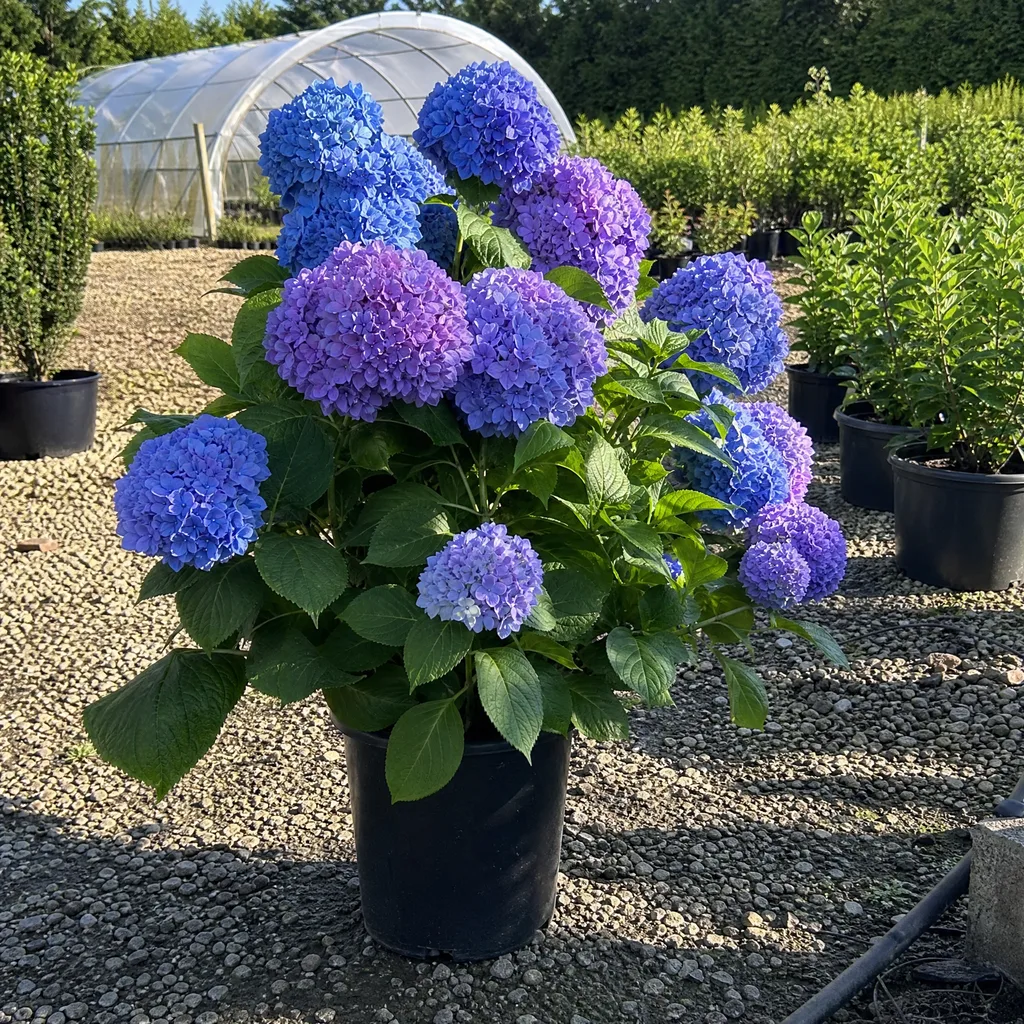
Big Daddy is forgiving in many ways, but light is where it asks for a little planning. We'll walk you through the mistake we see most often, then how to map your sun, test a spot, and adjust for your climate zone. After that we cover what a well-placed plant looks like through the season.
Big Daddy Hydrangea and the Afternoon Sun Mistake
The mistake we see most often is planting Big Daddy in a sunny spot and hoping rain covers the rest. Here is why that fails and what to do instead.
Many people assume "hydrangea" means "moisture-loving" and plant without thinking about afternoon sun. The reality is that Big Daddy in full afternoon sun without consistent watering will wilt, stress, and attract pests. Don't gamble on summer rainfall. Plan for regular supplemental watering or choose a shadier spot.
You'll hear that hydrangeas bloom best in full sun if you just water them more. We don't follow that advice for Big Daddy. Extra water doesn't cool scorched leaves, and the blooms still fade. Extension sources agree that this plant does best in part shade, and they say to protect it from afternoon sun. Use water as a backup, not a fix.
Big Daddy Hydrangea performs best in part shade, meaning morning sun and afternoon shade. This is the sweet spot for most home gardens. The plant will tolerate more direct sun if given consistent soil moisture, especially in cooler climates or coastal regions where afternoons don't peak above 85 to 90 degrees Fahrenheit.
In hot, dry climates, or wherever afternoon sun is intense, expect the plant to wilt during peak heat unless you water deeply and frequently. Conversely, if Big Daddy gets less than 3 to 4 hours of morning sunlight, flowering may diminish. The plant needs enough light to fuel bloom production, but afternoon shade protects both the flowers and the foliage from heat stress.
One of the most common questions we get is why a freshly planted Big Daddy droops at 3 p.m. even though the soil is wet. Usually the answer is afternoon sun, not a lack of water.
When Big Daddy Gets Too Little Light
The opposite mistake is just as easy to make. A shady corner feels safe, but it costs you flowers.
Big Daddy will survive under a dense shade tree or on the north side of a building, but flowering drops significantly. The plant needs morning light to initiate and fuel flower buds. If your only option is deep shade, consider a smaller hydrangea or a shade-loving shrub instead.
The payoff for good morning light is the main flush of blooms in June and July, when the big rounded heads open against deep green leaves. Skip the light and you skip that show.
Materials and Tools for Checking Your Light
Gather these before you start mapping. Most of them are things you already own.
- A sun tracker app (smartphone) or a notebook to record sun patterns
- Measuring tape or a phone camera to document garden features
- A sample pot or marker to hold a potential planting spot for 2 to 3 days
- Soil moisture meter (optional but helpful)
- Watering can or hose with a wand attachment
- Mulch (2 to 3 inches deep for moisture retention)
- A shade reference: tree canopies, pergolas, fences, or house structures that cast afternoon shadow
Step-by-Step: Finding the Right Light Spot for Big Daddy
Work through these six steps in order, and give yourself a few days of watching before you dig.
Step 1: Map Your Garden's Sun Exposure Over 3 Days
Sun patterns shift seasonally. What's shaded at 4 p.m. in June might be in full sun by September as the sun's angle drops. Begin by observing your garden at three key times: early morning (around 8 a.m.), midday (noon), and late afternoon (4 to 5 p.m.). Use a sun tracker app or simply take photos from the same spot each time to document which areas receive direct sun and which are shaded.
Look for areas that get morning sun (6 a.m. to 10 a.m.) and fade into dappled or deep shade by 2 p.m. These are ideal for Big Daddy. Mark them with stakes or sketches in a notebook.
Step 2: Identify Shade Sources and Their Patterns
Shade comes from trees, buildings, fences, or other structures. When evaluating shade, consider whether it's permanent (a house or evergreen tree) or seasonal (deciduous trees that leaf out in May). Deciduous shade is excellent for Big Daddy because the plant gets spring sun early in the season and afternoon protection during the hottest months.
If your only available spot is under a dense evergreen tree or on the north side of a building, Big Daddy will survive with limited sun. However, it will produce fewer and smaller flowers. Aim for at least 3 to 4 hours of direct or dappled morning sun daily.
Step 3: Test the Spot Before Planting
Place a potted plant or container in your chosen planting location for 2 to 3 days. This simple test reveals how the microclimate behaves. Monitor whether the soil dries out quickly (indicating more sun or heat), stays consistently moist (indicating good conditions), or becomes waterlogged (indicating drainage issues). Watch the plant for any wilting during peak afternoon hours.
If the test plant wilts noticeably in the afternoon despite daily watering, you'll need to either choose a shadier spot or commit to deep, frequent watering during summer heat.
Step 4: Assess Water Availability at Your Chosen Spot
Big Daddy wants consistently moist soil and will wilt in hot afternoon sun if not watered regularly. Before finalizing your planting location, consider your watering capacity. Can you water deeply twice weekly during summer heat? Is the soil naturally rich and moisture-retentive, or sandy and fast-draining?
If your chosen spot gets more sun than ideal but you can mulch deeply and water reliably, Big Daddy will do well in cooler climates (zones 6 to 7a). In warmer zones or arid regions (zones 8 to 9 without coastal influence), stick closer to the part shade recommendation.
Our watering guide has a full schedule if you plan to rely on mulch and a hose to make up for extra sun.
Step 5: Prepare the Planting Area
Once you've selected your spot, amend the soil with compost or aged bark. Big Daddy prefers rich, humusy, well-drained soil with good organic matter. Work amendments into the top 12 inches. After planting, apply 2 to 3 inches of mulch (bark chips, shredded leaves, or compost) around the base, staying 3 inches away from the stem. Mulch moderates soil temperature and moisture, a huge help in warmer microclimates.
If your native soil is heavy or sandy, our soil guide shows how to amend it before planting.
Step 6: Monitor and Adjust the First Growing Season
The first year after planting, watch your Big Daddy closely. If it wilts frequently on sunny afternoons, increase watering or provide afternoon shade (a shade cloth, or plant it in front of a structure that casts a longer shadow as summer progresses).
If the plant looks pale or blooms diminish, it may not be getting enough morning sun. Move it the following fall or spring if needed. Big Daddy grows rapidly into a multi-stemmed shrub, and in a good spot we expect it to reach roughly 5 to 6 feet tall and wide, so making adjustments early is easier than waiting.
Tips for Success in Different Climate Zones
The hydrangea species is hardy in zones 6 to 9, but the light you give should change across that range. If you're unsure of your zone, check our hardiness zone guide.
Zones 6 to 7 (Cooler Climates)
In cooler regions, Big Daddy can tolerate more direct sun throughout the day if soil moisture is consistent. Morning sun and light afternoon shade is still ideal, but a spot that receives 5 to 6 hours of morning to midday sun works well. Cooler air temperatures protect the foliage and flowers from heat scorch.
Zones 8 to 9 (Warmer and Hot Climates)
In warm zones, afternoon shade is non-negotiable unless you have coastal influence or unusually cool microclimates. Aim for morning sun and deep afternoon shade (dappled sun is acceptable). Afternoon shade becomes more critical as summer progresses. If you're in an interior location far from cooling ocean influence, err toward more shade and reliable water rather than testing the plant's heat tolerance.
Coastal and Maritime Climates
If you live near an ocean or large lake, Big Daddy tolerates more sun even in zone 8 or 9 because maritime air keeps temperatures moderated. Morning sun and afternoon dappled shade remains best practice, but the plant is more forgiving of 4 to 5 hours of direct sun in these regions.
Seasonal Shifts and the Mulch Habit
Two habits slip once the plant is in the ground. One is ignoring how the light changes through the year, and the other is skipping mulch.
Overlooking Seasonal Sun Changes
A spot that's shaded in July (when deciduous trees are fully leafed) might be fully exposed in September (when leaves drop early). This shift is usually fine for Big Daddy, but it does mean your watering needs change. After late August, reduce watering frequency as the plant enters dormancy and shade increases naturally.
Forgetting to Mulch and Water
Even in ideal part shade, Big Daddy needs mulch and consistent moisture. Neglecting either is a frequent reason for lackluster performance. Mulch and watering go hand in hand, so don't treat them as optional extras.
What a Well-Placed Big Daddy Gives Back
When the light is right, here is what you should see over the first seasons.
When Big Daddy is positioned correctly and watered consistently, you can expect glossy, deep green foliage and dense mophead flowers through the summer, mostly in June and July and sometimes later depending on your region. It grows quickly, filling out to a mature size of roughly 5 to 6 feet tall and wide.
If the light is adequate and water is reliable, flowering begins within the first 1 to 2 years of planting. Color follows your soil, not your light: between pH 5.5 and 6.5 the flowers will be purple or a mix of blue and pink, with blue in more acidic soil and pink in alkaline soil. Our bloom color guide covers how to steer it.
During the hottest part of summer, some wilting on very hot afternoons is normal, especially in zones 8 to 9. Consistent moisture and mulch minimize this stress. If wilting occurs regularly despite good watering, your spot has too much afternoon sun for your climate. Adjust in the following year by relocating or adding shade cloth temporarily.
Quick Reference: Big Daddy Hydrangea Sun and Light Checklist
Use this table as a checklist when you choose a spot and again when you review it next summer.
| Element | Recommended / Target | What to Avoid |
|---|---|---|
| Light exposure | Part shade: morning sun (3–4 hours minimum), afternoon shade | Deep, all-day shade, or full afternoon sun without consistent water |
| Zones 6–7 | Morning sun + light afternoon shade, with more sun tolerated if watered consistently | Placing in full shade expecting good blooms |
| Zones 8–9 | Morning sun + deep afternoon shade or dappled shade | Full afternoon sun without reliable watering, or dry soil in heat |
| Coastal regions | More sun tolerated due to moderate maritime temperatures | Assuming inland zone 8 rules apply without adjustment |
| Soil moisture | Consistently moist soil, deep mulch (2–3 inches), and deep watering 2x weekly in summer heat | Allowing soil to dry between waterings, or skipping mulch |
| First-year monitoring | Observe wilting and flowering, then adjust watering or shade if needed | Planting and ignoring the plant for an entire season |
| Mature size | About 5–6 feet tall and wide in a good spot, so plan accordingly | Crowding it with other plants, or expecting small shrub proportions |
Getting Big Daddy's Light Right
Give Big Daddy morning sun and afternoon shade, and back it up with mulch and steady water. Skip deep shade, because it costs you blooms, and skip all-day sun in hot zones, because no amount of watering fully makes up for it. Test your spot before you plant, and be ready to move the shrub in its first year if it tells you the light is wrong.
Big Daddy Hydrangea
Nursery-grown Big Daddy Hydrangea in sizes from 3 Gallon, shipped to your door.
From $65.85
Shop Now →As a small grower with our own farms, we care about getting light right because a Big Daddy that wilts every July is a plant we'd rather not have sold you. We grow and sell top-quality shrubs, and we want yours to be loaded with blooms when summer arrives.