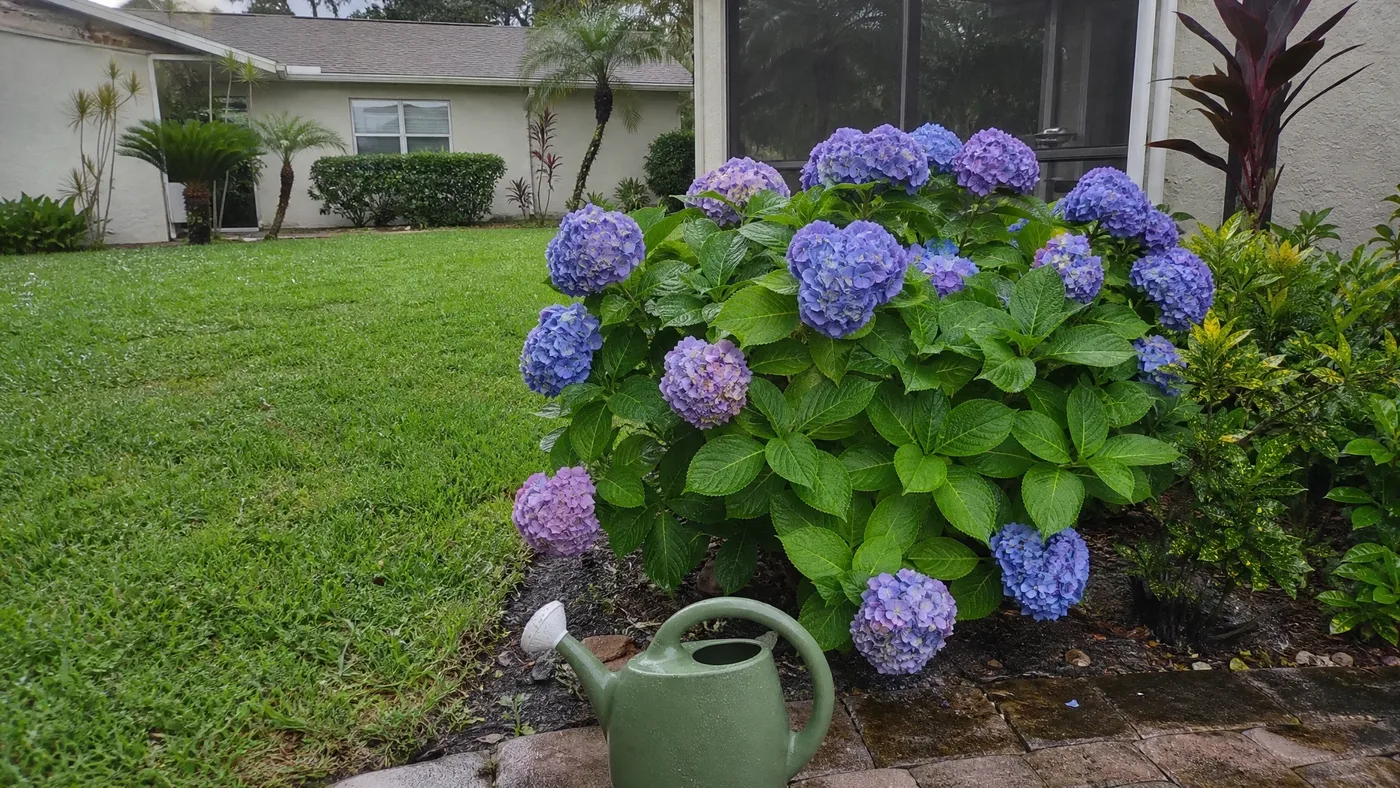
Growing Big Daddy Hydrangea in Florida and Texas Heat
Parts of Florida and Texas can grow Big Daddy Hydrangea and parts can't, and the soil will decide before the thermometer does. A plant that sails through a humid north Florida summer in sandy loam can still fail in a Texas bed where the roots hit caliche and the water runs alkaline.
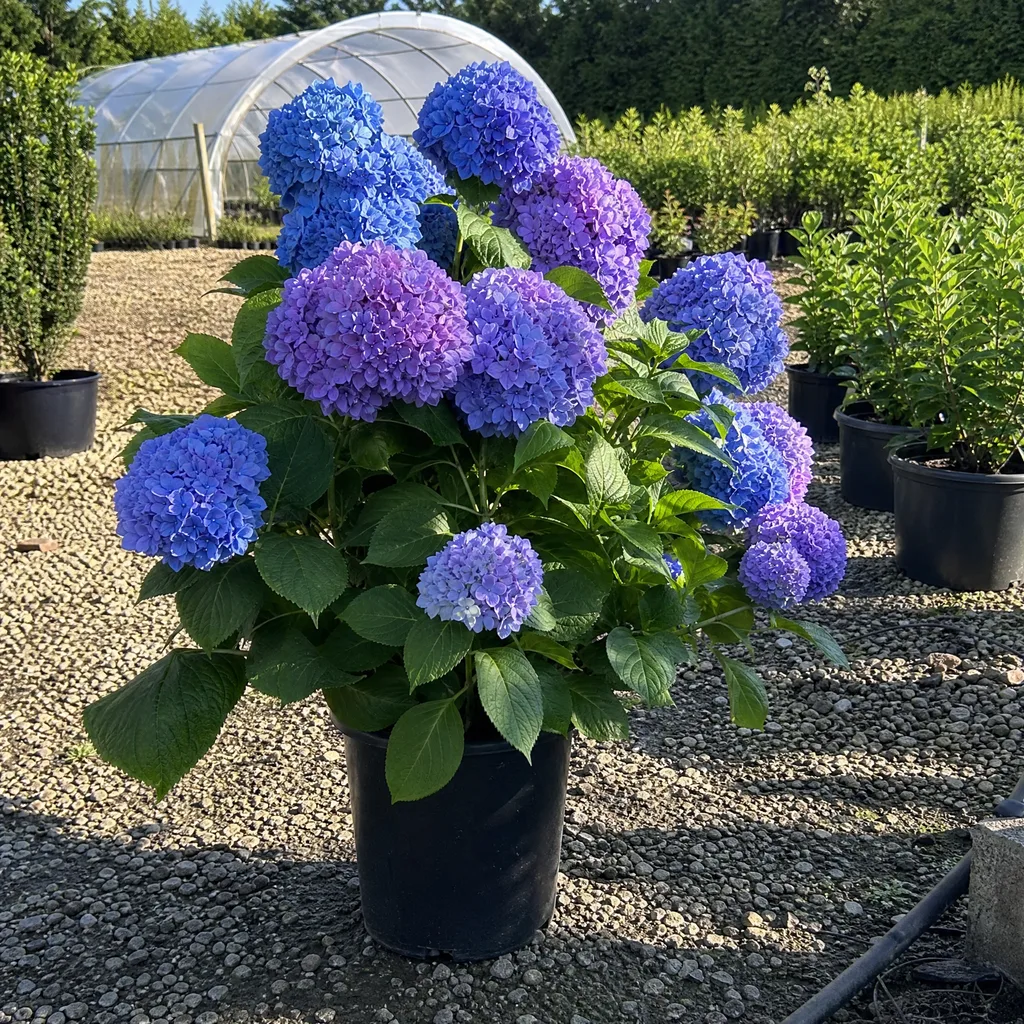
For most people this becomes urgent in late spring. The blooming plants are in the stores, the afternoons are getting hot, and you have to decide whether this is the year you try one. Get it wrong and you spend July watching big soft leaves collapse by late afternoon.
In this article, we'll go through which parts of the region suit the plant, how to deal with sand, caliche and high pH, and how shade and irrigation carry it through its first weeks, its first year and its first real August.
Before Buying Big Daddy Hydrangea in the Heat Belt
Start with a map and then a soil test. Whether hydrangeas grow in Florida or Texas has a different answer in every county, and most of it is settled before you pick a plant.
Where It Works in Florida
Big Daddy tops out around zone 9. Virginia Tech's extension lists bigleaf hydrangea for zones 6 to 9, and this cultivar follows that ceiling. North Florida sits inside it. Central Florida is workable if you have the right corner and a hose. Our hardiness zones guide covers the range as a whole.
One of the most common questions we get is whether it will live in south Florida. It lies beyond the top of the range, and we'd tell you to spend your money on something native to the heat instead.
Where It Works in Texas
East Texas is the easy end of the state. Rain is more reliable and the soils are often sandy and acidic, which suits this shrub. Central Texas works in a shaded bed with irrigation and some soil work. West Texas and the far south of the state are where we'd stop. Hot, dry, exposed sites are the very ones the Mississippi State extension warns bigleaf hydrangeas away from.
Who Should Skip It
Skip it if your only open ground faces west, if you have no way to irrigate, or if you want a shrub you can ignore from June to September. Big Daddy rewards a gardener who looks at the bed every morning. If that isn't you, choose something built for full sun and save yourself the replacement cost.
Caliche, Sand and Alkaline Soil Under Big Daddy Hydrangea
Soil is where the region differs most from the plant's home range. Sand drains too fast, caliche blocks roots and holds water, and alkaline ground changes the bloom color.
Test Before You Dig
A lab test through your county extension service tells you the pH and what the soil is short of. It is cheap and it settles arguments. NC State notes that blue flowers develop in acidic soil and pink flowers in alkaline soil, so high-pH Texas ground pushes Big Daddy toward pink.
Between roughly pH 5.5 and 6.5, UMass reports purple or mixed flowers on the same plant. Our soil and amendment guide goes deeper on pH.
Fixing Sand
Sand is the more forgiving problem. The species tolerates sandy soil and has some salt tolerance, but tolerating sand is not the same as thriving in it. Hydrangeas prefer well-drained soil with plenty of organic matter, and plain sand holds neither water nor nutrients.
Work compost or aged pine bark into the whole planting area, not just the hole. Plan to top it up every year, because heat and rain burn organic matter out of sand fast.
Breaking Through Caliche
Caliche is a hardened, limy layer common in central and west Texas, and it is the real deal-breaker. Dig the hole and fill it with water. If it is still standing there hours later, you have a bathtub, and a hydrangea in a bathtub rots.
Break the layer up with a digging bar, or skip it and build a wide raised bed above it. Elemental sulfur can lower pH slowly, but follow your soil test and your extension office for rates. Retest each year, because caliche soil drifts back.
The First Weeks Are Mostly Watering
For the first weeks after planting, your job is to keep the root ball and the soil around it evenly moist. Our planting guide covers the hole itself.
How Often to Water
Check the plant every morning for the first few weeks. A nursery root ball dries out faster than the native soil around it, especially in sand, so the surrounding bed can feel damp while the roots are bone dry. Water slowly at the base until the whole root ball is soaked, then stop. Frequent sprinkling wets the surface and teaches the roots nothing.
Reading the Plant
Big Daddy's large, soft leaves wilt in hot sun even when the plant is well watered, so a droop alone doesn't tell you what's wrong. This table separates the common signals.
| What you see | Likely cause | What we'd do |
|---|---|---|
| Leaves droop in the afternoon and recover by evening | Heat load, not thirst | Add shade and leave the hose alone |
| Leaves still limp the next morning | Dry root ball or soggy, failing roots | Feel the soil at the root ball before you add water |
| Brown, crisp leaf edges | Scorch from sun or dry spells | Shade it and water more evenly |
| Yellowing leaves and wet soil | Too much water or poor drainage | Back off and check the drainage |
Temporary Shade for New Plants
A new plant has a small root system, so give it help while it builds one. Prop a piece of shade cloth on stakes to the west of it, or set a patio umbrella over it. It looks silly for a few weeks and costs far less than a replacement plant.
Afternoon Shade Does More Than Any Fertilizer
Customers often ask us what to feed a drooping hydrangea. In the heat belt, the better answer is usually a different spot in the yard.
Why the Afternoon Matters
Afternoon shade is a must for bigleaf hydrangeas. Morning sun is fine in Florida and Texas. It's the hot light after midday that costs the plant water faster than the roots can deliver it. Our sun requirements guide covers light in cooler climates, but here you should go shadier than you think.
Siting Against Buildings and Trees
The east side of a house is the best bed you have. The north side works too. Avoid west-facing walls, which hold heat well into the evening, and avoid bare ground beside driveways and patios.
High, open canopies from pines or oaks give dappled light. Mature tree roots compete for water, so expect to irrigate more under them.
Shade Structures That Work
Where you have no natural shade, build some. A shade cloth panel on a wooden frame, a slatted pergola on the west side, or a lattice screen all do the job. Choose a moderate-density cloth rather than the darkest one, because a hydrangea needs some light to bloom.
A fast fence or a taller shrub planted on the west side works too. The structure only needs to block the low western sun, so you can build it smaller than you'd expect.
Irrigating Big Daddy Hydrangea Through Year One
In the first year, the hose does the work the roots can't yet do. Our watering guide has the general rules, and here is how they apply to a hot, dry summer.
A Weekly Target
The Mississippi State extension recommends one inch of water per week from rainfall or irrigation. In a Florida or Texas July, treat that as a floor. Set a tuna can or rain gauge under the drip line and measure what actually lands. Guessing is how people end up giving half of what the plant needs.
Setting Up Drip
Drip beats a sprinkler here. Lay a ring of drip line around the root zone, or place emitters on opposite sides of the root ball, and move them outward as the plant grows. Put it on a timer for early morning.
Sand needs shorter, more frequent runs, because water drains straight through. A caliche bed needs slow, long runs that soak in rather than run off. Overhead watering at midday wastes water and does nothing for the roots.
Mulch Through the Hot Months
A 2- to 3-inch layer of mulch conserves moisture and keeps the roots cool. Pine bark, pine straw or shredded hardwood all work. Keep it off the stems to prevent rot, and top it up in midsummer, because it breaks down quickly in heat.
An Established Big Daddy Hydrangea in August
By its second summer the root system is deeper and the plant gets easier, but August is still the hardest month for it in this region.
What It Tolerates
An established plant goes longer between waterings than a new one, and a mature, well-mulched bed in the right corner will carry it through a dry week. It will still wilt in the afternoon. Wilt that is gone by evening is normal. The species grows rapidly into a multi-stemmed shrub, so expect it to fill out quickly once it settles.
What Still Goes Wrong
Bloom mostly happens in June and July, so by August the show is over and the plant is just trying to survive. The flower buds for next year form on this year's growth, which is why the species blooms on the previous year's wood. A plant that is stressed and defoliated now blooms poorly next June.
Scorched leaf margins, mites in hot dry spells and a thin, washed-out mulch layer are the usual August problems. Skip the heavy feeding in peak heat, because it pushes soft growth the plant can't support. Our problems guide has the fixes.
Worth Growing, If You Pick the Right Corner
In our view, Big Daddy is worth the effort in north Florida, in east Texas, and in the shaded, irrigated corners of central Florida and central Texas. It isn't worth it in south Florida, in west Texas, or in any full-sun yard. Expect pink flowers in alkaline soil, and decide ahead of time that you're fine with that.
Big Daddy Hydrangea
Nursery-grown Big Daddy Hydrangea in sizes from 3 Gallon, shipped to your door.
From $65.85
Shop Now →Plant it where the afternoon sun can't reach and leave the rest to the hose. Before a plant leaves us, our growers check the roots, stems and leaves of every Big Daddy, and as a small business with our own farms, we grow and sell top-quality shrubs we'd be happy to plant ourselves.