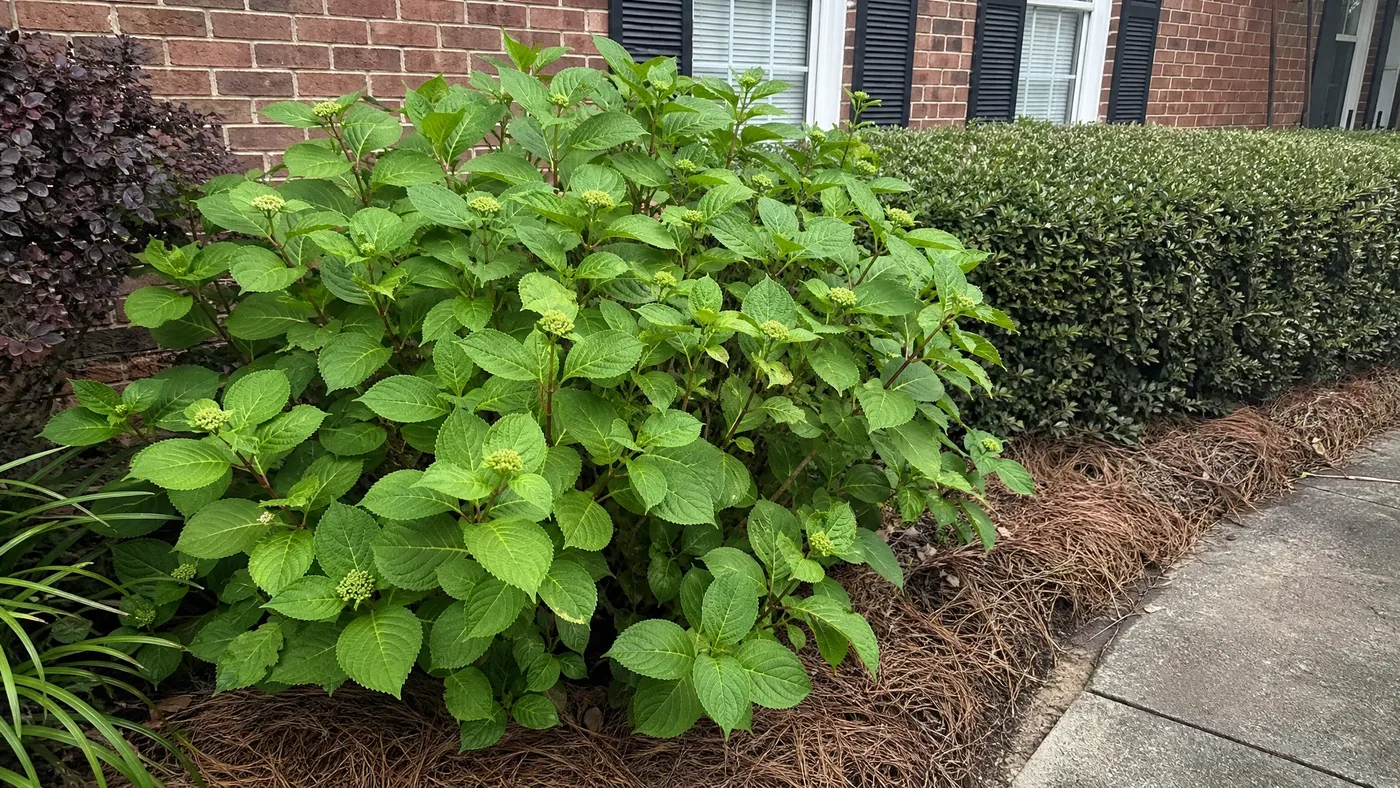
Big Daddy Hydrangea Care: The Complete Growing Guide
A well-grown Big Daddy Hydrangea is one of the best things that can happen to a June border. The heavy mophead blooms nod over broad, glossy leaves, and the whole shrub feels cool even on a warm morning. Grown badly, it sulks. The leaves flop by mid-afternoon, the buds disappear, and you end up with a big green shrub that never flowers.
Nearly all the trouble comes from a handful of mistakes, and they are easy to avoid. We'll walk you through planting and siting, then watering, flower color, feeding, pruning and the problems we see most often, ending with a seasonal calendar you can pin up in the shed.
Big Daddy Hydrangea Care in Brief
Give Big Daddy morning sun, afternoon shade, steady moisture and rich soil, and prune it once, right after it flowers. Here is what that means for this particular shrub.
Big Daddy Hydrangea (Hydrangea macrophylla 'Big Daddy') is a deciduous shrub prized for its large, showy mophead flower clusters and bold foliage. Unlike many hydrangea cultivars, this plant lives up to its name with substantial blooms and sturdy growth. Hydrangea macrophylla species are native to Japan, and 'Big Daddy' represents a carefully selected cultivar bred for reliable performance in home gardens.
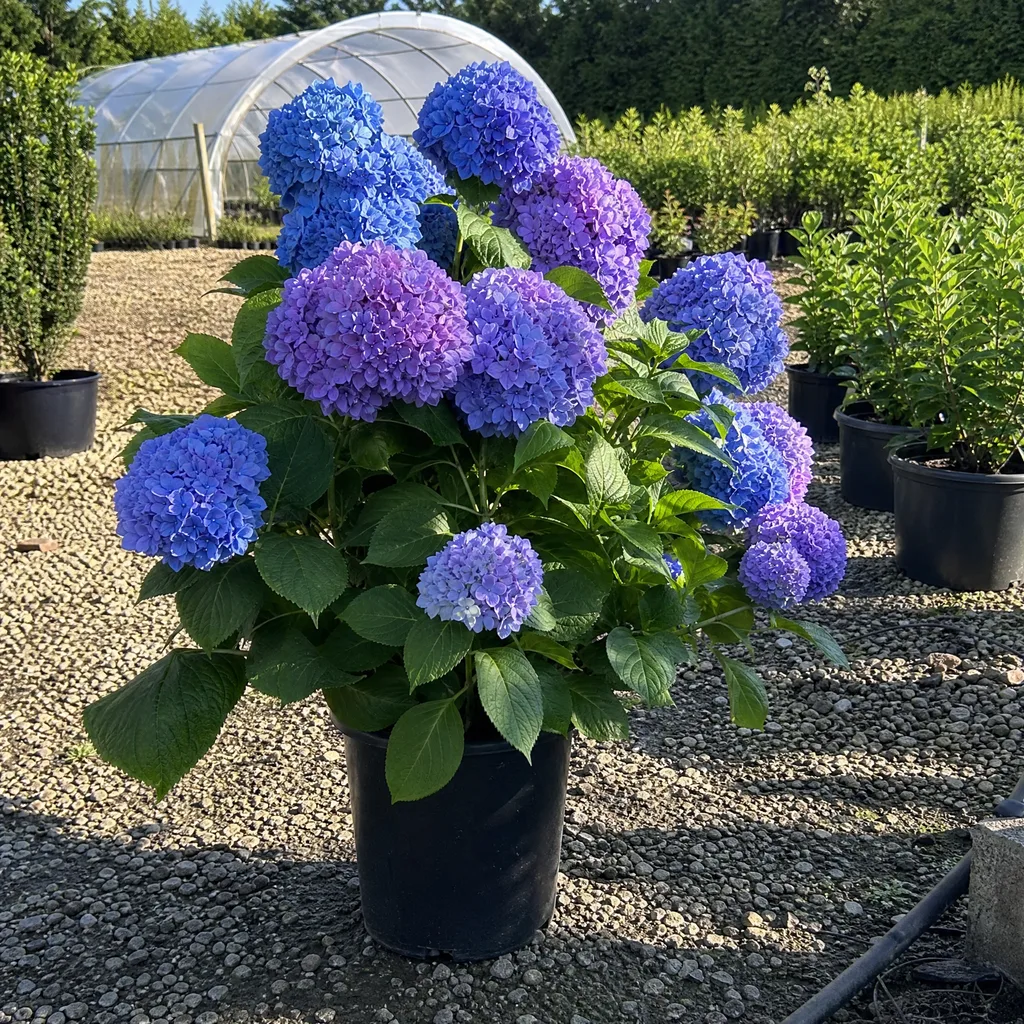
The plant produces glossy, coarse-textured dark green leaves that provide season-long structure. Summer flowers range from rich blue to rosy pink depending entirely on your soil's pH. This is one of the most controllable aspects of big daddy hydrangea care: acidic soil triggers blue blooms, while alkaline soil produces pink. Neither color is superior, and a pH of 6 or so may yield purple or lavender flowers instead.
Big Daddy grows quickly into a rounded, multi-stemmed shrub. The species reaches 3 to 6 feet tall and wide at maturity, and in our rows Big Daddy sits at the upper end, around 5 to 6 feet. Flowers come mostly in June and July, so the show starts just as summer does. That size and bloom make it a cornerstone for foundation plantings, mixed borders and cut flower gardens.
Planting Big Daddy Hydrangea
Big Daddy rewards a careful start. Get the timing, the light and the soil right on day one and everything else in this guide gets easier. Our planting walkthrough covers the digging in more detail.
When to Plant
Plant in spring or fall when temperatures are mild and roots can establish without drought stress. Fall planting (September through October) gives roots several months to develop before winter dormancy. Spring planting (March through May) works equally well as long as you maintain consistent moisture through the first growing season.
Site Selection
Choose a location with part shade. The ideal situation is morning sun with afternoon shade, especially if you live in a warm climate. In cooler or coastal regions where summers are mild and consistent moisture is available, Big Daddy can tolerate more sun. In hot climates, afternoon shade becomes critical to prevent leaf wilting and stress during the hottest months.
Avoid planting under trees or in deep shade where foliage becomes sparse and blooming suffers. Conversely, all-day full sun in hot regions will stress the plant despite extra watering.
Check your zone before you buy. Big Daddy is hardy in zones 6 to 9. In zone 6, winter lows between -10 and 0°F can damage flower buds in harsh years, though established plants usually recover. Zones 7 to 9 carry little winter worry.
Soil Preparation and Spacing
Big Daddy Hydrangea demands rich, humusy soil with good organic matter and excellent drainage. Before planting, work 2-3 inches of compost or aged bark into the planting area. The soil should feel crumbly and retain moisture without becoming waterlogged. If your site has heavy clay or sand, amend liberally to create a balanced growing medium.
Space plants 5-6 feet apart to allow for mature width and air circulation. Closer spacing creates competition and reduces air flow, which invites fungal diseases.
Watering and Ongoing Moisture Management
Big Daddy Hydrangea has medium to high water needs. The plant wants consistently moist soil, never bone-dry or waterlogged. This balance is critical: drought stress causes bud drop and wilting, while soggy soil rots roots and invites fungal disease.
Watering Schedule
After planting, water deeply twice weekly for the first 4-6 weeks to settle soil and encourage root development. Once established, water when the top 1-2 inches of soil feel dry to the touch. In most climates, this means watering 2-3 times per week during the growing season, more frequently in heat waves or sandy soil, less often during cool spring or fall.
The plant has low drought tolerance. During hot, dry spells, check soil moisture every 2-3 days. Wilting foliage by afternoon is a sign that watering is needed, though preventing wilting altogether by staying ahead of dry soil is preferable.
Mulching
Apply 2-3 inches of mulch around the base, keeping it 3-4 inches away from the stem to prevent rot. Mulch cools soil, reduces water loss through evaporation, and enriches the soil as it breaks down. Shredded bark or wood chips work well. Refresh mulch annually in spring.
Soil pH, Flower Color and Feeding
Soil pH is the single most important factor controlling bloom color in Big Daddy Hydrangea. This is not a minor detail but a fundamental control mechanism: plants absorb aluminum from the soil, and aluminum availability depends entirely on pH.
Blue Blooms
Soil at about pH 5.0 to 5.5 gives blue flowers. Here is how to get there and hold it.
Acidic soil with a pH of 5.5 or below makes aluminum readily available. The plant absorbs it, and the result is blue flowers. If your soil tests between 5.5 and 6.0, flowers will be blue-tinted but may have purple undertones. Many gardeners with naturally acidic soils (common in eastern regions with higher rainfall) get blue hydrangeas without any intervention.
To maintain or achieve blue blooms, apply aluminum sulfate in early spring following package directions. Test your soil first with an inexpensive kit to confirm current pH and avoid over-application.
Pink Blooms
Alkaline soil with a pH of 6.5 or higher limits aluminum availability, and flowers appear pink or coral. If your soil is naturally neutral or slightly alkaline (common in drier western regions and areas with limestone), you will get pink hydrangeas without effort.
To maintain pink blooms in acidic soil, apply garden lime in early spring. Again, soil testing guides application rates and prevents waste.
Purple and Lavender Hues
Intermediate pH levels (roughly 5.5 to 6.5) produce purple, mauve or lavender flowers, sometimes a mix of blue and pink on one plant. This happens when aluminum availability is moderate. We like these colors because they need no soil tinkering. Our bloom color guide goes deeper on steering the shade you want.
Feeding Big Daddy
Feeding is simple with this shrub, and a light hand works best.
Big Daddy Hydrangea is not a heavy feeder. In spring, apply a light feeding of balanced fertilizer (such as 10-10-10) or one formulated for hydrangeas. Follow package directions, because more is not better. Too much nitrogen encourages leafy growth at the expense of flowers.
If you are adjusting soil pH with aluminum sulfate or garden lime, apply it in early spring as well. These products serve a dual purpose: they shift pH and add micronutrients, but they are not substitutes for balanced fertilizer.
Pruning Big Daddy Hydrangea Without Losing Blooms
This is where most Big Daddy owners lose their flowers. One of the most common questions we get is why a healthy plant has no blooms, and the answer is usually the pruners.
The plant blooms on the previous year's growth. Flower buds form on stems in late summer and fall, wait out winter, and open the following June or July. If you prune in fall, winter or spring, you remove those buds and sacrifice the season's blooms.
You will often read that hydrangeas should be cut back hard in late winter. We don't do that with Big Daddy. Some sources call it a rebloomer, but we still prune it as an old-wood bloomer, so the main flush is never at risk. Our pruning guide shows the cuts step by step.
Correct Pruning Timing
Prune immediately after flowering ends, typically in late July or August depending on your region. At this point, the plant has finished blooming and flower buds have not yet set. This window is narrow but forgiving.
What to Prune
Remove dead or weak stems at their base. Thin out crossing or crowded branches to improve air flow. You can remove up to one-third of the overall plant if needed for shaping, but avoid heavy pruning beyond this. Large, woody stems can be cut back partway to encourage bushier growth. Always use sharp pruners and make clean cuts just above healthy growth. The healthy trimmings can also become new shrubs when started as softwood cuttings.
Do not prune in late summer, fall, or winter. Any pruning after August stimulates tender new growth vulnerable to frost, and any cutting removes the following year's flower buds.
If You've Over-Pruned
If you pruned too heavily and sacrificed blooms this year, resist the urge to prune again. Leave the plant alone for the rest of the season and next year. A single season without flowers is the price of learning this lesson, and over-pruning two years running will severely set back the plant.
Common Big Daddy Hydrangea Problems and Fixes
Most trouble with Big Daddy traces back to pruning, heat or soil. We often see customers worry about a limp plant at 3 p.m. when nothing is wrong at all. Here are the problems we see most, with the fix for each.
Flower Bud Loss
The most common cause is incorrect pruning timing (see above). The second cause is a late spring frost that kills tender new growth and developing buds. There is no remedy for frost damage, but siting the plant in a slightly sheltered location or avoiding low-lying frost pockets helps. Very cold winters in zone 6 may also cause some bud loss, and this is normal.
Wilting Despite Moist Soil
The plant wilts on hot afternoons even when soil moisture is adequate. This is not a disease but rather the plant's response to heat stress. Ensure afternoon shade, especially in zones 8-9 or in regions with sustained 90-degree-plus temperatures. More frequent watering and heavier mulch also help. If wilting persists into evening or occurs in morning, check soil drainage and root rot (see below).
Chlorosis (Yellow Leaves with Green Veins)
Chlorosis often appears in high-pH soil, where flowers also run pink. Apply a chelated iron supplement or lower the pH gradually. Mild chlorosis usually eases as the root system deepens.
No Blooms Despite Healthy Foliage
The primary cause is pruning at the wrong time. The secondary cause is excessive shade that suppresses bud formation. A third possibility is frost damage to flower buds in a harsh winter. Move the plant to a sunnier location if possible, wait one year, and never prune except immediately after flowering.
Pests and Diseases
Aphids, spider mites, Japanese beetles and scale occasionally colonize Big Daddy Hydrangea. In most cases, a strong spray from the hose dislodges pests. Systemic treatments are rarely necessary in home gardens.
Watch for powdery mildew (white powder on leaves in humid conditions), Cercospora leaf spot (brown circular spots) and botrytis blight (soft rot of flower petals). Improve air circulation by pruning, avoid overhead watering, and clean up fallen leaves to reduce fungal spores. Root rot occurs only in poorly drained soil. This is a site selection and soil preparation problem, not a spray-able disease.
Big Daddy in Pots and in the Border
Big Daddy is happy in a big pot or in the ground, but the rules shift a little between the two. Our container guide has more on pots.
In Containers
Big Daddy Hydrangea can be grown in a large container (15-20 gallons minimum) with excellent drainage. Use quality potting soil amended with perlite or sand for drainage.
Container plants dry out faster than in-ground plants, so daily watering may be needed during hot weather. In zones 6-7, move containers to a sheltered location or mulch heavily in winter, as container-grown plants are less winter-hardy than in-ground specimens. Repot into a larger container every 2-3 years to prevent root binding.
In the Landscape
Big Daddy Hydrangea is ideal for foundation plantings, shrub borders, and cut flower gardens. Its 5-6-foot mature size works as a focal point without overwhelming smaller yards. The large leaves and substantial blooms make it visible from a distance. Pair it with shade-loving companions like hostas, ferns, and astilbe. Azaleas, another shade-tolerant shrub, work well alongside hydrangeas.
In July the heads hang heavy and cool-colored over the border, and by late summer they age to softer, dustier tones. We often leave those faded heads on and deadhead them later in the season. It is a shrub worth planting near a path or a window, where you can see it up close.
The plant attracts bees to the fertile inner flowers, though mophead types produce mostly showy sterile florets, so pollinator value is lower than lacecap hydrangeas. Deer frequently browse hydrangeas, so use fencing or deer-repellent spray if this is a concern in your area.
Seasonal Care at a Glance
This table shows what to do in each season, and the checklist below it boils the whole guide down to a single list.
| Season | Task |
|---|---|
| Spring (March-May) | Apply balanced fertilizer or hydrangea-specific fertilizer in early spring. Adjust soil pH with aluminum sulfate (blue) or garden lime (pink). Mulch at 2-3 inches. Monitor soil moisture as growth accelerates. |
| Summer (June-August) | Water deeply 2-3 times weekly or when top soil dries. Enjoy blooms, mostly in June and July. Prune immediately after flowers fade in late July or August. Remove dead flowers as they age if desired (deadheading is optional). |
| Fall (September-November) | Stop pruning after August. Allow foliage to drop naturally. Reduce watering as growth slows. Refresh mulch. Plant new specimens in early fall while soil is warm. |
| Winter (December-February) | Dormant period in zones 6-9. No pruning or fertilizing. Container plants benefit from extra mulch or shelter in zones 6-7. Do not cut back old stems, which protect flower buds beneath. |
Quick Reference Checklist
Pin this list up where you keep your tools.
- Hardiness zones 6-9 for reliable outdoor growth
- Mature size 5-6 feet tall and wide, and it grows fast
- Spacing 5-6 feet apart
- Sun exposure part shade, with morning sun and afternoon shade ideal
- Soil rich, humusy and well-drained, with pH 5.5 or below for blue and pH 6.5 or above for pink
- Watering 2-3 times weekly during growing season, keeping soil consistently moist and never bone-dry
- Pruning immediately after flowering (late July-August only), because it blooms on old wood
- Fertilize once in early spring with balanced or hydrangea-specific fertilizer
- Mulch 2-3 inches and refresh annually
- Bloom time mostly June and July
- Toxicity to pets: mildly toxic to dogs, cats and horses if ingested, and mildly toxic to people if consumed in quantity
- Low drought tolerance and low deer resistance, so protect as needed
- Container-suitable in large pots with reliable watering, but less winter-hardy in containers
Getting Big Daddy Right, Season After Season
Big Daddy Hydrangea asks for little: afternoon shade, steady water, rich soil, and pruners kept in the shed until the last blooms fade. Get those four right and June and July bring the heavy blue, pink or purple heads this shrub is known for.
Big Daddy Hydrangea
Nursery-grown Big Daddy Hydrangea in sizes from 3 Gallon, shipped to your door.
From $65.85
Shop Now →Test your soil before you chase a color, and never cut it back in fall or spring. As a small grower with our own farms, we care about getting Big Daddy care right, because we grow and sell top-quality shrubs and they only stay that way if the advice that goes home with them is sound.