
Growing Big Daddy Hydrangea in Containers and Pots
Most customers who ask us about Big Daddy in a pot are surprised by how fast the first summer goes. The plant fills its container with roots, drinks more than they planned for, and then droops at three in the afternoon to let them know.
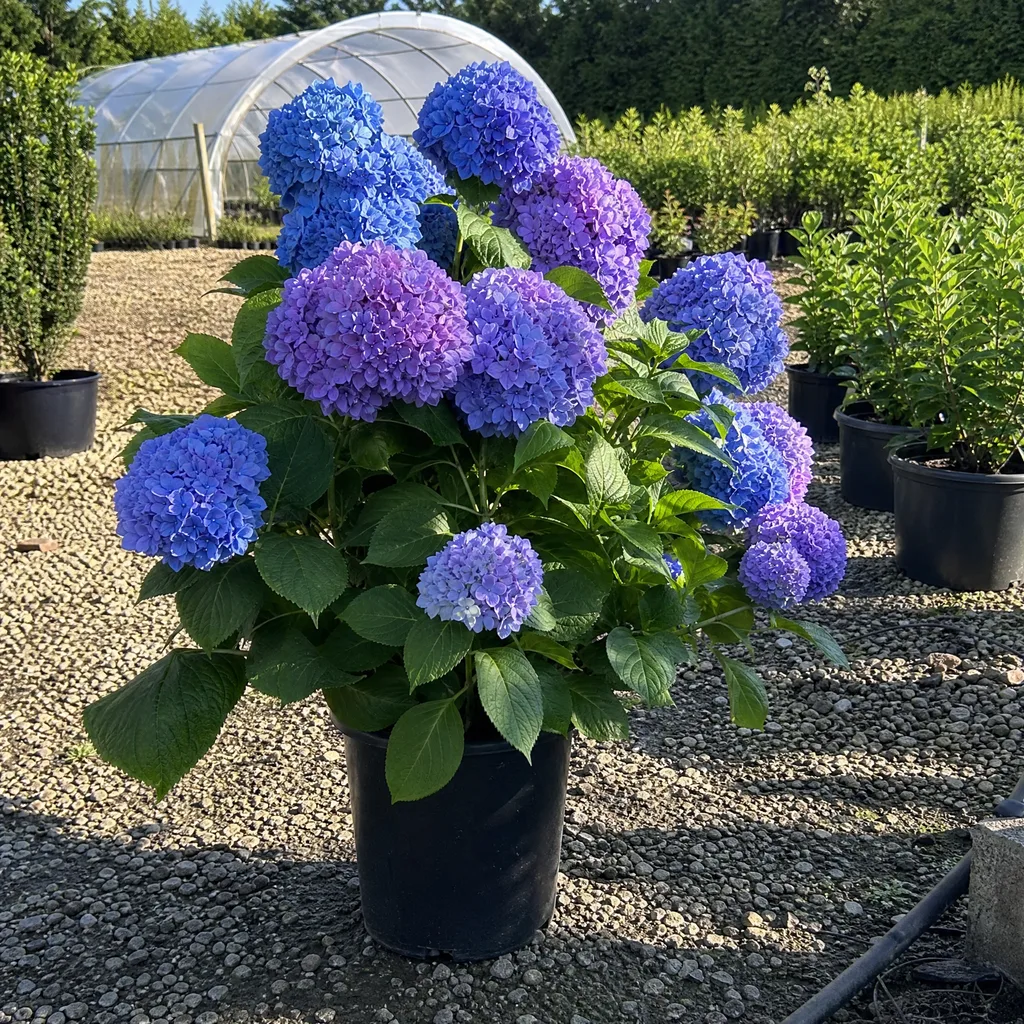
Done well, a potted Big Daddy puts heavy mophead blooms on your patio, porch step or deck rail for June and July, and you can wheel it into shade when the heat peaks. Done badly, the roots rot, freeze solid, or the plant never sets buds.
This guide covers everything you need to know about growing Big Daddy in a pot, from choosing the container and mixing the soil to watering, pruning and getting the roots through winter.
Is Big Daddy Hydrangea Right for Your Pot?
The short answer is yes, if you can give it a big container and a daily look at the soil. Here is who it suits and what to expect.
What we tell customers is to choose Big Daddy for a pot if you have a patio, deck or porch with morning sun and afternoon shade, and you can water every day in July. Skip it if your only spot bakes in afternoon sun, or if you are away most of the summer with nobody to water.
Expect blooms within 1 to 2 years of potting, mostly in June and July. The species grows 3 to 6 feet tall and wide at maturity, and Big Daddy sits at the upper end of that range in the ground. A pot usually holds it a little smaller, and it can take 3 to 5 years to fill out. A pot also lets you move it for shade in summer and shelter in winter.
Bloom size may vary year to year depending on winter severity, pruning timing, and whether flower buds were lost to late frost. Large specimens in favorable conditions produce the biggest, most impressive flower heads.
Choosing the Pot and Soil Mix for Big Daddy
Pot size and soil mix decide most of what follows, so settle both before you bring the plant home.
The Right Pot
The single biggest mistake we see with big daddy hydrangea in a pot is choosing a container that is too small. Big Daddy is a vigorous shrub that wants room to spread roots and store water between drinks.
For a mature plant, use a container at least 15 to 18 inches deep and 15 to 18 inches across. A 15-gallon pot (roughly 16 inches wide and 18 inches deep) is ideal for a plant at or near mature size. Nursery plants usually arrive in #1 or #3 containers. Start a young plant in a 10-gallon pot, then size up after a year if it becomes root-bound.
Material matters. Terracotta breathes well but dries out quickly and offers less winter insulation in cold climates (zone 6 areas face particular risk). Plastic pots retain moisture longer and warm soil faster in spring, which helps with this shrub's spring growth cycle.
Fabric grow bags are another option, combining decent drainage with good insulation. Avoid containers smaller than 10 gallons, as they will not hold enough moisture for consistent watering and may freeze solid in winter.
Ensure your pot has drainage holes. Hydrangeas will not tolerate sitting in water, and waterlogged soil in a container leads to root rot faster than it does in-ground.
The Right Mix
The key to successful growing hydrangea in containers is a soil mix that balances moisture retention and drainage. Big Daddy wants consistently moist, never soggy soil. A pot-specific mix achieves this better than garden soil.
Mix:
- 40% high-quality potting soil (peat moss or coconut coir based)
- 30% composted pine bark or orchid bark
- 20% perlite or coarse sand
- 10% well-aged compost
This blend drains faster than straight potting soil but retains more moisture than bark alone. It also allows for good aeration around roots, which helps prevent root rot and fungal diseases.
pH matters for bloom color. Acidic soil (pH 5.5 or lower) produces blue blooms, while alkaline soil (pH 6.5 or higher) produces pink.
If you are blending your own mix and want to influence bloom color, adjust pH before planting. To lower pH toward blue, add aluminum sulfate or sulfur to the mix according to package directions. To raise pH toward pink, add garden lime. Most potting soils start slightly acidic (pH 6.0 to 6.5), so you may already be in the neutral-to-pink range.
In soil around pH 5.0 to 5.5, flowers come out blue. Between pH 5.5 and 6.5 you will see purple or a blue and pink mix on the same plant. Our advice is to pick the color you want first and mix to match. For the full picture, see our bloom color guide.
Potting Up Big Daddy Hydrangea, Step by Step
The best time to pot up Big Daddy Hydrangea is spring or fall. Spring planting allows the plant a full growing season to establish roots before winter. Fall planting works if you can protect the pot from freezing solid.
Step 1: Fill the Pot Partially
Add 3 to 4 inches of your prepared soil mix to the bottom of the container. This base layer ensures roots do not sit directly against the drainage hole and gives you room to position the plant at the correct depth.
Step 2: Position the Plant
Remove Big Daddy from its nursery pot and gently loosen the root ball by hand or with a root rake. Set it into the container so the top of the root ball sits level with or slightly below the rim of the pot. The soil line on the stem should be at the same level as it was in the nursery pot. Do not bury it deeper.
Step 3: Backfill and Firm Gently
Fill around the root ball with your prepared mix. Firm it gently with your hands or a trowel, but do not pack it hard. The soil should be snug enough that the plant does not wobble, but loose enough that water percolates through.
Step 4: Water Thoroughly
Water the pot until water drains from the drainage holes. This settles the soil, eliminates air pockets, and helps roots make contact with the new mix. If the soil level drops noticeably, add a bit more mix to top it off.
One piece of common advice we don't follow is adding a layer of gravel or broken pot shards at the bottom "for drainage." It raises the soggy zone closer to the roots instead of helping water out. Rely on open drainage holes and a well-aerated mix.
Watering and Light for a Potted Big Daddy
Big daddy hydrangea container care hinges on watering. Potted plants dry out faster than in-ground plants because the root zone is smaller and exposed to air on all sides.
Check soil moisture daily during the growing season. Insert your finger 1 to 2 inches into the soil. If it feels dry at that depth, water. If it feels moist or wet, wait. Consistently moist is the target, not bone-dry and not waterlogged.
In summer, you may need to water every day, especially if your pot is in full sun or in a warm climate. In cooler weather or if the pot is in heavy shade, you might water only two or three times a week.
Use a soaker hose or water can with a fine rose to avoid splashing foliage, which can invite leaf spots such as Cercospora. Water at soil level, not overhead.
If wilting occurs on a hot afternoon even though soil is moist, this is temporary and usually recovers by evening. However, persistent wilting signals either ongoing underwatering or root rot from overwatering. Adjust frequency and check drainage holes for blockages.
One of the most common questions we get is whether to use a saucer. We skip saucers in summer, because water standing under the pot keeps the roots wet. For more on schedules, see our watering guide.
Light Needs for Container Plants
Light matters just as much in a pot, because the root ball heats up faster than ground soil.
Big Daddy thrives with morning sun and afternoon shade. Part shade is ideal, meaning 4 to 6 hours of direct sun per day. In zones 6 to 7, afternoon shade is essential to prevent wilting on hot days. In cooler coastal climates with consistent moisture, the plant tolerates more sun without stress.
In containers, you can move pots to follow the sun or to shift them to shadier spots during peak summer heat. This flexibility is one advantage of container growing.
Feeding, Pruning and Repotting
Three jobs keep a potted Big Daddy blooming year after year. Feed it lightly, prune it on time, and repot only when the roots demand it.
Container soil depletes nutrients faster than in-ground soil because water drains through it regularly, leaching nutrients away. Light feeding in early spring with a balanced fertilizer (10-10-10 or similar) or a hydrangea-specific fertilizer supports healthy leaf and bud development.
Apply fertilizer once in early spring as new growth emerges. Do not fertilize after mid-July, as late feeding can stimulate tender new growth that will not harden off before winter dormancy.
If you want to shift bloom color, aluminum sulfate encourages and maintains blue blooms in acidic soil. Apply according to label directions in spring. Lime encourages pink. These amendments are separate from routine fertilizing.
Pruning After Bloom
Big Daddy sets flower buds on stems that grew the previous year, so prune as soon as flowering is finished. For most of you that means July or early August. Remove dead or weak stems and any crossing branches. Plenty of advice says to cut hydrangeas back hard in late winter. We don't do that with Big Daddy, because you would cut off next year's flower buds.
In a container, the plant may grow taller and more upright than it does in-ground, especially if light is limited. Light pruning to maintain a compact shape is fine after bloom, but avoid cutting back more than one-third of the plant.
When and How to Repot
Young plants may need upsizing annually for the first 2 to 3 years. If your Big Daddy fills the pot with roots and soil dries out within a day of watering, it is time to repot into a slightly larger container (usually 2 to 3 gallons larger). Do this in spring before active growth, or in fall after bloom. We time a move to the garden the same way.
Once the plant reaches mature size in a 20-gallon or larger pot, repotting becomes unnecessary. Instead, top-dress the soil annually by gently removing 1 to 2 inches of the top layer and replacing it with fresh, nutrient-rich compost.
Winter Care for Potted Big Daddy
Winter protection is critical for container-grown Big Daddy. The plant is hardy in zones 6 to 9, but roots in a pot are exposed to colder temperatures than roots in the ground. In zone 6, roots in an unprotected pot may freeze solid and die, even if the stems survive.
In zones 6 to 7:
- Move the pot to a sheltered spot (against a south-facing wall, under an eave, or near the house foundation) in late fall.
- Wrap the pot in burlap or place it inside a larger box filled with straw or leaves for insulation.
- Reduce watering in winter, but do not let soil dry completely. The plant is dormant and uses little water, but the roots must not desiccate.
- Avoid exposing the pot to harsh winter winds.
In zones 8 to 9, winter protection is less critical, though moving the pot to a sheltered spot helps. Water sparingly but do not withhold entirely.
A heated garage or cool greenhouse is ideal if you have access, as it protects both soil and stems from freeze-thaw cycles. Unheated structures like sheds or lean-tos also help by buffering temperature swings.
Customers usually ask us whether the pot can simply stay outside. In zone 6 and colder, we say no unless it is wrapped and sheltered. For more, see our winter care guide.
Fixing Common Container Problems
Most trouble in a pot traces back to water, drainage or pruning time. Here are the signs we see most often and what to do about each.
Wilting despite moist soil: This often signals root rot from poor drainage or overwatering. Check for drainage holes, ensure your soil mix is not too heavy, and reduce watering frequency. Repot into fresh mix if the problem persists.
No blooms in the second season: Overwatering or pruning at the wrong time are the usual culprits. Make sure you prune only after flowering (not in fall or winter), and let the soil surface dry slightly between waterings to encourage flower bud set.
Pale or yellowing leaves (chlorosis): This indicates either pH is too high (blocking aluminum and iron uptake) or soil is waterlogged. If pH is the issue, add sulfur or acidify the soil mix. If soil is soggy, improve drainage and reduce watering.
Powdery white coating on leaves: Powdery mildew thrives in humid, poorly ventilated conditions. Improve air circulation by spacing pots apart and avoid overhead watering. Remove affected leaves and consider a sulfur-based fungicide if the problem is severe.
Speckled or stippled leaves: Spider mites or aphids can affect container plants, especially indoors. Spray foliage with water to dislodge mites or use a horticultural oil spray. Isolate the pot from other plants if pests are present.
For more comprehensive care information, see our complete growing guide for Big Daddy Hydrangea.
Quick Reference: Container Care Checklist
Use this table as a season-long checklist for your potted Big Daddy.
| Task | Timing | Notes |
|---|---|---|
| Choose pot size | Before planting | 10 gallons for young plants, minimum 15–18 inches diameter and depth, 20-gallon ideal for mature plants |
| Prepare soil mix | Before planting | 40% potting soil, 30% bark, 20% perlite, 10% compost |
| Plant or pot up | Spring or fall | Keep soil line level with original nursery pot |
| Water | Daily in summer, 2–3x weekly in cool weather | Keep soil consistently moist, never soggy or bone-dry |
| Fertilize | Early spring | Light feeding with balanced or hydrangea-specific fertilizer |
| Position | Year-round | Morning sun, afternoon shade (part shade ideal) |
| Prune | Right after bloom (July or early August) | Remove dead or weak stems and skip heavy pruning in fall or winter |
| Protect from winter | Late fall (zones 6–7) | Insulate pot, shelter from wind, reduce watering |
| Repot | Every 1–2 years if young, mature plants stay put | Upsize 2–3 gallons when roots fill the pot |
| Check for pests/disease | Weekly during growing season | Watch for powdery mildew, spider mites, aphids |
Big Daddy in a Pot: What to Remember
Give Big Daddy a roomy pot, a mix that drains but holds moisture, and afternoon shade. Check the soil every day in summer, prune right after the blooms fade, and wrap the pot before the first hard freeze. Those habits do most of the work.
Big Daddy Hydrangea
Nursery-grown Big Daddy Hydrangea in sizes from 3 Gallon, shipped to your door.
From $65.85
Shop Now →Every Big Daddy we ship comes from our own farms, where we grow top-quality shrubs. We pot each one in a fresh mix and pack it to protect its stems and root ball, so it arrives ready to plant in your container.