Winter Care for Big Daddy Hydrangea in Cold Climates
Big Daddy Hydrangea can handle a cold-climate winter, but only if you do a few jobs this month and next. Stop feeding, water deeply, mulch the roots, hold back the pruning shears, and wrap young plants if you garden in zone 6. This shrub is rated for zones 6 through 9, so the northern edge of that range is where it needs your help.
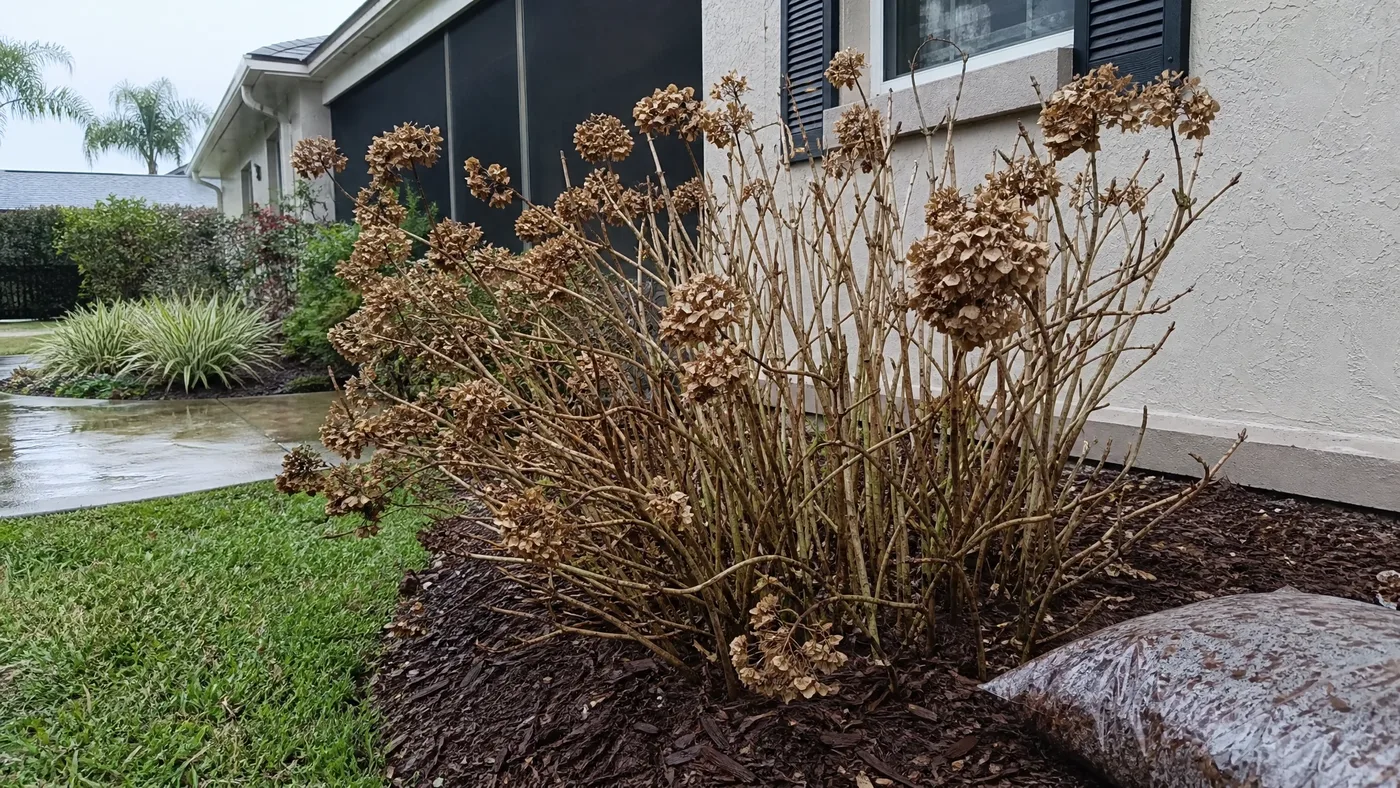
It's October as we write this. The leaves are yellowing and the faded flower heads rustle on the stems. Those stems carry next summer's buds, and one hard freeze or one careless fall pruning can take them. Get the winter work right and the plant rewards you with big blooms in early summer.
In this article, we'll go through the materials you need, the six fall steps from the last feeding to mulch, burlap and pots, and what to do when spring finally wakes the plant.
Why Big Daddy Hydrangea Needs Winter Protection
Winter hits Big Daddy in two places: the buds on its stems and the roots in the soil. Here is what each one faces.
Big Daddy Hydrangea sets its summer flower buds on the previous year's growth. That means the flower buds for next summer are already formed on this year's stems by mid-to-late summer. A hard freeze or late spring frost can damage those buds, resulting in fewer or no blooms. Winter also tests the root system: while the plant is deciduous and goes dormant, soil that stays waterlogged or freezes and thaws repeatedly can stress the roots.
Zone 6 temperatures routinely drop to minus 10 degrees Fahrenheit. Even in zones 7 and 8, unpredictable springs bring 20 to 30 degree swings that can harm emerging buds. Mulch insulates the root zone, and strategic wrapping protects the canes (stems) from the worst of the weather.
In our rows, the plants that lose buds are nearly always the ones that were pruned or fed late, not the ones that simply saw cold. One of the most common questions we get each fall is whether a bare, brown Big Daddy has died. Almost never. It's asleep.
Materials You'll Need
Gather everything before the first hard frost so you aren't hunting for twine in the dark. This is the full list for in-ground plants and pots.
- Mulch: pine straw, shredded hardwood bark, or compost (3 to 4 inches deep)
- Landscape fabric or burlap (4 to 6 feet wide, for wrapping if needed)
- Soft twine or nursery tape
- Pruning shears (for removing dead wood only)
- Work gloves
- Rake or garden fork
- For containers: burlap, straw or frost cloth, plus stakes to secure wrapping
In zone 6, a burlap wrap is optional but worthwhile on young or newly planted Big Daddy Hydrangea. In zones 7 to 9, mulch alone is usually sufficient unless your site sits in a frost pocket or experiences unusually hard winters.
Step-by-Step Winter Protection
Work through these six steps in order, starting in late summer and finishing once the ground freezes. The first three are the same in every zone.
Step 1: Stop Fertilizing by Late Summer
Cease all feeding by late August. Fertilizer encourages soft, tender new growth that cold will damage. The plant needs to harden off naturally before frost arrives. If you applied a spring fertilizer, that one feeding is enough for the year.
Our fertilizing guide covers the feeding schedule for the rest of the year.
Step 2: Water Thoroughly Before Ground Freeze
Three to four weeks before the first hard frost in your area, give the plant a deep watering. Moist soil holds more heat than dry soil and protects roots better through the winter. Don't create soggy conditions, but ensure the root zone is adequately hydrated. For in-ground plants, water 12 inches out from the base.
Step 3: Prune Only Dead or Diseased Wood
Do not prune Big Daddy Hydrangea in fall or winter. Pruning now removes the flower buds for next summer. If you see a dead or damaged cane, remove it cleanly at the base. Otherwise, leave the plant as is. The best pruning time is immediately after flowering, once blooms fade in late summer.
Leave the faded flower heads on the stems through winter, too. They turn the color of old parchment, and they shelter the buds just below them. We don't cut them off until spring.
Step 4: Apply Mulch in Late Fall
Once the ground freezes or temperatures consistently stay below 40 degrees Fahrenheit (usually early November in zone 6), apply 3 to 4 inches of mulch around the base. Keep it 2 to 3 inches away from the stems to avoid rot.
Good mulch choices include:
- Pine straw (loose, drains well)
- Shredded hardwood bark (slower to decompose)
- Compost or aged bark (adds organic matter as it breaks down)
Avoid piling mulch against the canes. The mulch's job is to insulate the soil and roots, not blanket the entire shrub.
Pine straw has a sharp, resinous smell as you spread it, and it's the mulch we reach for first because it stays loose and lets water through.
Step 5: Wrap Young or Exposed Plants (Zone 6 Only)
If your Big Daddy Hydrangea is younger than three years old, newly planted, or sits in a windswept location in zone 6, consider wrapping the canes with burlap. Here's how:
- Drive a stake into the ground next to the plant, taller than the shrub's height.
- Loosely wrap burlap around the canes, spiraling from the base upward.
- Secure it with soft twine or nursery tape at 12 to 18 inch intervals.
- Leave the top open so the plant can breathe. You're aiming to break the wind and reduce sun exposure, not create a sealed bag.
Step 6: Winter Water Management for Containers
Container-grown Big Daddy Hydrangea is less winter-hardy than in-ground plants. In zone 6, consider moving pots to an unheated garage, shed, or cold frame. The plant will still go dormant, but roots are better protected from repeated freeze-thaw cycles. Water sparingly during winter (the plant barely uses water while dormant), but don't let the soil dry out completely. Check soil moisture every 3 to 4 weeks.
If you must leave a container outside in zone 6:
- Wrap the pot (not the plant) in burlap or frost cloth to insulate the root ball.
- Move the pot to the north side of a building to minimize freeze-thaw fluctuation from winter sun.
- Water only if the top inch of soil is bone-dry.
For zones 7 to 9, outdoor containers are generally safe with basic mulching.
Pots have their own rules all year, which we cover in our guide to growing Big Daddy in containers.
Tips and Common Mistakes
These are the slips we hear about most when customers call us in spring. Each one is easy to avoid.
Do Not Prune Back the Entire Plant
A common mistake is cutting Big Daddy Hydrangea back to 12 inches or bare stubs in fall. This removes the flower buds and guarantees sparse blooms or no blooms next year. Pruning back is only appropriate right after flowering ends. In winter, leave the plant alone. We don't follow the old habit of cutting hydrangeas down to tidy the bed before winter, because with Big Daddy the tidy-up costs you the blooms.
Avoid Overmulching
Piling mulch against the stems creates a perfect pocket for rot and rodent damage. A 3 to 4 inch mulch layer around the base is adequate. Taper it away from the canes by 2 to 3 inches.
Watch for Damage from Deer and Rabbits
Big Daddy Hydrangea is frequently browsed by deer, and rabbits may chew canes in winter when other food is scarce. If deer or rabbit damage is a known issue in your area, consider wrapping the lower canes with hardware cloth or tree guards.
Our notes on deer and rabbit resistance go further if browsing is a problem where you live.
Be Patient with Spring Growth
After a harsh winter, the plant may be slow to break dormancy. Leaves may not appear until late May. Do not assume the plant is dead. Wait until early June, then gently scratch a cane with your thumbnail. If you see green tissue beneath the bark, the plant is still alive. If the entire cane is brown through, that branch died and can be pruned out once new growth appears elsewhere on the plant.
Don't Unwrap Too Early
Removing burlap or frost cloth too soon exposes new growth to a late frost. Keep protection in place until nighttime temperatures reliably stay above 45 degrees Fahrenheit. This varies by zone: usually late April in zone 6, mid-April in zone 7, and early April in zone 8.
Spring Cleanup and Expected Results
Once frost danger has passed and burlap is off, remove the winter mulch from around the canes. Leaving it in place through late spring keeps the plant too cool and can delay growth. You can leave a 1 to 2 inch layer of mulch after cleanup for ongoing moisture retention and soil health.
Well-cared-for Big Daddy Hydrangea should bounce back quickly in spring. The species reaches 3 to 6 feet tall and wide, and it grows fast once it's established, so a protected plant can put on real size in a single season. After a protective winter, you can expect the same vigor the following growing season and a normal flush of blooms, mostly in June and July, depending on your region.
If you see frost damage on emerging buds or tips (blackened foliage), do not panic. Pinch off the damaged portion and allow the plant to push new growth. The overall bloom set for the season may be lighter, but the plant will recover by the following year if winter care and pruning practices are sound.
For more detailed guidance on year-round care, read our complete growing guide for Big Daddy Hydrangea.
Winter Care Quick Reference
This table pulls the tasks above into one place, with timing for zone 6 set against zones 7 to 9.
| Task | Timing | Zone 6 | Zones 7-9 |
|---|---|---|---|
| Stop fertilizing | Late August | Yes | Yes |
| Deep water before freeze | 3-4 weeks before first frost | Yes | Yes |
| Prune dead wood only | Fall/winter | Yes | Yes |
| Apply mulch (3-4 inches) | After ground freezes | Yes | Yes |
| Wrap canes with burlap | Early winter | Recommended for young/exposed plants | Optional |
| Move containers to shelter | Early winter | Recommended | Optional |
| Remove burlap/frost cloth | Late April (Z6), mid-April (Z7), early April (Z8) | Late April | Varies by zone |
| Remove winter mulch from canes | After frost danger passes | Yes | Yes |
Carrying Big Daddy Hydrangea Through to June
The winter plan for Big Daddy comes down to a few habits. Stop feeding in late August, water deeply before the freeze, mulch the roots but keep it off the stems, and leave the pruning shears in the shed. Wrap young or exposed plants in zone 6, shelter your pots, and give the plant until early June before you decide it hasn't made it.
Big Daddy Hydrangea
Nursery-grown Big Daddy Hydrangea in sizes from 3 Gallon, shipped to your door.
From $65.85
Shop Now →Before a plant leaves us, we check that the stems are firm and fully ripened and that the roots fill the pot, because that is the shrub that sails through its first cold winter. We're a small business with our own farms, and we grow and sell top-quality shrubs, Big Daddy among them.