Big Daddy Hydrangea Through the Year: Dormancy and Leaf Drop
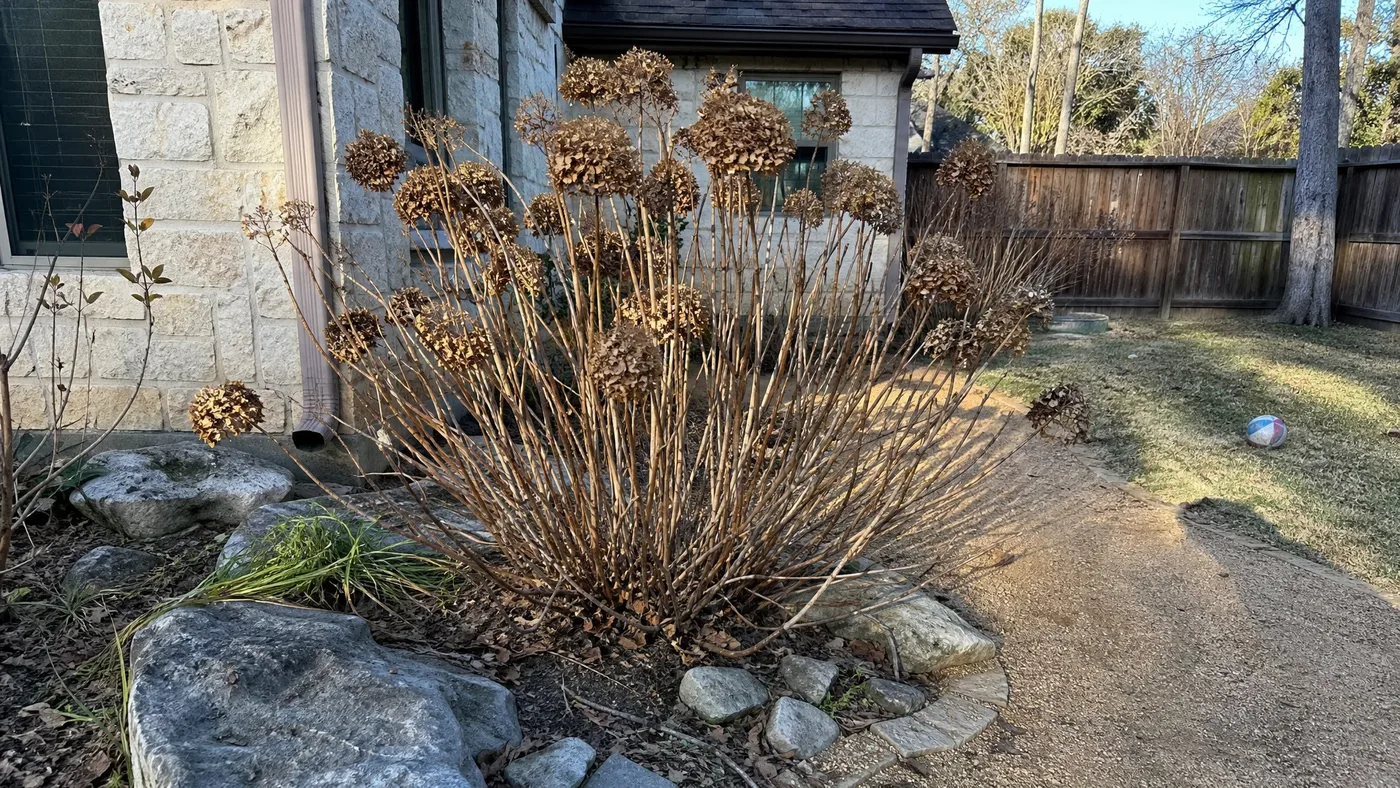
Nursery tags like to picture a healthy shrub in full leaf. That picture fails Big Daddy Hydrangea for about half the year. In March, a sound plant is a clump of bare tan sticks that looks exactly like one the winter killed. So what does the evidence say about whether that stick is dead?
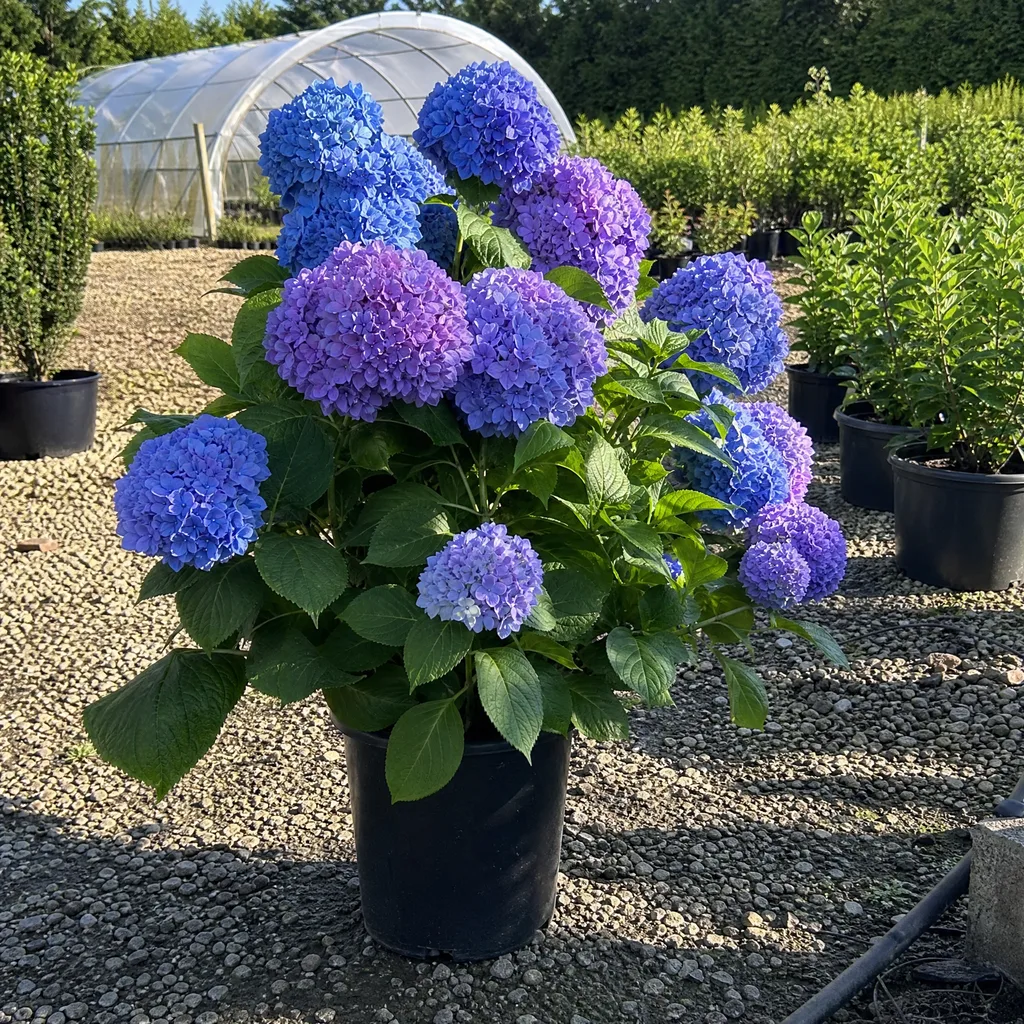
NC State describes bigleaf hydrangea as a woody, deciduous, perennial shrub. It drops its leaves, rests, and returns from the same stems and roots. What surprises people is how late it wakes up, and how much damage a shrub can take for looking dead when it is only asleep.
Below, you'll find out all about how Big Daddy Hydrangea moves through the year, including what healthy bare wood looks like, how long to wait in spring, when flower buds form, what summer heat does to the blooms, and why we let the leaves fall where they fall.
Big Daddy Hydrangea in Late Winter Bareness
The tag idea is that green means alive and bare means dead. We think that test is wrong for any deciduous plant. For this one, bare stems in late winter are the normal condition.
Evergreen? No, and That Is Fine
People search whether big leaf hydrangeas are evergreen, so here is the plain answer.
They are not. Every leaf drops in fall. The shrub is also a perennial, not an annual, so you plant it once and it comes back each year from the same woody framework. The species reaches 3 to 6 feet tall and wide at maturity, and that framework of stems is what you are looking at in winter.
What Healthy Dormant Wood Looks Like
Live dormant wood has a few clear signs, and they are easy to learn.
The stems are firm and tan to gray-brown. Buds sit in pairs along the stems and at the tips, tight and plump. Last summer's dried flower heads may still cling to the ends, papery and pale. A dead shrub has none of that. Its buds are shriveled and dark, and its stems feel hollow and dry.
A Quick Check Before You Give Up
Use these four checks on any stem you doubt, one stem at a time.
- Bend a thin stem. Live wood flexes. Dead wood snaps with a dry crack.
- Scratch a small patch of bark with a thumbnail. Green or pale, moist tissue underneath means the stem is alive.
- Look at the buds. Firm and plump is good. Shriveled and blackened is not.
- Check the base. Stems can die back while buds near the ground stay alive and push new shoots.
We often see customers pull out a healthy shrub in March because it looked like a bundle of kindling. The verdict from the evidence is simple: bare is not dead. Give it the bend test first, and wait on any shovel work.
Early Spring Leaf-Out Arrives Later Than Expected
Every shrub around it greens up and yours stays bare. That is the point where most people panic, and most of the time they should not.
A Late Starter by Nature
This is a trait of bigleaf hydrangea, not a sign that something is wrong with your plant.
UMass Extension says it is late to leaf out in spring and, during cold winters, may die back to the ground. The buds swell first, then small leaves unfold from the nodes. The shrub trails its neighbors by weeks, and that gap is normal.
How Long to Wait Before Judging Damage
Our rule is to judge by the calendar of your own garden, not by a date on a tag.
What we tell customers is to hold the pruners until the shrubs around it are in full leaf and nights have turned reliably mild. Your last frost date varies by climate, so check with your local extension service for it. Then cut back only the stems that stay bare once new growth is well underway, down to the first live pair of buds.
When a Warm Spell Backfires
Early warmth is the real hazard here, and it does more harm than a steady cold winter.
Alabama Extension notes that the plant suffers with early or late freezes because the flower buds have a weak dormancy. A warm week in late winter wakes the buds, and the next hard freeze kills them. The shrub still leafs out, so it looks fine, but the flowers are gone.
This is the usual reason a green, healthy plant has no blooms, and our guide on why Big Daddy may not bloom covers the other causes. The species is rated for zones 6 to 9, and the colder your zone, the more often you will see dieback. Our winter care guide covers the protection steps.
Big Daddy Hydrangea Builds Its Buds During Summer Growth
Most people expect flower buds to appear in spring, just before bloom. The plant works a full season ahead of that.
Buds Ride on Last Season's Stems
The key fact is the age of the wood that carries the flowers.
The species blooms during the late spring and summer on the previous year's growth. The stems that grow this spring and summer are building the buds for next year's show. The sources do not give a firm date for bud set, so we will not invent one. Your local extension service can tell you how it runs in your region.
Why Pruning Time Matters
Because the buds sit on stems the plant already made, a cut at the wrong time removes the flowers.
Virginia Tech advises that, since the species flowers on old wood, pruning should be finished as soon as flowering is. The common advice to cut every hydrangea back in late winter to keep it tidy does not hold for a bigleaf. It trims off the buds. Our guide to pruning Big Daddy walks through the cuts, and our piece on old wood versus new wood covers how this cultivar fits the species rule.
Keep the Leaves Working
The leaves are the factory for those buds, so protect them through the growing season.
A shrub that scorches or wilts through a dry summer builds fewer and weaker buds. Steady moisture, a mulch layer and shade from afternoon sun all help. Heavy feeding late in the season is a poor trade, since it pushes soft new growth that winter handles badly. Verdict: the care you give in July pays out in next June.
Midsummer Bloom and What the Heat Does
Bloom is the reward for a year of waiting, and heat decides how long the heads stay at their best.
When the Heads Open
The sources agree on the broad window for the species, so we follow it.
Virginia Tech says flowers are mostly produced in June and July. The big rounded heads build in color over a couple of weeks. Soil chemistry sets the shade. Acid soil at about pH 5.0 to 5.5 gives blue, between 5.5 and 6.5 gives purple or a blend, and above about 6.0 to 6.5 gives pink. Our bloom color guide shows how to steer it.
Afternoon Sun Changes the Flowers
Sun is the other variable, and the sources point the same way.
The species does best in part shade, and NC State says to protect it from afternoon sun. Hot sun fades the color faster and crisps the edges of the petals. Heads in morning sun and afternoon shade hold their color longer and look fresh into the later weeks of the season.
Reading Midday Wilt
Big leaves lose water quickly, so a drooping shrub is not always a thirsty one.
In our rows, the leaves flop at two in the afternoon on hot days and stand up again by evening. That is the plant managing heat. Look at it at dusk or early morning. If it is still limp then, it needs water. If it has recovered, leave it alone.
As the Heads Age
Past peak, the heads shift toward muted, papery tones. They dry on the stem and rustle in a breeze, and many people like them that way. When you are ready to tidy, cut right after flowering, as above, since the buds for next year are already forming below the old heads.
Fall Color and the Case for Letting Leaves Drop
Fall is when the usual advice gets loud: strip the leaves, rake the bed, cut it back. We weigh each claim.
What Fall Looks Like
Do not expect the fireworks of a maple. The leaves dull and lose their gloss, then drop over a few weeks. The show here is the flower heads, which fade to parchment and antique tones and hold their shape on the stem into winter.
Three Cleanup Claims, Weighed
Each of these claims is common, and each is wrong or only half right for this shrub.
Strip the leaves early. No. The leaves are still sending energy into the stems and buds until they drop on their own.
Rake every leaf away. Mostly no. Fallen leaves are a free mulch around the roots. The exception is a year with heavy leaf spot, when raking out the spotted leaves makes sense.
Cut the stems back for winter. No. The stems carry next summer's buds, and UMass Extension warns that early fall and late spring freezes, along with winter temperatures below 10°F, may kill flower buds even without help from pruners.
The Right Time to Move a Shrub
Leaf drop also tells you when the shrub can be moved.
UConn Extension says the best time to transplant hydrangea is when it is dormant, after all leaves have been shed. Wait for the last leaf to fall. Our planting guide covers the hole and the aftercare.
Dormancy Is Not Death for Big Daddy Hydrangea
Dormancy is a needed rest. It is the stage that links a finished summer to the next one.
What the Plant Is Doing Inside
The shrub stops growing above ground and holds its buds closed. With the leaves gone, there is nothing to feed or water in the canopy. The stems and roots carry the plant through, and the buds wait for the signal that spring has come. The stillness you see is a plan, not a failure.
A Light Sleeper
This is the weak spot in an otherwise tough plant.
UConn Extension notes that flower buds may begin to break dormancy during a late winter or early spring warm period and that freezing temperatures afterward can kill them. Bigleaf buds sleep lightly. So the goal in winter is steadiness, not warmth. Mulch the roots, keep stems standing, and avoid anything that tempts the plant to wake early.
Rest Is Part of the Bloom Cycle
Skipping the rest would not give you more of the plant. It would give you less. The cycle runs from leaf, to bud, to bloom, to leaf drop, and the dormant months are the stretch that the buds need to get through intact. A shrub that sits bare for months is doing what it should.
What a Full Year Tells You About Big Daddy Hydrangea
A normal year for this shrub looks odd at first. Bare stems through winter, a late and slow leaf-out, buds building quietly through summer, big heads in the main flowering window, then a modest leaf drop. Every one of those stages is on schedule. The only true warnings are stems that snap dry and buds that shrivel.
Big Daddy Hydrangea
Nursery-grown Big Daddy Hydrangea in sizes from 3 Gallon, shipped to your door.
From $65.85
Shop Now →So here is the test to apply each month. If the buds are plump and the stems bend rather than snap, the plant is on schedule. On our farms, we grow Big Daddy in morning sun with shade through the hot afternoon, in acid soil, and we let it drop its leaves and rest on its own time.