Does Big Daddy Hydrangea Bloom on Old Wood or New Wood?
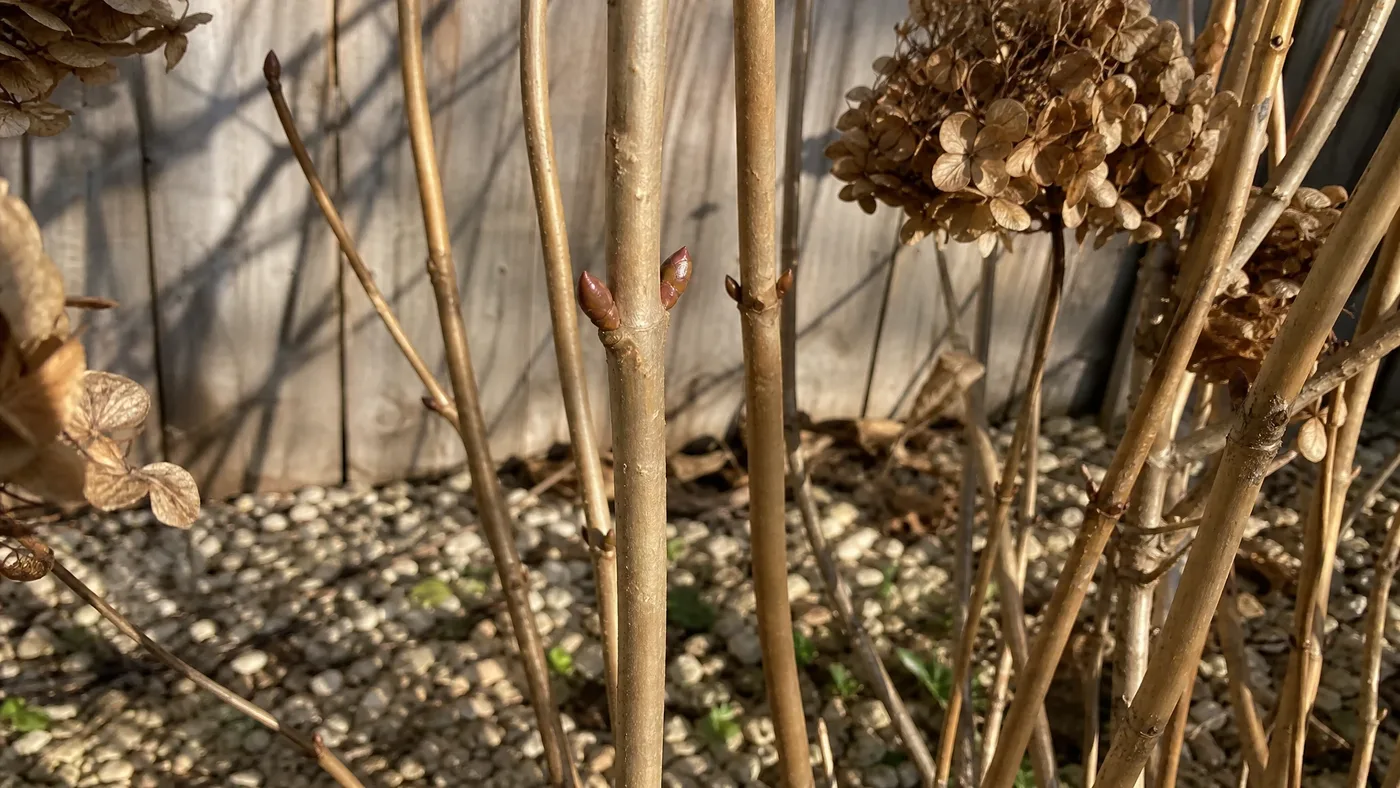
In January, when the sun drops low and the border turns amber, a Big Daddy Hydrangea looks like a bundle of tan sticks. Move in close and you can see that each stem tip carries a pair of plump buds, already holding next summer's flower heads and waiting out the cold.
Those buds were made last year, on last year's stems. That one fact explains most of the questions we hear about this plant, from empty summers after a hard winter to the shrub that came back green and never flowered.
This guide covers everything you need to know about when Big Daddy sets its flowers, from the way buds form in late summer to the scratch test you can run on a spring stem, including what a cutback costs you and whether a second bloom is worth waiting for.
How Big Daddy Hydrangea Builds Next Year's Buds
To understand when this shrub flowers, start with when it plans to flower. The work happens a full year ahead of the show.
Growth in Spring and Summer
The season's stems come first, and they come fast.
Bigleaf hydrangeas, the group Big Daddy belongs to, bloom in late spring and summer on the previous year's growth. The species is a rapidly growing, multi-stemmed shrub with a rounded habit. That is how Big Daddy fills a border: a rising mound of broad, coarse leaves built from stems that did not exist in April. Through the summer those stems have one job, which is to get tall and leafy enough to carry what comes next.
The Late-Summer Switch
Then the plant changes what those stems are for.
As summer wanes and the days shorten, the tips of the mature stems stop stretching and form flower buds. They are small, tight and scaled, and by fall they are set. From then on they sit at the very ends of the stems, which is the most exposed place on the shrub. Because bigleaf hydrangeas set buds on the previous year's growth, those buds are more susceptible to freeze damage.
It also means that anything you cut after midsummer is cutting next year's flowers. We come back to that in the pruning sections below.
Old Wood, New Wood, and Why It Matters
Gardeners use two terms for the same calendar, and Big Daddy sits firmly on one side of it.
Old wood is any stem that grew in a previous season. New wood is the growth that emerges this spring. Virginia Tech's extension team puts the consequence plainly: since plants flower on old wood, pruning belongs right after flowering. The species and older cultivars bloom only on old wood. We treat Big Daddy the same way and plan every year around the stems it already has.
Some newer bigleaf cultivars bloom on old and new wood, so a freeze that kills their old stems does not erase the season. The table shows how the two habits play out.
| Situation | Big Daddy (old wood) | Old and new wood types |
|---|---|---|
| Where the main flowers form | On last year's stems | On last year's stems and on new growth |
| Winter kills stems to the ground | Usually no flowers that year | New growth can still bloom |
| Hard spring cutback | Removes the buds | Plant can still bloom on new wood |
| Second flush | Not dependable | Possible, but often inconsistent |
That last row deserves a caution. Endless Summer is an inconsistent bloomer even though it flowers on both kinds of wood, so the second habit is a safety net and not a guarantee.
Reading the Stems After a Hard Winter
By late winter you can usually tell what kind of season is coming, if you know what to look for on the stems.
What Live Stems Look Like
Healthy stems have a clear, quiet look.
They bend a little before they snap, the bark has some sheen, and the tips carry fat, firm buds. Small leaf buds ride along the sides of the stem. In low evening light, live stems often show a warm brown or reddish tone, while dead ones turn a dull gray.
What Winter Damage Looks Like
Damage shows up in a few recognizable ways.
Dead stems feel dry and brittle, snap cleanly, and have shriveled or blackened tips. In a hard winter the whole shrub can die back toward the base. Severe winters kill the flower buds while the leaf buds survive. That is the trap: a Big Daddy can leaf out handsomely in May and still carry no flowers, because the leaf buds lower on the stem survived and the flower buds at the tips did not.
If you grow it where winters are harsh, our guide to winter care for Big Daddy Hydrangea in cold climates covers the protection that keeps those tips alive.
What a Cutback Does to Big Daddy Hydrangea
Freeze and loppers have the same effect on this plant. Either one removes the old wood, and the old wood is where the flowers are.
When Winter Does the Cutting
Cold-season dieback is the more common route to a flowerless year.
Where a bigleaf hydrangea dies to the ground in winter, there is no old wood, and therefore no flowers. The roots usually send up new stems, and the shrub grows rapidly, so you get a full green plant by summer. What you do not get is bloom. That season's stems are the ones that will flower next year, if they survive the winter.
When You Do the Cutting
A spring cutback made on purpose has exactly the same result.
Some advice tells you to cut every hydrangea to the ground in late winter to tidy it. For Big Daddy, that advice costs you the summer. One of the most common questions we get is whether a hard spring pruning will make it bloom on fresh growth, and the answer is no. Early in the year, remove only what is clearly dead. Save shaping for right after flowering, as laid out in our guide to when and how to prune Big Daddy Hydrangea.
Can Big Daddy Hydrangea Rebloom at All?
Here we have to be candid, because some listings describe this plant more generously than we would.
Some bigleaf cultivars rebloom, flowering again later in summer on new growth. Big Daddy is not one we would call dependable at it. Virginia Tech's extension team describes the species as mostly blooming in June and July, with remontant cultivars carrying flowers into August. We plan for Big Daddy to deliver one flush, and we treat anything after it as a gift.
If a Second Flush Does Appear
A later flower, when it happens, comes from new growth rather than the old wood.
Expect it to be smaller and thinner than the main show, and to arrive well after the first heads have faded. Do not cut the shrub back hard hoping to coax it. A deep cut after bloom removes the stems that are already forming next year's buds, so you would trade a modest bonus for next year's main event.
Why Reblooming Types Are Not an Easy Fix
Planting a rebloomer in place of Big Daddy only helps if the rebloomer is more reliable in your garden.
As noted above, the best-known one is still inconsistent. If your problem is a flowerless year, work out whether winter or pruning caused it first. Our guide on why a Big Daddy Hydrangea isn't blooming this year walks through that diagnosis.
Checking Big Daddy Hydrangea Stems in Spring
The most useful hour you can spend on this shrub comes in early spring, and it takes a thumbnail and some patience.
Hydrangeas wake late, and stems that look finished in March often show green buds a few weeks on. Wait until the buds begin to swell and the first leaves open, so you can tell live wood from dead. Early spring is the time to prune out the dead stems, which makes it the right moment for this check.
The Scratch Test
Scratching is faster and more reliable than guessing from the color of the bark.
Use a thumbnail or a clean knife tip to scrape a sliver of bark near the base, the middle and the tip of a stem. Green and moist underneath means the stem is alive. Tan or dry and brown means it is not. A stem can be alive at the base and dead at the tip, so test all three spots before you cut.
Spring Stem Checklist
Run through these points on each stem, working from the outside of the clump inward.
- Scratch at three heights and mark any stem that is green only at the base, because its tip buds are probably lost.
- Cut dead stems back to a live bud pair or to the ground if the whole stem is dead.
- Leave every living stem alone, even if it looks ragged, because it may still carry flower buds.
- Look for plump buds at the stem tips and note how many stems have them, since that count predicts the bloom.
If you are planting a new Big Daddy from us, we pack each one so the stem tips, where the buds sit, arrive unbroken.
Living With Big Daddy Hydrangea's Once-a-Year Show
A single flush can be a limitation or a design strength, and the difference is mostly how you plan around it.
Designing Around One Season
Think of Big Daddy as a performance with a defined run.
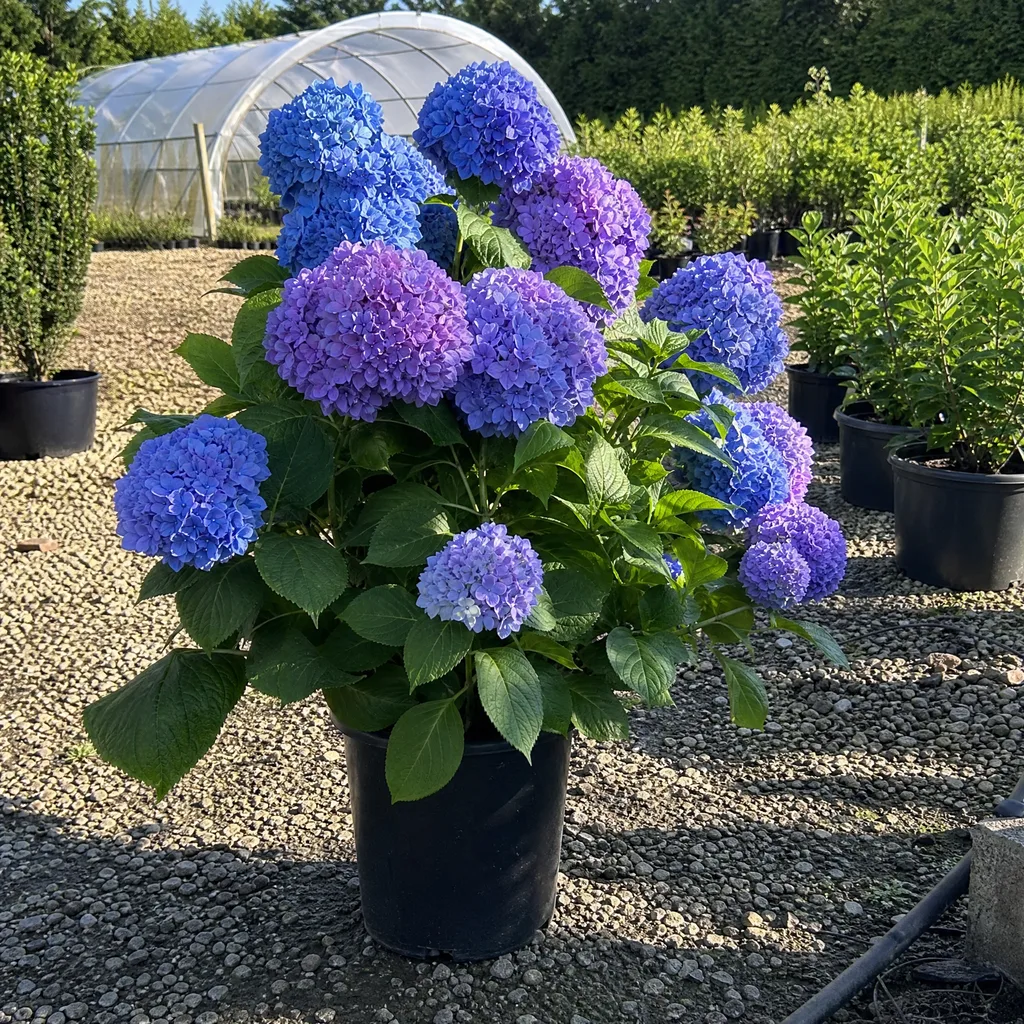
The weeks of flowers are the peak of the border, and the rest of the year the shrub supplies structure: large leaves, a rounded mass, and in fall the faded heads. Color follows your soil, with blue flowers in acidic soil and pink in alkaline soil. Pair it with plants that carry the months on either side, such as fine-textured grasses and late perennials. Our landscape design ideas for Big Daddy Hydrangea give plenty of combinations.
Choosing Between Old Wood and New Wood Types
This is where we say who should grow what.
If you garden in the cooler end of the species range of zones 6 to 9, check your Big Daddy Hydrangea hardiness zone first. In a sheltered spot where stems usually survive, we would choose Big Daddy for the sheer scale of its heads. In an exposed spot, or in zone 5, where bigleaf hydrangeas often die to the ground, we would choose a type that blooms on old and new wood. The heads may be less dramatic, but a flowerless year is a bigger loss.
Planning Around Last Year's Stems
Big Daddy flowers on stems it grew the year before, and nearly every decision follows from that. Protect the stems through winter, prune right after bloom, remove only what is dead in spring, and expect one great flush with perhaps a modest echo. If winter takes the old wood, plan for a green year and let the new stems build toward the next one.
Big Daddy Hydrangea
Nursery-grown Big Daddy Hydrangea in sizes from 3 Gallon, shipped to your door.
From $65.85
Shop Now →Picture the border in midsummer with every stem you saved now carrying a heavy head at full strength, bright against the broad leaves and humming with that single flush. Every Big Daddy we ship is potted, packed and shipped by growers who raise it ourselves, so it arrives ready to plant and ready to start building those stems.