12 Landscape Design Ideas for Big Daddy Hydrangea
A common mistake people make with Big Daddy is planting it where it will bake. Afternoon sun wilts those big leaves by lunchtime, and a shrub that looks tired in July rarely gives you the mopheads you bought it for.
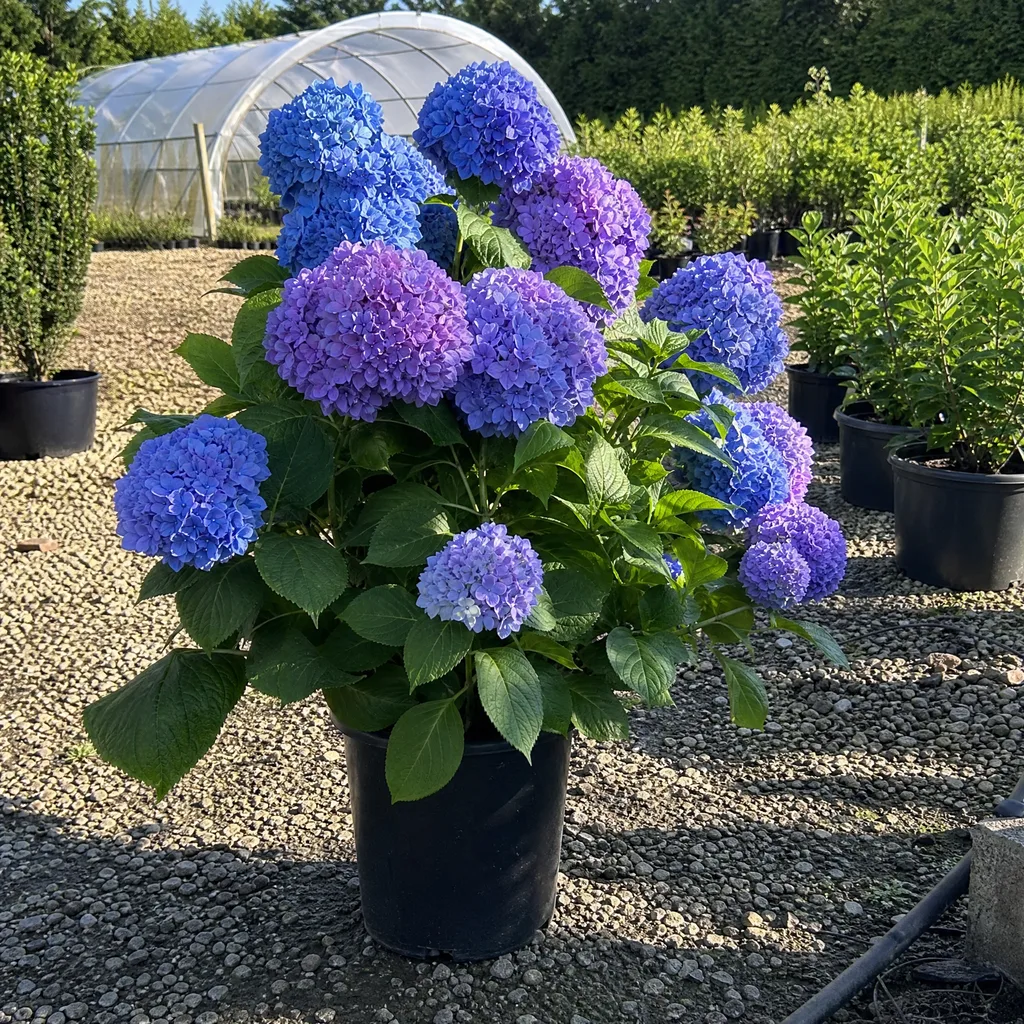
Placement matters more with this plant than almost anything else you will do. Big Daddy grows quickly into a rounded shrub about 5 to 6 feet tall and wide, and it is hardy in zones 6 to 9.
Put it in the right spot and you get glossy leaves from spring, then big blue, pink or purple blooms from June. Read on for how we place it through its first years: the foundation planting, the border around it, shade gardens, a screen that fills in, and finally pots, cut flowers and color.
Plant Big Daddy Where It Can Anchor the House
The first decision is where the shrub goes, and the foundation is where most of our customers start. These steps cover spacing, exposure and what to plant in front.
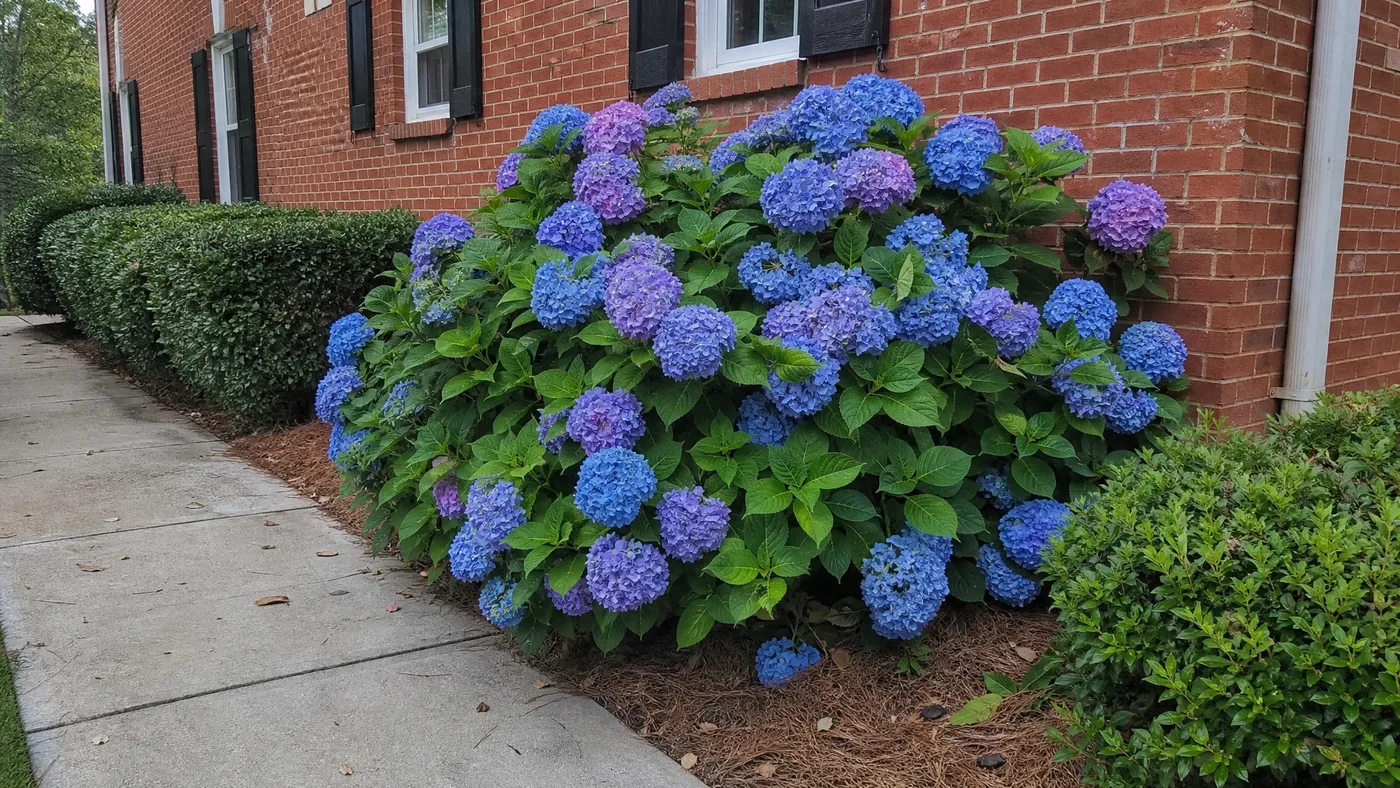
Big Daddy Hydrangea is one of the most reliable choices for anchoring a house foundation. It grows rapidly into a rounded, multi-stemmed shrub and reaches 5 to 6 feet in height and width, so it is substantial enough to balance a single-story home without crowding windows or doors. Position the plant at least 3 feet away from the foundation to allow air circulation and mature growth.
Pair it with low perennials such as heuchera or coral bells in front to create layers. The large, glossy green foliage of Big Daddy Hydrangea stays attractive from leaf-out through early fall, giving the foundation visual weight even before flowers arrive in June or July. In USDA zones 6 and 7, a morning eastern exposure is ideal, since it catches early light without afternoon sun stress.
Some advice says to tuck a hydrangea tight against a warm south wall for shelter. We don't follow it. Reflected heat scorches the leaves, and in our rows the plants against hot walls are the ones that wilt first. Customers usually ask us whether 3 feet is too much room in year one. It looks like it for a season or two, and then the shrub fills it. Our planting guide covers the hole and the first watering.
Practical takeaway: Reserve 5 to 6 feet of linear space per plant, and avoid planting directly against the house wall. This simple spacing prevents branch rubbing and allows you to prune old wood right after flowering in summer without damaging foundation materials.
Build the Border Around Big Daddy
Once the first shrub is in, build the bed around it. Companions should share its taste for part shade and moist soil, and they should contrast with its coarse leaves.
Companion Shrubs and Perennials for the Border
Big Daddy Hydrangea shines in a mixed shrub border when paired with other shade-tolerant plants. Combine it with azaleas, which share similar soil preferences and bloom in spring before Big Daddy flowers emerge. Add hostas for foliage contrast, their broad, heart-shaped leaves echoing the hydrangea's coarse texture without competing for bloom time. Other mophead hydrangeas planted nearby can extend the bloom show.
Ferns and astilbe belong in front of Big Daddy Hydrangea, where their delicate fronds catch dappled light and soften the visual weight of the hydrangea's large leaves. Space Big Daddy 5 to 6 feet from other large shrubs so that all plants reach full mature size without crowding. This mixed approach creates a four-season display: fern and astilbe emerge early, azaleas and hydrangeas provide spring and summer color, then hydrangea foliage persists into fall.
Practical takeaway: Build your border around Big Daddy's summer bloom window. Choose spring bulbs and early perennials in front to fill the spring gap, and rely on foliage contrast for interest from June onward. See our guide to Big Daddy Hydrangea care for pruning timing that prevents bud loss.
Fine-Textured Plants for Contrast
Big Daddy Hydrangea's coarse, large leaves create striking contrast with fine-textured plants. Surround it with ferns, astilbe, and Japanese forest grass, whose delicate, feathery foliage plays off the hydrangea's bold leaf structure. This textural interplay is especially effective in designs where bloom color alone would feel monotonous.
Fine-textured plants also soften the visual weight of Big Daddy's dense, rounded form. Position lighter, airier plants in front and to the sides, allowing their refined texture to frame the hydrangea's presence. The combination works in part-shade conditions that suit both plant types.
Practical takeaway: Group three or more fine-textured plants around each Big Daddy Hydrangea to create a cohesive design. Avoid dotting single plants around the garden, which dilutes the textural impact.
Big Daddy as a Perennial Border Anchor
Use Big Daddy Hydrangea as a permanent woody anchor in a perennial border. The 5 to 6-foot frame creates structure that ties together shorter herbaceous plants around its base. Unlike purely herbaceous borders that collapse in winter, adding a deciduous shrub gives the bed winter presence and reliable summer interest. Panicle and oakleaf hydrangeas also work as border anchors.
Practical takeaway: Position Big Daddy toward the back or middle of the border so its mature size doesn't shade out shorter plants in front. Allow 5 to 6 feet of space, then fill in with perennials that reach only 2 to 3 feet at maturity.
Use Big Daddy Hydrangea in Shade Gardens
Shade is where Big Daddy earns its keep, and it is also where people get the siting slightly wrong. Follow these steps to place it as a focal point, a color source and a shelter for smaller plants.
Big Daddy as a Shade Garden Focal Point
Use Big Daddy Hydrangea as a focal point in a shaded garden room. Plant it where it receives morning sun and afternoon shade, the sweet spot that keeps flowers vibrant without wilting. A single well-sited specimen becomes a garden anchor, drawing the eye and providing a visual resting point.
Surround the specimen with shade plants at varying heights: shorter hostas and heuchera in the front, then mid-height azaleas or understory trees (such as Japanese maple) farther back. The hydrangea's mophead blooms, typically appearing in shades of blue or pink depending on soil pH, create a natural focal point in July and August. Position it where evening light can illuminate the flowers, making them glow as the day dims.
Practical takeaway: Site your specimen where it can be seen from the house and the main garden path. Allow at least 6 feet of clear space around it so viewers can appreciate the full form. This prevents overcrowding and makes pruning easier.
Adding Summer Color to Shaded Beds
In yards where shade dominates, Big Daddy Hydrangea becomes precious real estate. Its large, glossy leaves brighten shaded beds even before flowers appear. The blooms, arriving in June through August depending on your zone, deliver genuine color where most shade plants offer only foliage.
Combine Big Daddy with other shade-tough bloomers on a staggered schedule: hellebores and bleeding heart in spring, astilbe and coral bells in early summer, Big Daddy Hydrangea from mid-summer onward. This layered approach keeps the shade garden visually interesting from April through October.
Practical takeaway: Shade is not a limitation for Big Daddy Hydrangea. It is a preference. This plant struggles with full afternoon sun in zones 8 and 9, so protect it from afternoon sun. Select afternoon shade as your primary siting criterion, then confirm morning sun is available.
Sheltering Tender Plants Under the Canopy
Big Daddy Hydrangea's substantial canopy creates dappled afternoon shade ideal for tender plants that struggle in full sun. Use it as a nurse plant to shelter azaleas, smaller hostas, and shade-preferring perennials on its north and east sides. The hydrangea's open branching structure allows enough light through for shade plants to thrive.
This strategy extends your planting options in sunny yards. Azaleas and rhododendrons, which prefer afternoon shade, flourish under Big Daddy's protection. The hydrangea essentially lowers the light intensity for neighboring plants without creating deep, root-dry shade like larger trees.
Practical takeaway: Position Big Daddy Hydrangea on the south or west side of sensitive plants, so its canopy casts partial shade toward them and filters the most intense afternoon rays (2 to 5 p.m.). This passive shading reduces plant stress without requiring supplemental irrigation beyond Big Daddy's own water needs.
Fill In a Screen as the Shrubs Mature
By the third or fourth season, a group of Big Daddy shrubs can work as a living screen. Plan the layout on paper first, and pick formal or informal before you dig.
Staggered Rows for a Formal Screen
Plant multiple Big Daddy Hydrangeas in a staggered line to create an informal privacy screen. Space plants 5 to 6 feet apart, then stagger the second row behind the first at the same spacing. A two-row planting of shrubs that reach 5 to 6 feet creates a living wall that softens your property line while delivering color.
This approach works well along driveway edges, fence replacements, or to screen neighboring buildings. Unlike formal hedges, Big Daddy Hydrangea tolerates variable pruning and still produces abundant summer blooms. Prune right after flowering in summer, since pruning in late summer, fall, or winter removes next year's flower buds.
Common advice says to cut hydrangeas back in late winter to keep them tidy. We don't, because Big Daddy flowers on old wood and that cut takes off the buds for the year. Prune right after flowering in summer instead. Our pruning guide explains the timing in more detail.
Practical takeaway: Plan a mass planting on paper first, measuring 5 to 6 feet between centers. Water consistently during the first two growing seasons to establish a dense screen faster. See our sun requirements guide to ensure your screen location gets morning sun and afternoon shade.
Informal Spacing for a Naturalistic Screen
Unlike rigid hedges, Big Daddy Hydrangea accepts informal, naturalistic spacing. Plant in odd numbers (3, 5, or 7) at varying distances along a property line, creating visual rhythm without geometric precision. This approach feels less designed and more like part of the existing landscape.
Informal screening allows sight lines while still softening visual transitions. Stagger heights by varying plant maturity at planting (buy some 18-month-old plants, some 3-year-old specimens) to speed up the screen effect. Mulch generously between plants to unify the grouping and reduce weeds while plants fill in.
Practical takeaway: Sketch your informal planting on site with chalk before digging. Stand back and adjust spacing until the visual flow feels natural. Avoid rigid straight lines, which formal hedges demand but informal screens should resist.
Pots, Cut Flowers and Color at Maturity
A mature Big Daddy gives you more than a shrub. It gives you a patio plant, an armful of cut stems and a color you can steer. Here is how to use each.
Growing Big Daddy in Containers
Big Daddy Hydrangea thrives in large containers, giving you a mobile summer display. Use a pot at least 18 inches in diameter, filled with rich, humusy, well-drained soil. Position the container where it receives morning sun and afternoon shade, protecting it from harsh midday heat that can cause wilting in containers.
Container-grown Big Daddy Hydrangea requires more frequent watering than in-ground plants, since pots drain faster and roots can dry out. Check soil moisture daily during hot spells, aiming to keep it consistently moist but not soggy. In zones 6 and 7, move the pot to a sheltered location for winter, as container plants are less winter-hardy than those planted in the ground.
If you want more help, our guide to growing Big Daddy in containers covers pot size and winter protection.
Practical takeaway: Use a wheeled plant dolly to reposition heavy containers without strain. Group your potted hydrangea with complementary shade plants (hostas, ferns) in containers nearby to create a lush outdoor room on the patio.
Harvesting Big Daddy for Cut Flowers
If you grow Big Daddy Hydrangea for fresh-cut blooms, position plants in a dedicated garden area where you can harvest freely without worrying about the plant's appearance in the landscape. The large mophead flowers stay fresh in a vase for 7 to 10 days, making Big Daddy one of the most reliable hydrangeas for cutting.
Harvest blooms in the morning after dew dries, and immediately place stems in cool water. Avoid cutting flowers before mid-July when buds are still developing, as early cutting reduces next year's bloom if you remove old wood that hasn't yet set buds. Late-summer and early-fall blooms are safest to cut in abundance.
Practical takeaway: Plant your cut-flower section where it receives morning sun and afternoon shade, the ideal exposure for bloom quality. Let blooms dry on the stem for dried arrangements, a design that extends their usefulness into fall and winter.
Steering Bloom Color With Soil pH
Big Daddy Hydrangea's color shifts with soil pH: acidic soil (below pH 5.5) produces blue blooms, while alkaline soil (above pH 6.5) yields pink flowers. Use this trait intentionally to create a coordinated color scheme. Plant multiple Big Daddy Hydrangeas in areas where you can adjust pH independently, producing blue specimens in one zone and pink in another.
Soil pH steers the color. Acid soil of about pH 5.0 to 5.5 gives blue flowers, and between roughly pH 5.5 and 6.5 you get purple or a mix of blue and pink on one plant. In alkaline soil, garden lime applied in early spring keeps the blooms pink. To hold blue in a bed with higher pH, work sulfur into the upper layer. June brings the first color, and by late summer the faded heads turn dusty antique tones. For more, see our guide to Big Daddy bloom color.
Practical takeaway: Get a soil test before planting to understand your starting pH. If you want blue blooms and have alkaline soil, amend at planting with sulfur or acidifying fertilizer. For pink blooms, avoid sulfur and maintain slightly alkaline conditions. See our complete growing guide for annual maintenance practices.
Quick Reference: Big Daddy Hydrangea Landscape Checklist
This table pulls the main design uses together so you can compare sun, spacing and companions at a glance.
| Design Use | Sun Exposure | Spacing | Key Companions | Bloom Window |
|---|---|---|---|---|
| Foundation planting | Morning sun, afternoon shade | 3 ft from foundation | Heuchera, low perennials | June-August |
| Mixed shrub border | Part shade | 5-6 ft from other shrubs | Azalea, hosta, fern, astilbe | June-August |
| Specimen focal point | Morning sun, afternoon shade | 6 ft clear space minimum | Shade plants layered behind | June-August |
| Privacy screen (mass) | Morning sun, afternoon shade | 5-6 ft staggered rows | Background trees optional | June-August |
| Container specimen | Morning sun, afternoon shade | 18+ in. diameter pot | Container ferns, hostas | June-August |
| Cut flower garden | Morning sun, afternoon shade | 5-6 ft from other plants | Harvest-friendly spacing | June-September |
| Shade garden color | Part to full shade | 5-6 ft from other shrubs | Fern, hellebore, hosta | June-August |
| Textural contrast | Part shade | 5-6 ft spacing | Fern, astilbe, fine grass | June-August |
| Afternoon shade provider | Full sun to part shade | Position on south/west side | Azalea, rhododendron, hosta | June-August |
| Perennial border anchor | Part shade | Back to middle row | Coneflower, black-eyed Susan | June-August |
| Informal screen | Morning sun, afternoon shade | Varied, staggered spacing | Mulch base for unity | June-August |
| pH-coordinated color garden | Part shade | 5-6 ft per plant | pH-matched companions | June-August (color variable by pH) |
Give Big Daddy the Right Spot and Let It Fill In
Almost every design idea here comes down to the same few choices. Give Big Daddy morning sun and afternoon shade, leave it room to reach 5 to 6 feet, and pair it with fine-textured plants that like the same conditions. Skip the late-summer, fall, and winter haircut and prune right after flowering in summer, so the flower buds ride through to next year's blooms.
Big Daddy Hydrangea
Nursery-grown Big Daddy Hydrangea in sizes from 3 Gallon, shipped to your door.
From $65.85
Shop Now →Customers come back to us each spring for Big Daddy, and we think it is because we grow every shrub on our own farms and sell only top-quality plants that settle in fast and bloom on schedule.