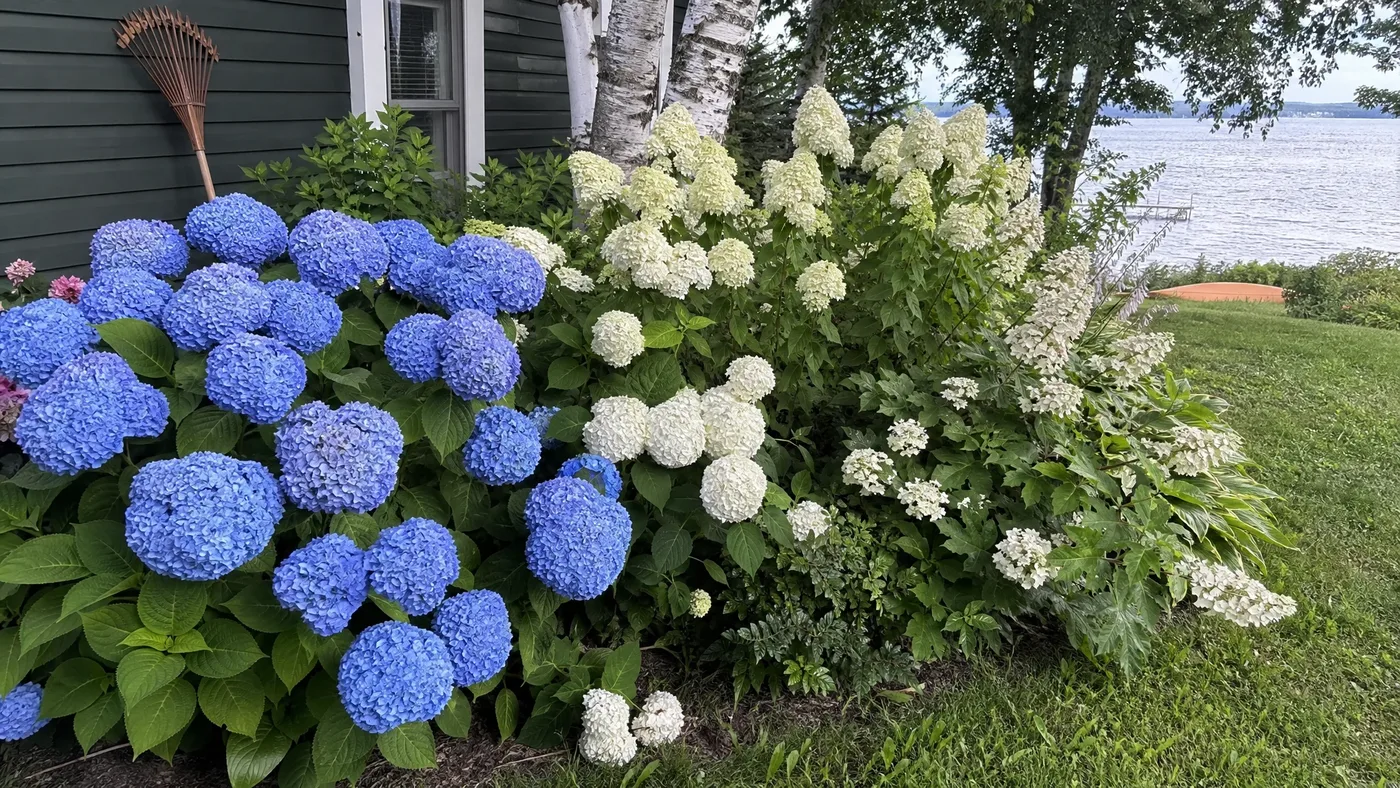
Big Daddy Hydrangea vs Smooth, Panicle and Oakleaf Types
We have killed or pruned into uselessness at least one of every hydrangea type, and the potting shed has the old stems to prove it. What those losses taught us is that the word "hydrangea" on a label hides four very different jobs. A panicle wants a hard cut every winter. An oakleaf mostly wants to be left alone. Big Daddy sets its flower buds the year before, so one wrong snip costs you a summer of big green leaves and no flowers.
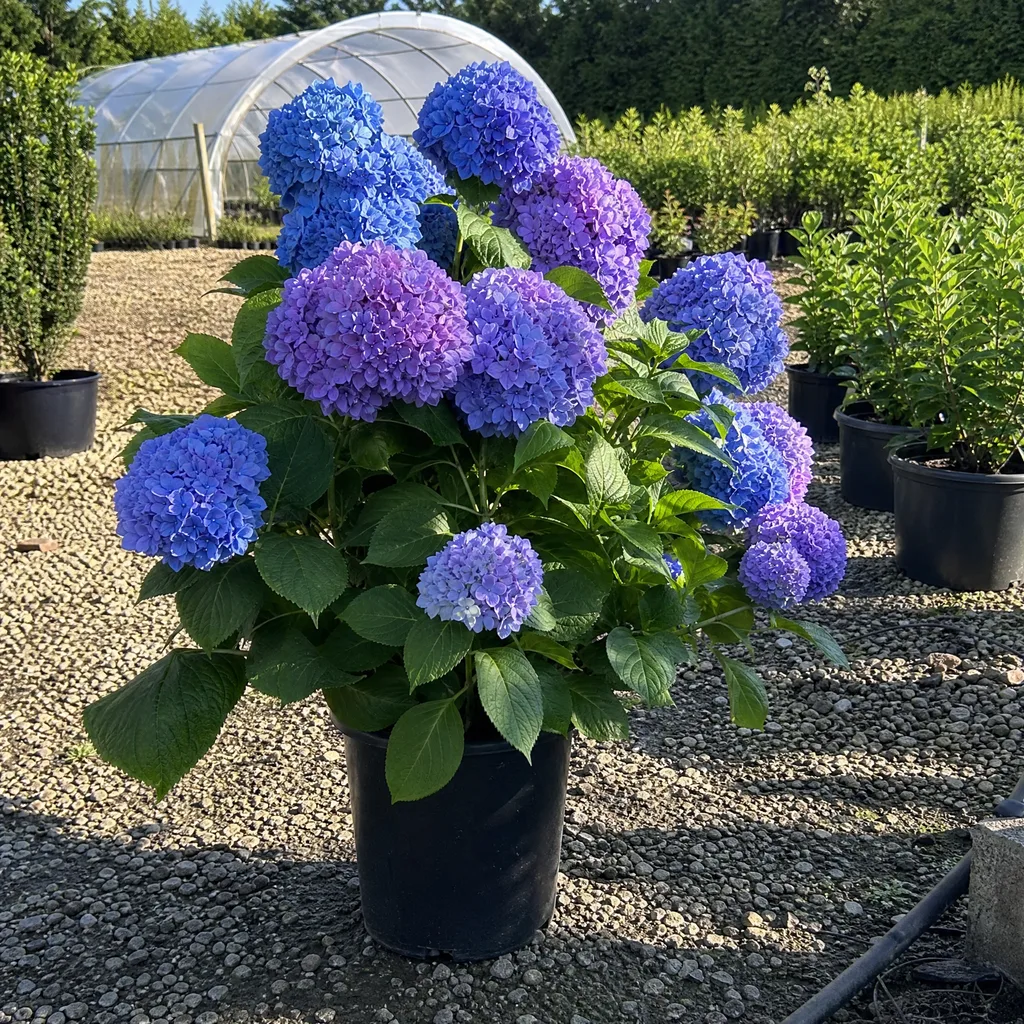
In this article, we'll go through bloom wood, winter cold, sun and soil, pruning workload, and looks, with a verdict on each. Big Daddy is the baseline, and we hold smooth, panicle and oakleaf types up against it so you can match the shrub to the spot.
Bloom Wood Sets Big Daddy Hydrangea Apart
Every other difference between these shrubs follows from one fact: which stems carry the flowers. Split the four by that and the pruning, the winter risk and the disappointment all sort themselves out.
The Old-Wood Pair
Big Daddy and oakleaf both flower on stems grown the previous season. Bigleaf hydrangea blooms during the late spring and summer on the previous year's growth, and the species flowers mostly in June and July. The buds sit on those stems all winter, exposed to every cold snap and every pair of shears.
The New-Wood Pair
Smooth and panicle hydrangeas build their flowers on stems they grow this year. Smooth hydrangea can be pruned close to the ground in late winter, and panicle hydrangea can be severely pruned in late winter or spring. Freeze them to the ground and they still flower that summer.
Verdict on Forgiveness
New wood wins, and it is not close. You will read "prune hydrangeas in late winter" everywhere. That is right for two of these four and wrecks the other two. If you cut Big Daddy in March, you remove the buds you waited a year for. For a cold yard or a gardener who prunes by instinct, we point people to smooth or panicle. Our guide on whether Big Daddy blooms on old wood or new wood covers how to tell what your own plant is doing.
Winter Cold Ranks the Four From Toughest Down
Hardiness is where the old-wood habit costs you most. A stem can survive a winter that kills its buds, so we rank these by how reliably they flower after a hard one, not just by whether they live.
Smooth, Then Panicle
Smooth hydrangea is the toughest. It grows in zones 3 to 9, the widest range of the four. Panicle comes second. It copes with colder winters than Big Daddy, and because it blooms on new growth, a hard freeze is a haircut rather than a loss. Our sources give no zone figure for panicle, so check its range with your local extension service before you buy for zone 3 or 4.
Oakleaf, Then Big Daddy
Oakleaf sits third and Big Daddy last. Both carry their buds on old wood, which puts flowers at risk in a cold snap. Virginia Tech lists bigleaf hydrangea at zones 6 to 9, the narrowest and warmest range here. That is a species figure, and our winter care guide covers how to protect the buds at the cold edge. Check oakleaf's range locally too.
Verdict for Cold Zones
In zone 5 or colder, plant smooth or panicle and enjoy flowers every year. In zone 6 and warmer, Big Daddy earns its place if you wrap or mulch it and accept an occasional lean year. One of the most common questions we get is whether Big Daddy can be pushed one zone colder. You can, but you are gambling the flowers, not the shrub.
How Much Sun Big Daddy Hydrangea Can Take
Big Daddy is the baseline here, and it is the pickiest. The species does best in part shade, and it should be protected from afternoon sun. Its big leaves lose water faster than they can replace it on a hot afternoon.
This table sets the other three against that baseline, using what the extension sources say.
| Type | Sun tolerance |
|---|---|
| Big Daddy | Part shade, with relief from afternoon sun |
| Smooth | Partial shade, full sun only with consistent moisture |
| Panicle | Most sun tolerant of the hydrangea species |
| Oakleaf | Full sun to part shade, with summer mulch to hold moisture |
Panicle is more tolerant of full sun than other hydrangea species, and it still prefers some afternoon shade in hot climates. Oakleaf is the second most flexible. Smooth looks like the easy one, but in full sun it sulks without steady water.
Verdict: panicle takes the open, sunny spot, and Big Daddy takes the place that gets morning light and shade after lunch, such as the east side of a house. If your only bed bakes all afternoon, don't force Big Daddy into it. Our sun requirements guide goes deeper on reading scorch and wilt.
Soil and Water Habits of Each Shrub
Soil is where Big Daddy does something none of the others will do for you. It also asks the most of you with the hose.
Soil pH and Color
Big Daddy changes color with soil chemistry. Virginia Tech says that in relatively acid soil, about pH 5.0 to 5.5, flower color will be blue. UMass Extension adds that between pH 5.5 and 6.5 you get purple or a mix of blue and pink on the same plant, and above that the flowers go pink. That is a bigleaf trait. Smooth wants neutral to acidic, well-drained soil, and oakleaf also wants good drainage, but neither gives you a color dial to turn. Our soil guide shows how to move the pH.
Thirst and Drainage
Big Daddy wants even moisture and wilts visibly when it runs short, though it recovers quickly once watered. Smooth needs the same steadiness if it sits in sun. Oakleaf likes mulch in summer to keep the soil moist, but it dislikes wet feet. Panicle is the most relaxed of the group.
Verdict on Easiest to Keep
Panicle is the easiest, with oakleaf close behind once it is in well-drained ground. Big Daddy is the most attentive if you care about color, because the pH will drift back and you will be amending every year or two. If you only want pink or blue as it comes, you can ignore all of it.
Pruning Big Daddy Hydrangea Beside Panicle Shears
The annual job runs from one decisive cut to almost nothing. This table lays out what each type asks of you, based on the extension guidance for each species.
| Type | Annual job | When |
|---|---|---|
| Smooth | Cut back close to the ground | Late winter |
| Panicle | Hard cut or light shaping, your choice | Late winter or spring |
| Oakleaf | Prune only if needed | Right after flowering |
| Big Daddy | Deadhead and thin with care | Right after flowering |
Why Panicle and Smooth Are Easy
Panicle and smooth reward bold cuts, so there is almost no wrong answer. Panicle is also a big plant, typically 8 to 15 feet tall and able to reach 25 feet, so that yearly cut is also how you hold it to size. Smooth stays at 3 to 5 feet.
Why Big Daddy Needs a Careful Hand
Big Daddy asks you to hold back. Since plants flower on old wood, prune as soon as flowering is finished. Oakleaf follows the same rule, so prune it immediately after flowering if it needs it. Our guide on when and how to prune Big Daddy walks through the cuts.
The practical habit is simple. Do your Big Daddy work in summer, once the last flowers fade, and keep the shears in the shed all winter and spring. The calendar does the thinking for you.
Verdict on workload: oakleaf asks for the least cutting, smooth the least thinking, and Big Daddy the most care. If you forget to prune, Big Daddy and oakleaf forgive you. If you prune at the wrong time, only the new-wood types do.
Flower Shape, Leaf and Fall Color Compared
Looks are where Big Daddy takes back ground. Each type peaks at a different moment, so the real question is how long each one holds your attention.
Bloom Form
Big Daddy carries huge round mopheads, and the color follows your soil. Its main show lands in June and July. Panicle flowers form in cone-shaped clusters, a different silhouette that sits high on tall stems. Smooth and oakleaf fall between, with oakleaf throwing its flowers above deeply lobed leaves.
Foliage and Fall
Big Daddy's leaves are large, bold and plain. Oakleaf wins here, with oak-shaped leaves that turn color in fall and give it real interest after the blooms are gone. In our rows, the oakleaf is the one customers walk back to in October.
Verdict on Staying Power
Oakleaf holds up longest through the year. Panicle keeps its flower heads well into the cool months. Big Daddy delivers the single biggest moment and then settles into green leaves and bare stems. Take Big Daddy for the show, oakleaf for the calendar.
Where Big Daddy Hydrangea Still Wins a Place
After all that, you might think we'd talk you out of Big Daddy. We wouldn't. It simply suits a particular gardener and a particular site, and the rest should choose differently.
Keep Big Daddy as Your Baseline If
You garden in zone 6 or warmer, you have a spot with morning light and afternoon shade, and you want a big mophead in a color you can steer with soil. You are also willing to prune once, right after flowering, and then leave it alone. For that gardener, nothing else on this list gives the same flower.
Choose Another Type If
Choose smooth if winters are severe or you want the simplest cut. Choose panicle for full sun, a large space or low upkeep. Choose oakleaf for a drained, woodsy site and interest across the whole year. Big Daddy lands in the middle of the pack on cold and sun, so it should be your pick for the flower, not the easy option.
Size settles a few close calls. The bigleaf species runs 3 to 6 feet tall and wide, so Big Daddy fits a foundation bed or a border edge where an 8 to 15 foot panicle would swallow the window.
Take a Notepad Into the Yard
Walk the yard with a notepad and stop at each spot where a hydrangea might go. Write down which criteria matter most there: winter cold, afternoon sun, drainage, how much pruning you will actually do, and how long you want it to look good. Then let the winning type at that spot decide the purchase, instead of buying the shrub you liked in the photo.
Big Daddy Hydrangea
Nursery-grown Big Daddy Hydrangea in sizes from 3 Gallon, shipped to your door.
From $65.85
Shop Now →Before a plant leaves us, our growers go over every stem, bud and root ball by hand and set aside anything that does not look ready to settle into a new bed. We are a small business with our own farms, we grow and sell top-quality plants, and we would rather see the right hydrangea go home with you than the most popular one.