
How to Keep Big Daddy Hydrangea Smaller Without Losing Blooms
If your Big Daddy is bigger than you planned, you are in good company. Wanting a smaller one is one of the most common reasons people reach out to us, and there is usually something you can do about it.
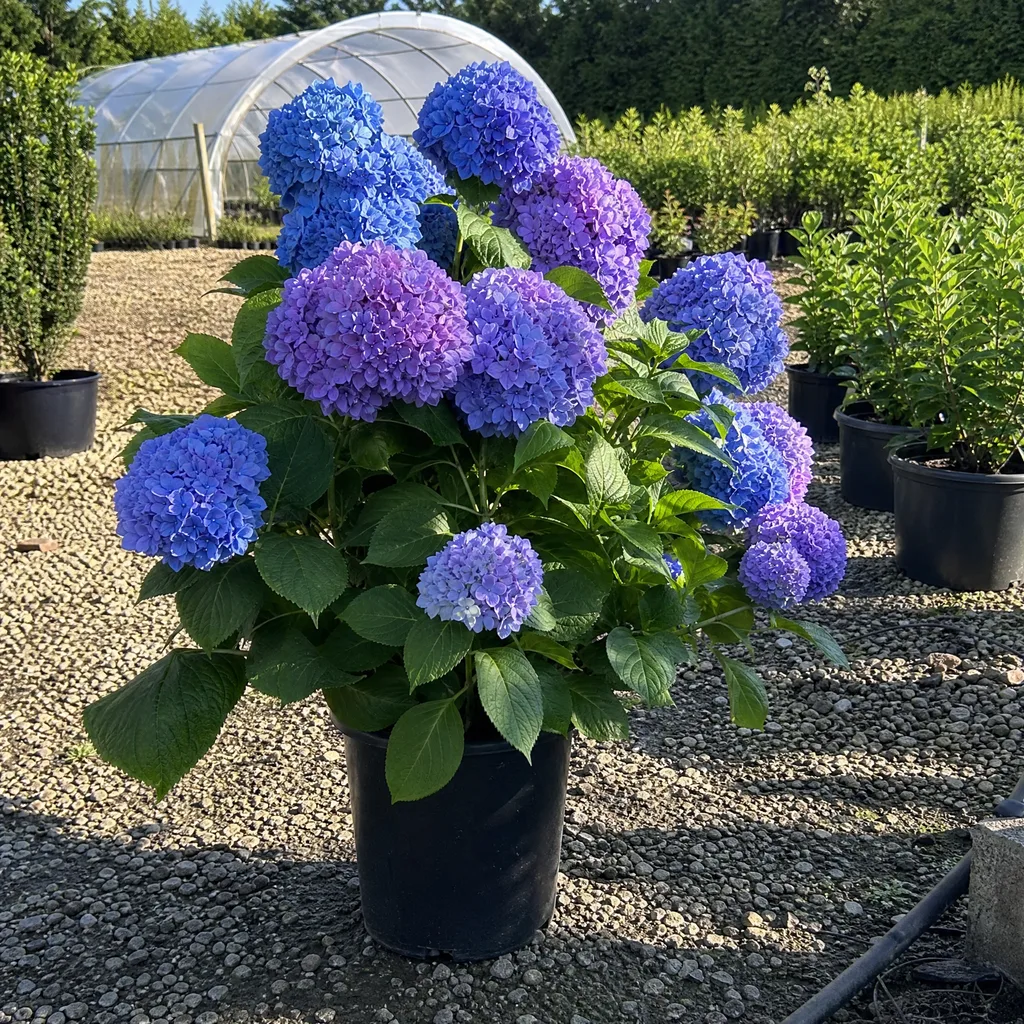
We will also be straight with you about what cannot be changed. Big Daddy is a large mophead, and no trim will turn it into a dwarf. Cut at the wrong time, it will also cost you the big June and July flower heads you grew it for.
This guide covers everything you need to know about keeping Big Daddy smaller, from siting it in a narrow bed to trimming it beside a window, with wind, pots and compact replacements along the way.
The Narrow Side Bed for Big Daddy Hydrangea
Our first case is a bed along the house or fence that is only four feet wide. Size control here starts the day you plant, because every fix after that costs you flowers.
Do the Math Before You Dig
Virginia Tech lists bigleaf hydrangea at about 4 to 5 feet tall and 6 feet wide, varying by cultivar. Big Daddy is a large-flowered, large-leaved plant, so plan on the wide end of that range. Centered in a four-foot bed, a six-foot spread overhangs by about a foot on each side.
That overhang is the honest answer to the question we get on the phone. A four-foot bed can hold a Big Daddy only if you let it lean a foot over the edge, or if you give it the spot where the bed bulges wider. If neither is possible, this bed belongs to a smaller plant (see the swap section below).
Set It Toward the Back and Away From Walls
Plant it at the back of the bed, with the walkway or lawn side left free for the lean. Keep the base of the plant well off the siding or fence, because stems that press against a wall bend, break and give you nothing to look at but leaves.
Choose the end of the bed that gets morning light and shade in the afternoon. NC State advises protecting bigleaf hydrangea from afternoon sun, and a plant that is not baking in July wilts less and tempts you to chop less. Our planting guide covers the hole and the first watering.
Think Past the Pot
We grow and ship Big Daddy in pots, and a young plant in a pot looks far smaller than it will once it settles in. Measure your bed against the mature size, not the container.
Walk the bed with a tape before you buy. Mark where the plant's edge will fall, then check that you can still open the gate, reach the hose bib and walk past without brushing the blooms. If the answer is no, you have learned it for free.
The Windy Corner Lot and Its Big Daddy Hydrangea
Our second case is the exposed corner, where wind comes at a shrub from two directions. The trouble here is less raw size than a plant that flops, tatters its big leaves and looks untidy by midsummer. A few selective cuts after bloom do most of the work.
Cut Right After the Flowers Fade
Big Daddy forms its flower buds on old wood, so timing decides everything. Virginia Tech says to prune as soon as flowering is finished, before next year's buds form, and warns that late summer, fall and winter pruning removes them. Bloom is mostly June and July for the species, so the window opens when the heads turn papery.
Walk the plant and find the longest stems, usually on the windward side. Cut each one back to a pair of healthy leaves lower down. Take only the tallest, most exposed stems and leave the rest of the outline alone.
Thin Rather Than Shear
Hedge clippers give a tidy ball and a bare summer, because they cut the buds at the tip of every branch. Instead, remove a few of the oldest, weakest stems at the base so wind can pass through the plant. An open shrub catches less wind and holds its heads better. Our pruning guide shows the cuts step by step.
Give It Some Shelter
If you can, plant on the lee side of the house, a fence or a larger shrub. Big, soft leaves lose water fast in a steady breeze, and a plant that wilts every afternoon is not growing neatly in any direction.
Stake the one or two heaviest stems loosely while the heads are open. A thick mulch layer will keep the roots from drying out between rains, which matters more on a corner where wind pulls moisture from the soil as well as the leaves.
The Hot Deck Pot That Keeps Outgrowing Itself
Our third case is a pot on hot decking, and it is the one place where size control honestly works. Roots set the pace for the shoots above them, so limiting the roots limits the plant, up to a point.
Pick the Pot on Purpose
Step up only one pot size at a time, and stop when you reach a container you can still move. A giant pot invites a giant plant. The species grows rapidly into a multi-stemmed shrub, so even in a pot Big Daddy fills out quickly once the roots have room. Our container guide covers mixes and drainage.
Trim the Roots, Not Just the Tops
When roots circle the pot or push out of the drainage holes, lift the plant after bloom. Shave a little off the outside of the root ball and repot into fresh mix in the same container. Take only a little. A short-rooted plant with large leaves wilts quickly on a hot deck.
There is a limit. Roots can be restricted but not stopped, and after a few rounds of trimming a potted Big Daddy starts to decline. When that happens, plant it in the ground or replace it.
Keep Deck Heat Off the Roots
Decking radiates heat well into the evening. Raise the pot on feet so air moves underneath, and move it to a spot with morning sun and afternoon shade. A pot in full afternoon sun dries out fast and forces you to choose between a wilted plant and a soggy one.
Big Daddy Hydrangea Under a Low Window
Our fourth case is a plant crowding a window. Customers usually tell us it was fine until the first stems tapped the glass. The goal is to lower the top without cutting off next year's buds.
Mark the Stems That Reach the Glass
Right after the flowers fade, mark only the stems that reach the sill. Cut each one back to a pair of leaves well below the window line, since the stem will grow again before summer ends. Stems cut early have the rest of the season to grow and set buds.
Leave every other stem alone. A plant trimmed here and there still blooms across most of its width, while one cut flat across the top blooms only underneath.
Make the Cut a Habit, Not a Rescue
A small cut each year right after bloom beats a big cut every few years. If you wait until fall to tidy the view, you remove the buds for the following June. Pruning in late summer, fall or winter takes flower buds off the plant.
If the plant is already well past the sill, expect a lighter bloom on the cut stems for a year. That is the price of the correction, and the plant will not hold it against you. Next summer's heads will sit lower and still be big.
When Swapping to a Compact Variety Is Kinder
Sometimes the kindest fix is a different plant. If you have to fight the same shrub every summer, a compact replacement saves you work and keeps the blooms you wanted.
Signs It Is Time to Replace
Swap when you are cutting back more than a few stems every year, when the plant keeps hitting a wall, path or window, or when two years of careful trims have still left you with a poor bloom. A four-foot bed or a pot that is already at its limit also points to a smaller plant.
Moving is an option too, if you have a roomier spot. Dig the plant while it is dormant and keep as much root as you can. A plant in the right place needs far less pruning than one in the wrong place.
Choose a Smaller Type With Care
Read the plant tag for the mature height and width, and pick one that finishes under your limit with room to spare. Look for a remontant type. Remontant cultivars also produce flower buds on new wood, which makes them a safer choice if you prune, and they extend the season into August. Our Endless Summer comparison shows how that trade-off plays out.
Flower color follows your soil more than the plant. Between pH 5.5 and 6.5, the UMass Extension says, flowers are purple or a mix of blue and pink, so your new plant may not match the old one.
What Pruning Cannot Fix on Big Daddy Hydrangea
Here are the limits, plainly. We would rather you hear them from us than find them out in June with a bare shrub.
Heavy Cuts Cost You Blooms
The usual question is whether a hard cut in late winter will reset an oversized plant. It will reset the size, and it will take the flower buds with it, because they were formed on old wood last summer. Common advice to cut all hydrangeas hard in late winter works for some types but not for a mophead like this one. Expect a year of leaves and few flowers.
Growth You Cannot Hold Back
NC State puts the species at 3 to 6 feet tall and wide at maturity, and Big Daddy leans toward the large end. Pruning slows the top but does not change the roots. Starving or underwatering to stunt it just gives you a stressed plant, not a small healthy one.
Our size guide covers what to expect at maturity, and it is worth reading before you decide how much work you are signing up for.
A Smaller Big Daddy Hydrangea That Still Blooms
Across all four cases the pattern is the same. Site it with room, trim a few stems right after the blooms fade, restrict the roots in a pot, and swap when the space is simply too small. A realistic goal is a plant somewhat smaller than it would be left alone, not a dwarf.
Big Daddy Hydrangea
Nursery-grown Big Daddy Hydrangea in sizes from 3 Gallon, shipped to your door.
From $65.85
Shop Now →A modest trim after bloom and a realistic size goal usually keep everyone happy, you and the plant. Every Big Daddy we ship is potted and packed carefully so it arrives ready to plant, grown on our own farms so you can measure it against your space the day it arrives.