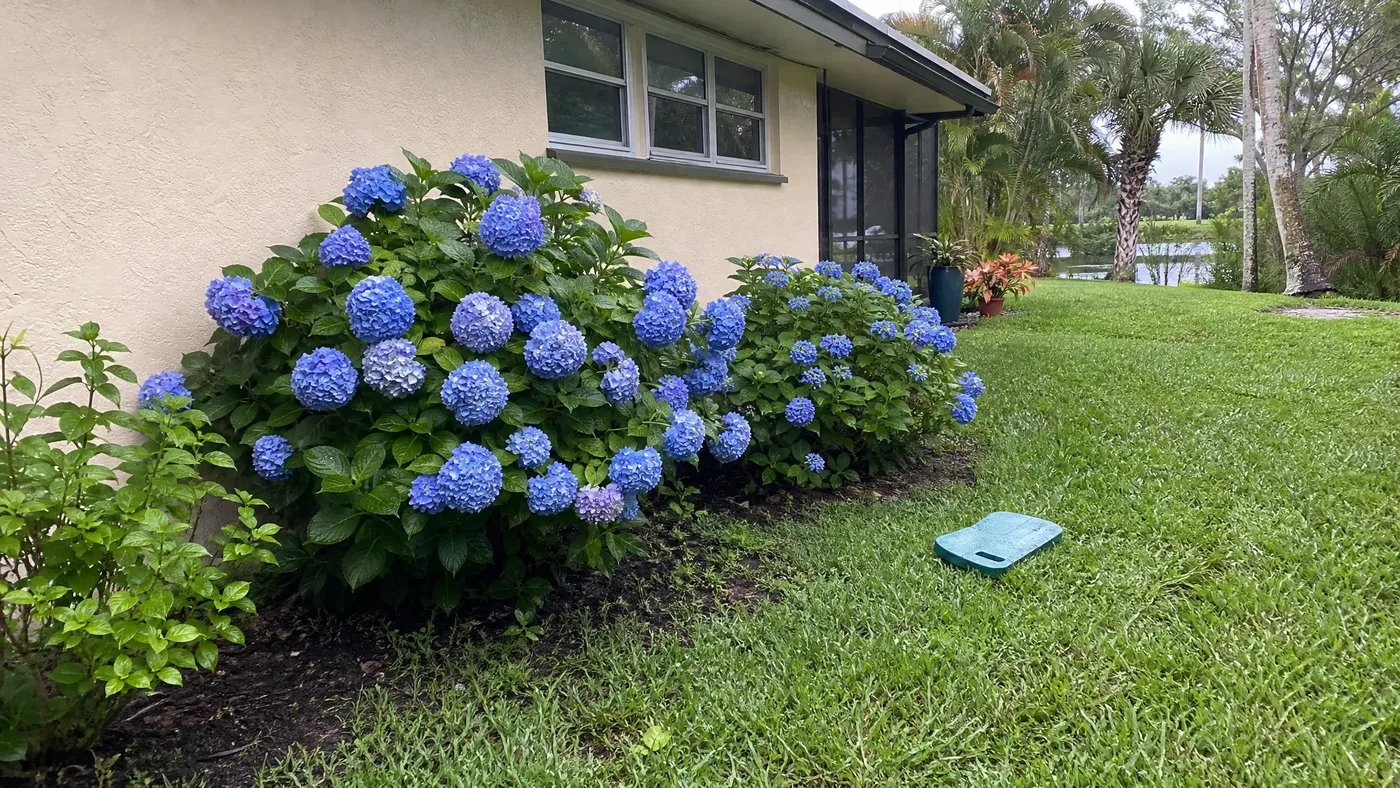
Big Daddy Hydrangea vs Nikko Blue Hydrangea: Key Differences
A common mistake is treating Big Daddy and Nikko Blue as the same shrub with a different tag. Both are Hydrangea macrophylla and both are hardy in zones 6 to 9, so it's easy to assume either one will do. Then Big Daddy goes into a tight corner, or you plant it expecting guaranteed blue, and you spend a season wondering why the bed looks wrong.
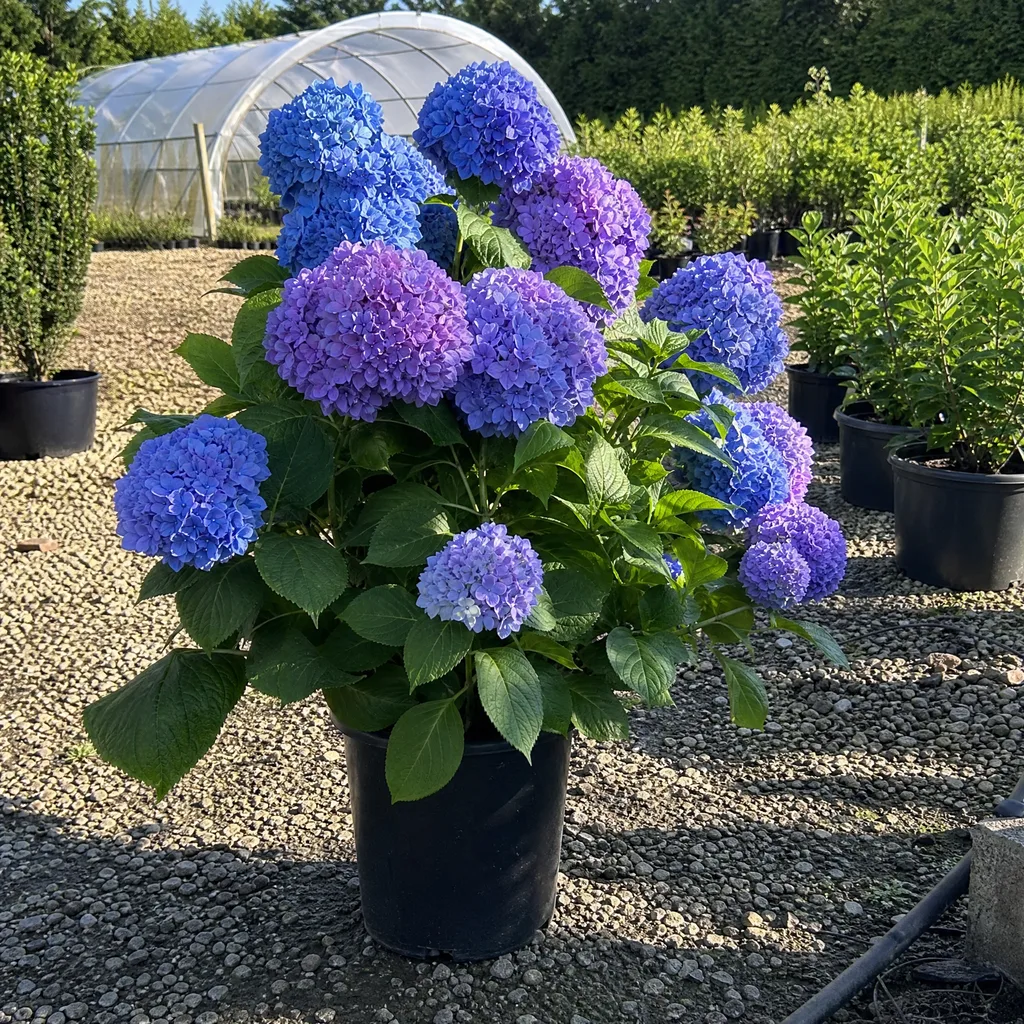
The choice matters because a mophead is a long commitment. Pick well and you get heavy flower heads in early summer that hold their color for weeks. Pick badly and you get a shrub that crowds its neighbors or wilts every afternoon. Read on for how the two compare on size, bloom color, light, water and pruning, plus who we'd hand each one to.
Big Daddy or Nikko Blue: Our Short Answer
If you have the room and a hose, we'd choose Big Daddy. If you have a tight bed, stronger light, or want blue without testing your soil, we'd choose Nikko Blue. Big Daddy has the bigger flower heads and fills a space faster, and it's the one customers ask for by name once June arrives.
Don't let flower size alone decide it. A common bit of advice is to put the biggest mophead in your sunniest spot to get the most bloom. We don't follow that for Big Daddy, because it needs protection from afternoon sun and will wilt without it. The table below sets the two side by side.
| Characteristic | Big Daddy Hydrangea | Nikko Blue Hydrangea |
|---|---|---|
| Mature Height | 5-6 ft | 4-5 ft (typical) |
| Mature Width | 5-6 ft | 4-5 ft (typical) |
| Growth Rate | Fast until mature | Moderate (typically slower to mature than Big Daddy) |
| Bloom Color | Blue (pH 5.5 or below), pink (pH 6.5+), or purple at intermediate pH | Blue (pH 5.5 or below), pink (pH 6.5+), or purple at intermediate pH |
| Bloom Time | June-August (region dependent) | July-September (later season) |
| Sun Requirements | Part shade, with morning sun and afternoon shade preferred | Part shade to part sun, and tolerates more direct sun |
| Water Needs | Medium to high, with consistently moist soil | Medium, and slightly more drought-tolerant than Big Daddy |
| Hardiness Zones | 6-9 | 6-9 |
| Pruning Complexity | Prune immediately after flowering, since it blooms on old wood | Prune immediately after flowering, since it blooms on old wood |
| Years to First Bloom | Typically 1-2 years after planting | Typically 1-2 years after planting |
Big Daddy Hydrangea: The Larger Statement
Big Daddy is built for impact. At 5-6 feet tall and wide at maturity, this cultivar becomes a substantial presence in the landscape. It grows quickly until it reaches full size, which means you'll see noticeable development year to year.
One of the most common questions we get is whether Big Daddy's flower heads are really bigger than other mopheads. They are, and in June they're the first thing visitors to our rows point at. We also compare it with Endless Summer on size and bloom habit.
The flower heads on Big Daddy are genuinely big, the trait that earned its name. Large, coarse-textured dark green foliage provides a bold backdrop. Blooms appear June through August, depending on your region, and the color depends entirely on your soil chemistry. Acidic soil (pH 5.5 or below) produces blue blooms. Alkaline soil (pH 6.5 or higher) produces pink. Between those points, you get purple or lavender tones from incomplete aluminum uptake.
Big Daddy wants consistently moist soil and part shade, though it tolerates more sun in cooler or coastal climates with reliable moisture. It has low drought tolerance, so this cultivar is not forgiving if you're the kind of gardener who forgets to water during heat waves.
In terms of investment, Big Daddy plants are often sold in #1 or #3 containers. The larger size at purchase means faster landscape impact, but also a bigger initial commitment.
Nikko Blue Hydrangea: The Proven Classic
Nikko Blue has been around for decades and has a reputation as one of the most reliable blue-flowering mophead cultivars. It typically maxes out around 4-5 feet tall and wide, making it a bit more compact than Big Daddy, though still a substantial shrub.
The distinguishing strength of Nikko Blue is its bloom color consistency. While other mopheads (including Big Daddy) shift from blue to pink based on soil pH, Nikko Blue is also pH-responsive. It turns pink or purple in alkaline or near-neutral soil, so it needs acidic soil (about pH 5.5 or lower) to stay blue. If a reliably blue hydrangea matters to your design, this cultivar has a documented track record of delivering it. Blooms appear slightly later in the season than Big Daddy, typically July through September.
Nikko Blue tolerates part sun more readily than Big Daddy. While still preferring afternoon shade, it's less fussy about midday light, which makes it workable in spaces that get 4-6 hours of direct sun. It also has slightly better drought tolerance than Big Daddy, though it's still a thirsty shrub that wants consistently moist soil.
Because Nikko Blue is more widely available than Big Daddy in many regions, you may find better pricing and easier sourcing at local nurseries.
Customers usually ask us whether Nikko Blue is still worth growing next to newer cultivars. For a small yard and a plain blue goal, we think it is. It also pairs well with other mophead varieties in the bed.
Bloom Color: The Key Difference
For most gardeners, bloom color will be the deciding factor between these two.
If you want to shift hydrangea color with your soil chemistry, Big Daddy is the more dramatic option. Acidic soil, about pH 5.0 to 5.5, delivers true blue, and alkaline soil delivers pink. In between, pH 5.5 to 6.5 gives purple or a mix of blue and pink on the same plant. You can nudge the color over time with aluminum sulfate for blue or garden lime for pink, and this flexibility appeals to people who like to experiment.
Start with a soil test and go slowly. The common advice to drench the roots with aluminum sulfate each spring is one we don't follow, because strong doses burn roots and one season's color rarely sticks. Our Big Daddy bloom color guide covers the slower approach.
If you want a hydrangea that can stay blue, Nikko Blue is a fine choice, but only if your soil is acidic. It turns pink or purple in alkaline or near-neutral soil, so it needs soil around pH 5.5 or lower to hold its color, which is worth knowing for people who already have their hearts set on one color.
Size and Spacing
Spacing is where many regrets begin with a mophead, because a young shrub in a one-gallon pot looks small. Here is what each one needs once it fills out, and you can see more in our guide to how big Big Daddy gets at maturity.
Big Daddy reaches 5-6 feet tall and wide. Space it 5-6 feet apart from other shrubs to allow room for mature spread. This makes it appropriate for medium to large foundation plantings, mixed borders, and as a focal point specimen.
Nikko Blue's smaller mature size (roughly 4-5 feet) makes it work in tighter spaces and smaller yards. You still need adequate room for air circulation and to see its full shape, but it won't overwhelm a modest landscape the way Big Daddy might.
Pruning and Timing
Both cultivars set flower buds in late summer and early fall, and bloom on the previous year's growth. That makes timing critical. Prune right after flowering ends, because pruning in winter or spring removes the buds and costs you a year of flowers. Some sources list Big Daddy as a rebloomer on new growth too, but we still prune it as if it blooms only on old wood.
The common advice to cut every hydrangea back hard in late winter is one we don't follow for these two. Our pruning guide shows the cuts we do make.
The pruning technique is the same for both. Remove dead or weak stems and thin out crowded growth. Avoid heavy pruning in late summer, fall, or winter, or you'll lose next year's blooms.
In terms of ongoing maintenance, both are comparable. Expect light fertilizing in early spring with a balanced or hydrangea-specific formula. Both attract the same pests (aphids, spider mites, Japanese beetles) and are susceptible to the same diseases (powdery mildew, leaf spot, botrytis).
Which One We'd Plant, and Where
Big Daddy wins if you want size, drama, and color flexibility. It's the choice for gardeners with room to spare and the water-management skills to keep it happy. Its fast growth and large blooms make it feel like a premium statement plant.
Nikko Blue wins if you want proven reliability, compact dimensions, and dependable blue color in acidic soil. It's the choice for smaller landscapes, busier gardeners, and anyone who values sun flexibility and a strong track record of performance across different regions.
Choose Big Daddy If:
These are the situations where we'd send you home with Big Daddy.
- You have a large foundation bed or mixed border and want a bold focal point
- You enjoy soil chemistry experiments and want the flexibility to shift bloom colors
- You have reliable irrigation and can commit to consistent watering
- You're willing to source a larger plant for faster landscape impact
- You want the most dramatic flower size possible
Choose Nikko Blue If:
These are the situations where Nikko Blue is the better call.
- You need a compact mophead hydrangea for a smaller space
- You have acidic soil (about pH 5.5 or lower) and want blue flowers, since Nikko Blue turns pink or purple in alkaline or near-neutral soil
- You prefer a cultivar with a longer track record and easier sourcing
- You have partial sun (not full shade) and need a more flexible cultivar
- You want slightly better drought resilience within the hydrangea family
- Budget matters, and Nikko Blue is often less expensive
Quick Reference Checklist
Run through these questions with your own yard in mind. They settle most of the choice in a minute.
| Question | Big Daddy | Nikko Blue |
|---|---|---|
| Do I have 5-6 feet of width available? | Yes | 3-5 feet is enough |
| Do I want to experiment with color? | Yes | No, I want consistent blue |
| Do I have reliable irrigation or live in a cool/wet climate? | Yes | Some flexibility okay |
| Do I prefer full shade? | Yes | Part sun okay |
| Is budget a primary concern? | Secondary | Primary |
| Do I prioritize fast growth? | Yes | Slower maturity okay |
| Is a proven, widely-available cultivar important? | Very | Critical |
Choosing Between Big Daddy and Nikko Blue
If you're torn, check your hardiness zone (both work in zones 6-9), measure your available space, and consider whether you prefer a larger cultivar with color play or a smaller one with blue certainty. For in-depth growing requirements and care for Big Daddy specifically, see our complete Big Daddy growing guide.
Big Daddy Hydrangea
Nursery-grown Big Daddy Hydrangea in sizes from 3 Gallon, shipped to your door.
From $65.85
Shop Now →Neither is objectively better, because they're built for different yards. Big Daddy rewards room, steady water and patience with the biggest flower heads of the pair, and Nikko Blue rewards tight spaces and a plain blue goal. Customers come back to us for the full, heavy flower heads Big Daddy puts on in early summer, and for shrubs we grow on our own farms and sell only at top quality.