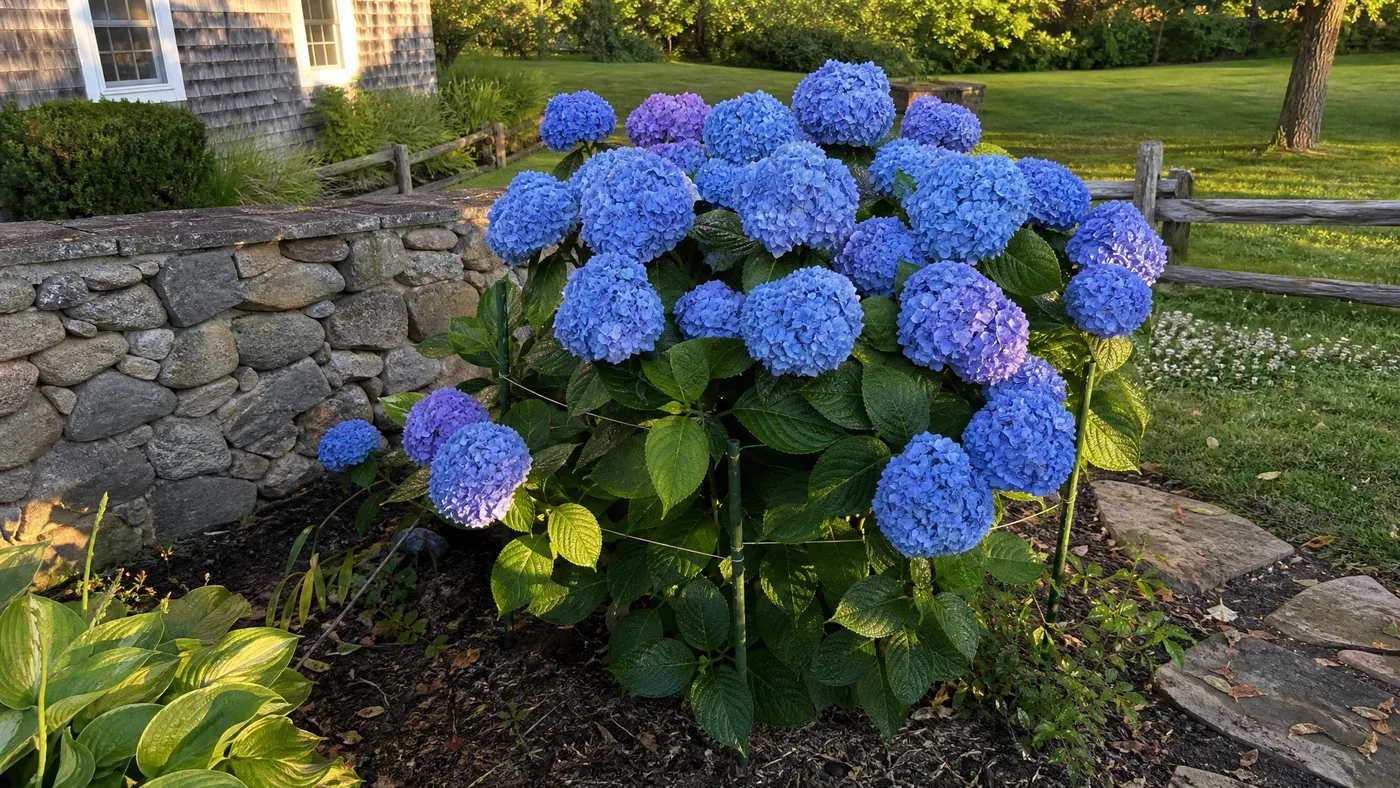
How to Support Big Daddy Hydrangea's Heavy Blooms
A wet, full Big Daddy head weighs several times what the same head weighs dry. That is the first number to know, because every stem has to carry it, and a stem that carries it well in July sun may fold flat after one storm.
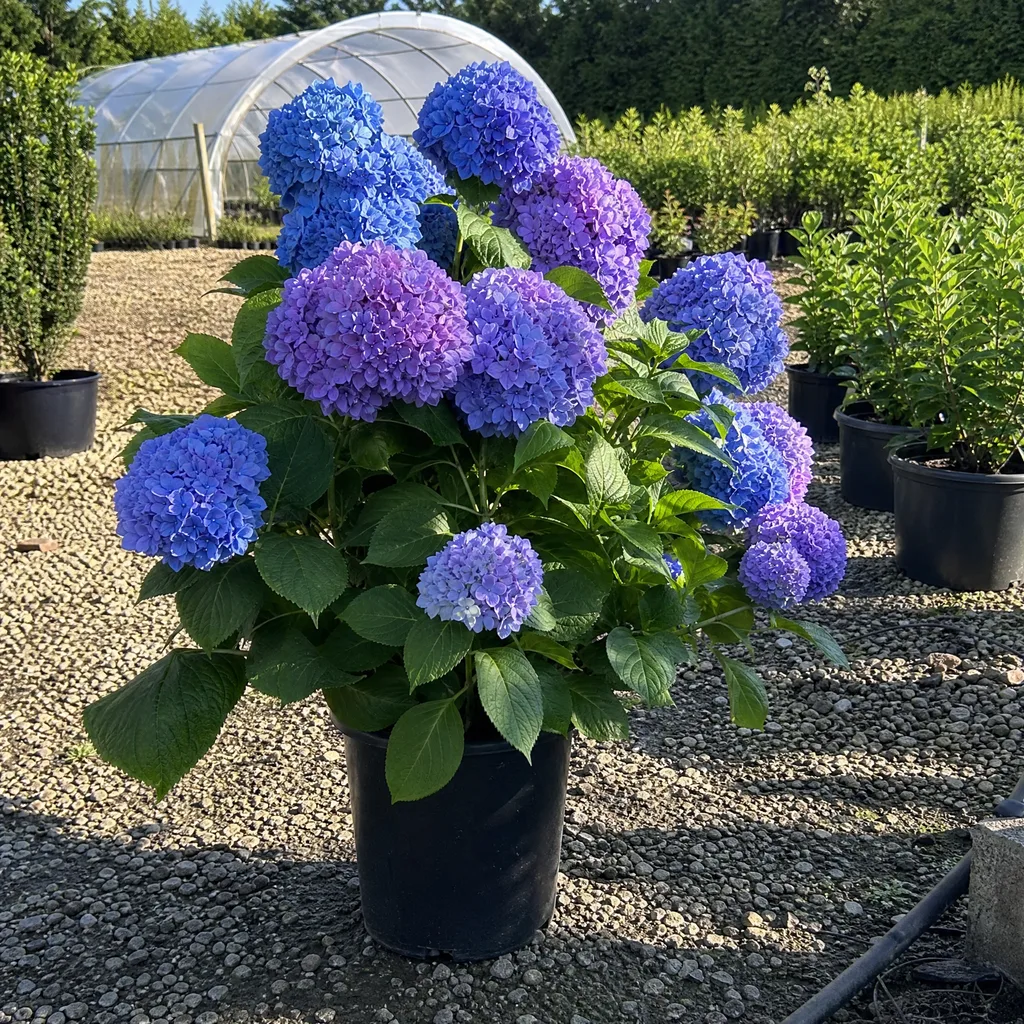
The cause is simple. Big Daddy puts up very large mophead flowers on stems that were not built to hold them once rain soaks the petals. Left alone, you get bowed branches, heads in the mud and the occasional snapped stem.
Below, you'll find out all about holding those heads up, including how to tell structural drooping from heat wilt, how to stake, ring or cage in spring, and when a stem is past saving.
Big Daddy Hydrangea Stems Bowed Flat After Rain
You walk out after a storm and half the shrub lies on the ground. This section traces that picture back to its two causes, head weight and soft growth.
Why the Heads Outweigh the Stems
Each stem carries one large head, and a wet head holds water between hundreds of tiny flowers. The University of Arkansas extension notes that large hydrangea heads make branches top-heavy and unable to support the blooms. Big Daddy is the clearest case of this. Its heads are oversized for the species, so the problem shows up earlier and harder than on smaller mopheads.
The bend is worst in June and July, the main flowering window for bigleaf hydrangea. That is when heads are full and the weather is stormy.
Why Soft Growth Makes It Worse
Fast, lush stems bend more easily than slow, firm ones. Heavy nitrogen, deep shade and crowding all push soft growth. If your stems bow every year, look at how you feed and where the plant sits before you blame the weather.
Our growers see this most on young plants with a few very large heads and thin stems. The heads arrive before the stems have thickened.
Prop It Up the Same Day
Bowed does not mean broken. A stem that lies over but has no crease will often lift again as the head dries. Here is what to do.
- Wait until the rain stops, then shake loose water gently from the head.
- Lift the stem from below its middle, not by the head, and check for a crease.
- If the stem is sound, tie it loosely to a stake or ring with a soft tie.
- Keep the head off the soil. A head that stays wet on the ground tends to rot at the contact point.
Heads Drooping in Afternoon, Upright by Morning
A head that sags at 3 p.m. and stands up by dawn is not a weight problem. This section separates heat wilt from structural drooping so you fix the right thing.
Run the Evening Check
Wait until the sun is off the plant, then look again. Heads that have lifted and leaves that are firm mean heat wilt. Heads that stay low in cool, shaded conditions mean the stem is the problem. Push a finger into the soil as well. Dry soil points to water, and damp soil with a drooping head points to weight or damage.
Heat wilt itself belongs in our guide to common Big Daddy problems. Water timing is covered in the watering guide, so we will not repeat either here.
Reading the Two Patterns
This table sets the two side by side so you can match what you see.
| What you see | Heat wilt | Structural drooping |
|---|---|---|
| Time of day | Afternoon, after sun | Any time, often after rain |
| Next morning | Upright again | Still bent |
| Leaves | Limp, then firm at night | Firm and green |
| Fix | Shade, water | Support, cut if creased |
NC State says to protect bigleaf hydrangea from afternoon sun. That helps with wilt but does nothing for a heavy head. A plant can have both problems at once, so run the check on more than one evening.
Snapped Stems at the Base of Big Daddy Hydrangea
Some stems do not bow. They crack, tear or break off near the soil. Here is what causes it and what you can keep.
What Breaks Stems
Three things do most of the damage. Wind catches a wet head like a sail and levers the stem at its base. An overloaded stem folds at its weakest point, usually low. Stems that rub against each other, a fence or a stake wear through the bark and fail later under load.
A clean snap is easy to read. A split that runs up the stem, or bark torn in a long strip, means the water-carrying tissue is gone above that point.
What to Save
Look at the break. If the stem is only cracked and the bark is intact on both sides, splint it with a stake and a soft tie and leave it. If it is torn through or hangs by a strip, cut it back to a healthy joint or to the soil line.
Big Daddy flowers on old wood, so each stem you lose takes its heads with it. Cut broken stems back to sound wood at once and do not wait for the regular pruning window. For the usual timing, see when and how to prune.
The Whole Plant Splaying Open From the Center
Sometimes the shrub does not fall in one place. It opens like a hand, with the middle bare and the outer stems pushed to the ground.
Why the Center Opens
Weight is the main cause. As heads fill, outer stems lean away from the crown. Older stems at the center lose strength with age, and a crowded mass of canes gives no mutual support once the rain arrives. Shade adds to it, since stems stretch and lean toward the light.
NC State describes the species as rapidly growing into a multi-stemmed shrub with a rounded habit, so a plant that opens up is losing that shape. A mature plant can reach 3 to 6 feet tall and wide, per our size guide, and the larger it gets, the more leverage each outer stem has.
The Ring or Corral Fix
Set three or four stakes around the outside of the clump and run soft twine around them to make a corral. Keep it loose enough that stems move in the wind but cannot flop outward. A single ring support does the same job with less fuss.
Then thin the plant. The University of Arkansas extension advises removing up to a third of the limbs at the soil line rather than cutting everything back hard. Take the oldest, weakest and crossing stems, and do it right after flowering.
Staking Big Daddy Hydrangea Before Heads Gain Weight
Support works best when it goes in early. This section covers the three options and when to set them in spring.
Choosing Stake, Ring or Cage
Each option suits a different plant, so match it to what you have. The table shows the trade-offs.
| Support | Best for | Drawback |
|---|---|---|
| Single stake | One or two heavy stems | Needs a tie per stem |
| Ring or hoop | Young and mid-size clumps | Must be set before growth fills in |
| Cage | Mature, wide shrubs | Bulkier and visible early in the season |
Our advice is the ring. It supports every stem at once and hides within the foliage by midsummer.
Spring Timing and Placement
Set the support when new leaves open and before flower buds swell. Stems pushed through a ring later tend to snap or leave buds behind. Place it below where the heads will sit, so the stems rise through it and fan out above.
Use soft ties such as cloth strips or plant tape. Wire and thin twine cut into the bark as the stems thicken. Check the ties again in early summer and loosen any that bite.
Plants that get plenty of water and fertilizer grow tall quickly. Our fertilizing guide shows how to feed without pushing weak, floppy growth.
When to Cut Drooping Big Daddy Hydrangea Stems
Not every sagging stem is worth saving. This section says when to cut, and what to do with the head afterward.
Signs a Stem Is Past Saving
Cut the stem if you find any of these:
- A sharp crease or kink where the stem folded, with the bark split or flattened.
- A head that stays down for several days after you have propped it, even with moist soil.
- Leaves above the bend that wilt and do not recover overnight.
- A torn base where the stem hangs from the crown by a strip.
A stem that droops but has no crease, with firm leaves, deserves support first.
Cut It and Bring It Indoors
The head is the show, so do not toss it. Cut the stem long with clean pruners and take it inside at once. Recut the end and stand it in water in a cool room. A bowed head that would rot outside can last a good while in a vase.
If you want to keep it longer, see how to cut and dry Big Daddy flowers. Cut back the remaining stub to a healthy joint or to the soil line.
A Big Daddy Hydrangea Standing Straight Under Wet Heads
This is the target. Here is what a well-supported plant looks like in a downpour.
What You Should See
The heads sit full and heavy, but the stems rise through the support and stay upright. Water runs off the petals and drips from the lowest tier of the head. No stem leans past the ring, and no head touches the soil.
The center is dense with leaves, not bare. The outer stems hold their line because they are thinned, tied and held. When the rain stops, the plant looks the same as before it started.
The Small Adjustments
Walk the plant after each big storm. Re-tie anything that slipped and lift any stem that leaned. Remove spent or broken heads, then adjust your support for next year. A plant that bowed even with a ring needs a taller one, or a cage.
Our growers often say that the first season tells you what the plant needs. Whatever bent this year will bend again unless you change something.
Support Big Daddy Hydrangea Before the First Storm
Support is a small job done early, and it saves the stems, the heads and next year's flowers. Know the cause, then match the fix: prop a bowed stem, splint a cracked one, corral a splayed clump and cut a creased one.
Before the first storm of the season, run this check:
- Set a ring, stake or cage around the clump once leaves have opened.
- Tie each heavy stem loosely with a soft tie.
- Thin crossing and weak stems, and keep rubbing stems apart.
- Check that the soil is damp and the plant is not in afternoon sun.
- Walk the plant after the first rain and re-tie anything that slipped.
Big Daddy Hydrangea
Nursery-grown Big Daddy Hydrangea in sizes from 3 Gallon, shipped to your door.
From $65.85
Shop Now →On our farms, Big Daddy grows in rows with open space between plants, so air moves through each clump and the stems thicken in step with the heads. We feed it lightly and keep its roots evenly moist, because steady, firm growth holds a wet head better than fast, soft growth.