Big Daddy Hydrangea Origin, Patent and Botanical Name
Last week in our rows we pulled a worn plant tag out of the soil beside an old shrub, its ink faded to a ghost of a name, and the first thing the grower holding it asked was how a hydrangea ever came to be called Big Daddy. It sounds like a nickname somebody gave it over a fence, and in a way it is. But the name sits on top of a long line of history, from wild coastal slopes to a patent filing.
This article talks about where the plant comes from, what its names mean and what the patent covers, and answers the questions customers ask us most. Read on to learn the native range of the species, how bigleaf, mophead and hortensia differ, how 'Big Daddy' reached gardens, and how that history shapes the way you water, shade and shelter it today.
Wild Hydrangeas on the Japanese Coast
Every Hydrangea macrophylla in a garden descends from wild plants a very long way from most backyards, and knowing where those plants lived explains more about your shrub than many care sheets do.
Where the Species Grows Wild
The Oregon State University landscape plant database lists the species as native to Japan and possibly Korea. That "possibly" is honest. Botanists do not all agree on how far the wild range reaches, and garden plants moved around Asia for centuries before anyone wrote down where they began.
Japan is the firm answer. It is also the answer that matters for the shrub in your yard, because the plants that eventually reached Europe and America came out of Japanese gardens and coastal hills, not out of a nursery catalog.
What Those Conditions Taught the Plant
We cannot quote a habitat survey here, so take this as a reading of the plant rather than a measured fact. Look at the leaves: they are broad, thin and soft, built for a place with steady moisture and some protection from wind and hot sun. A leaf like that gives up water quickly when the ground dries out.
You see it on a bigleaf in late July when the afternoon turns hot. The leaves droop, the whole plant sulks until evening, and it recovers if the roots have water to draw on. A shrub shaped by a mild, damp coast does not get used to a dry bed just because it now lives in your yard.
A Plant of Mild Places
The same history explains the hardiness range. Virginia Tech rates the species for zones 6 to 9, which tells you it is a plant of mild climates that gardeners have stretched outward. The stretch works, but it asks for help in winter, and for a closer look at your own region our guide to hardiness zones is the place to start.
It also explains the old habit of the species to bloom on growth made the year before. Because it blooms on the previous year's growth, a hard freeze that kills the buds can cost you the whole season of flowers even when the plant itself survives.
Bigleaf, Mophead and Hortensia Explained
Ask three gardeners what to call this plant and you may get three different words, and all of them are right. Each one points at something real, and each one grew out of a different habit of looking at the shrub.
Bigleaf
This is the plainest name and the one the Oregon State database uses as its main common name. It describes the foliage, which is large and glossy compared with the leaves of other hydrangeas. The oakleaf and panicle types have their own leaf shapes, and the bigleaf is the one with the wide, rounded leaves.
If you meet it as "bigleaf hydrangea" in a reference book or a university fact sheet, that is simply this species. The word describes the plant's habit, so it never needs a translation.
Mophead and Hortensia
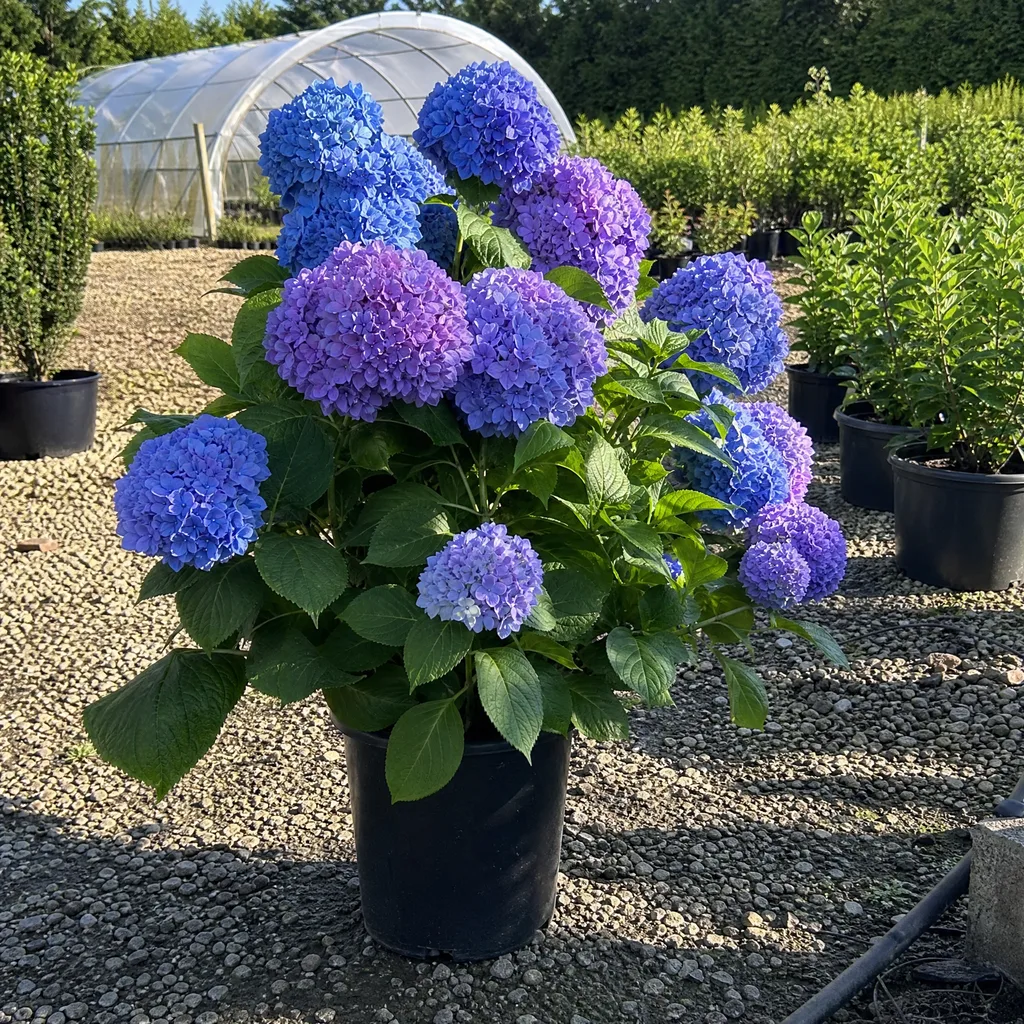
Mophead describes the flower rather than the leaf: a full, round ball of florets, like a mop turned upside down. Its partner is the lacecap, a flatter flower with a ring of showy florets around a small center. Our guide to mophead and lacecap blooms shows how to tell the two apart.
Hortensia is the name you hear in other languages, where the round-headed hydrangeas became well-loved pot and garden plants. French hydrangea is also a common name for the same species, which says a good deal about how far the plant traveled before it reached an American garden.
These words come up most in autumn, when people walk the rows and the spent heads have turned to papery tan and rose. Someone says mophead, someone else says hortensia, and the plant answers to both. One of the most common questions we get is whether they are different plants, and the answer is no.
How Big Daddy Hydrangea Reached American Gardens
Here we have to be careful. The story of this cultivar is told in many places with names and dates attached, and we are not going to repeat any we cannot check against a source.
What We Can Say With Confidence
'Big Daddy' is a cultivar, which means a single selected plant chosen for its traits and multiplied by cuttings so every plant matches the first. It was chosen for the size of its flower heads, and the name says so plainly. That is how most named hydrangeas reach the market: someone notices a plant that stands out, trials it, and nurseries propagate it.
The details of who made the selection and when are best confirmed in the plant patent record itself. Our buying guide covers what a healthy plant looks like on arrival, and it is worth reading before you trust any label.
Why Cultivars Travel
A cultivar cannot be passed along by seed and stay the same, because seedlings vary. That is why a selected hydrangea moves from one grower to the next as rooted cuttings, and why every genuine plant is, in effect, a piece of the original. The shrub in your bed shares its makeup with the first one that caught somebody's eye.
It also explains why a plant can cross an ocean and a continent without losing its character. Cuttings carry the whole plant forward, flower size and all, from one season to the next.
Why the Name Stuck
Marketing names matter in this trade. A big, easy-to-remember name does the work of a paragraph of description, and customers repeat it. The nickname feeling you noticed on that old tag is the point. It was meant to be remembered, and it has been.
What the Patent Means for Big Daddy Hydrangea
The patent is the part people ask about most, usually because they want to share a cutting with a neighbor and are not sure whether they may.
What a Plant Patent Covers
In plain terms, a plant patent protects a particular plant that was reproduced without seed, which is exactly how this shrub is multiplied. It gives the holder the right to control commercial propagation for a limited time. It does not give anyone a claim over the shrub in your yard, and it does not stop you from enjoying, pruning or moving it.
We will not quote a patent number, term or filing date, because we cannot verify them here. If you need the specifics, the patent search at the United States Patent and Trademark Office is the authority, and your local extension service can explain how plant patents work in your state.
Cuttings, Names and Fair Sharing
The useful way to think about it is to separate two ideas. Rooting a few cuttings for your own garden is one thing. Propagating the plant in quantity as a business is what a patent is aimed at. If you are unsure where the line falls, ask the patent holder or your extension office before you start. Our cuttings guide walks through the skill itself.
The name is a separate matter. A protected name means a plant sold as 'Big Daddy' should be the real cultivar and not a lookalike. That is a practical reason to buy a plant that is labeled clearly, because an unlabeled mophead could be any of dozens.
Reading the Botanical Name Behind Big Daddy Hydrangea
A botanical name looks like Latin homework, but each piece does a job, and reading it takes about a minute once you know the pattern.
Genus, Species and Cultivar
Take Hydrangea macrophylla 'Big Daddy'. Hydrangea is the genus, the wider family of shrubs that includes smooth, panicle and oakleaf types. macrophylla is the species epithet, built from Greek roots meaning large leaf, which is the same idea as the common name bigleaf. The name in single quotes is the cultivar.
The conventions are easy to remember. Genus and species are written in italics, with the genus capitalized and the species in lowercase. The cultivar name is capitalized, set in single quotes and not italic. That is how it should appear on a proper label.
Why the Cultivar Name Matters
The species name tells you the family traits, such as broad leaves and flower color that shifts with soil. The cultivar tells you which version of those traits you have. The species typically grows 3 to 6 feet tall and wide according to NC State, so treat that as a range for the species and read our size guide for what this cultivar does.
It helps with searching too. Typing the full name pulls up plants that belong to this exact selection and not every bigleaf in the trade. If a label gives only "hydrangea," you do not yet know what you are holding, and our identification guide by leaf, bud and bloom can help you sort it out.
Species Traits and Cultivar Traits
Some things you read about Hydrangea macrophylla belong to the whole species, and some belong to the cultivar. Soil-driven color is a species trait. Head size is what this cultivar was chosen for. When a source gives you a number, check which one it describes before you plan a bed around it.
Coastal Roots Shape Big Daddy Hydrangea Care Today
Now the history turns into practice. Each habit of the wild plant shows up as something you do, or should not do, in your own bed.
Moisture First
A shrub from a damp climate wants even moisture, and in our rows it is the first thing we adjust when the weather turns. Deep, regular watering beats frequent sips, and a layer of mulch helps the soil hold what you give it. Our watering guide has the details by season.
Light and Shelter
The species does best in part shade, and NC State adds that it should be protected from afternoon sun. Morning light with afternoon shade matches the plant's origins closely. A spot sheltered from drying wind also helps those wide leaves, and the sun requirements guide shows how this plays out by region.
Soil and Color
Soil is where this species gets famous. In relatively acid soil, about pH 5.0 to 5.5, the flowers come out blue. Between pH 5.5 and 6.5 the University of Massachusetts says they turn purple or a mix of blue and pink on the same plant. Our bloom color guide takes this further.
Pruning With the Past in Mind
Because the species flowers on old wood, Virginia Tech advises pruning as soon as flowering is finished, which for the species is mostly June and July. Cut late and you remove next year's buds. That is the species rule, and it is worth following until you have watched your own plant for a full year.
Carrying the Old Story Into Your Garden
The history comes down to a few habits the plant has not forgotten. Give it steady moisture, morning light, some shelter and a clear label, and it behaves much as its wild ancestors did on the Japanese coast. The names, the patent and the botanical name are all ways of saying the same thing: this is a particular plant with a particular past.
Big Daddy Hydrangea
Nursery-grown Big Daddy Hydrangea in sizes from 3 Gallon, shipped to your door.
From $65.85
Shop Now →On a quiet autumn afternoon your own shrub stands in the bed with its leaves turning and its faded mopheads gone papery, and that long line from the coast to a patent filing is simply part of an ordinary day in your garden. Our growers watch for the same things through the year, from the first soft leaves in spring to the moisture of midsummer and the leaf drop that closes the season, and as a small business we grow top-quality plants on our own farms.