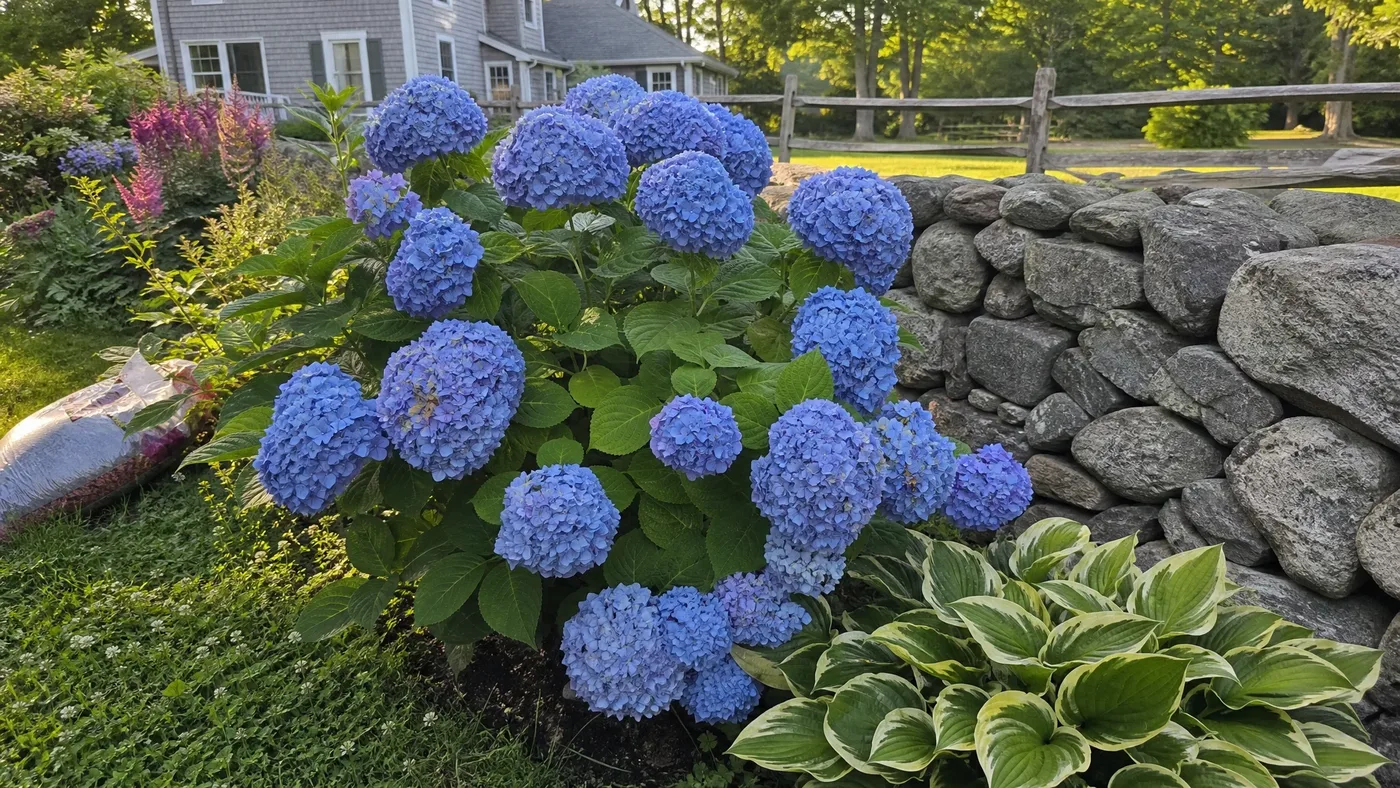
How to Get Bigger Blooms on Big Daddy Hydrangea
Walk the edge of a woodland where a native hydrangea grows and you will see loose, flattened clusters of small flowers, with a few larger sepals around the rim. Small bees and flies work those clusters all summer. Big Daddy is a cultivated mophead, and its heads are far larger, rounder and packed with showy flowers.
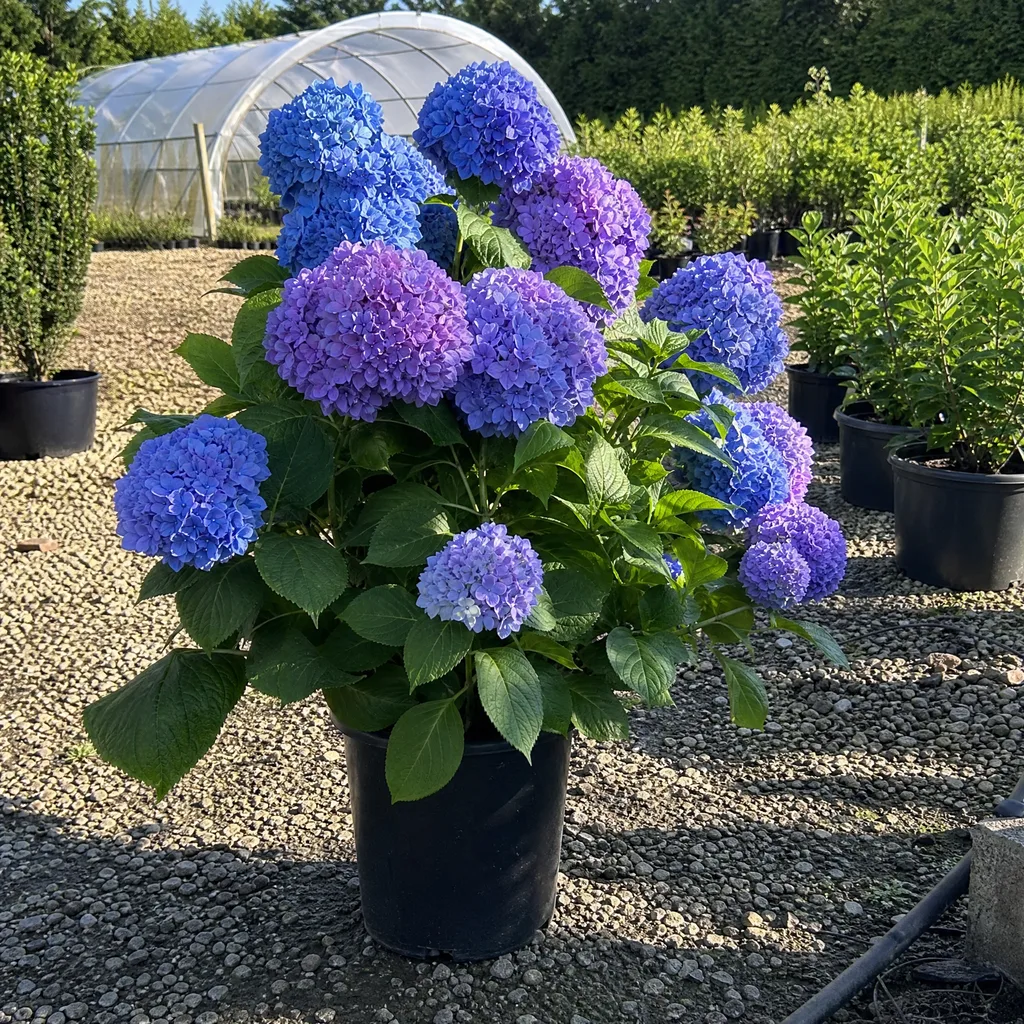
So why does a mophead carry heads so much bigger than its wild cousins, and what is the plant trading for that size? It spends stored energy on a limited number of buds and stems, and it needs steady light and water to pay for them. Fall short on any of those and the heads come out small, droop, or brown at the edges.
This guide covers everything you need to know about growing larger heads on Big Daddy, from protecting buds and getting the light right to water, feeding, thinning and root care.
Big Daddy Hydrangea Flowers on Last Year's Buds
Every large head you see in summer began as a bud that formed the season before. Protect those buds first, because no bud means no head at any size.
The NC State extension notes that bigleaf hydrangea blooms on the previous year's growth, and that is how you should plan for Big Daddy. If your shrub produces no flowers at all, start with our guide on why Big Daddy isn't blooming this year. This guide assumes buds exist and asks how to make the heads they open into as large as possible.
Prune Only After Flowering
Timing is the whole job here. Cut at the wrong season and you remove the heads before they exist.
Prune as soon as the last heads fade, because Virginia Tech advises that plants flowering on old wood be pruned right after flowering. The University of Georgia adds that bigleaf hydrangea sets its buds in late summer, so avoid pruning after August 1. Leave the shrub alone from then until the next bloom season. One of the most common questions we get comes after a fall tidy-up: where did the flowers go?
Cover Buds Against Cold
Buds can be lost to cold in winter and again after they swell in late spring. Both losses shrink the show.
When a freeze is forecast, drape an old sheet, blanket or cardboard box over the plant, as the Georgia extension suggests, and take it off when temperatures rise. Leave last year's stems standing through winter. Cut back only dead wood once new leaves open and you can see which buds survived.
Late cold is the sneaky one. A mild March coaxes buds to swell, and a hard night afterward can take them. Keep the cover within reach from late winter until your last frost has passed, and ask your local extension service when that usually falls.
Morning Sun Builds the Largest Heads
Think of where hydrangeas live in the wild: under taller trees, lit early and shaded when the day turns hot. Copy that arrangement and Big Daddy rewards you.
Virginia Tech says bigleaf hydrangea does best in part shade, and Georgia's extension specifies morning sun with afternoon shade and warns against hot, dry, exposed sites. Morning light feeds growth without the heat load that wilts big heads by midday. Our full guide to Big Daddy sun requirements covers the details.
Read the Light in Your Yard
Spend one day watching your planting spot before you blame anything else.
Note when direct sun first reaches the shrub and when it leaves. Look again at 2 p.m. on a hot day: hard sun on the leaves means the afternoon is too strong. Look at 10 a.m. as well, because a shrub in full shade all morning is too dark. Then check the heads facing south and west. Small, scorched or papery heads on that side point to afternoon exposure.
Fix a Too-Hot or Too-Dark Spot
Both problems can be corrected, and the fix for each is different.
For afternoon glare, add shade from a building, a fence or a small tree on the west side, or move the shrub in fall. For deep shade, trim low branches overhead to let in morning light. The Georgia extension lists too much shade among the causes of flower failure, and a shaded plant that does flower tends to carry fewer, looser heads.
Dappled light under high branches works better than the dense shade of a evergreen wall. A woodland edge gives you both: bright mornings from the open side and cool afternoons from the canopy. If your yard has a spot like that, plant there.
Big Daddy Hydrangea Drinks Steadily, Not in Bursts
A large head is mostly water held in many flowers. Even moisture lets the head fill out. Swings between soaked and dry make it stall.
The Georgia extension calls bigleaf hydrangea water-demanding and says to water whenever the plant wilts without rain, and to avoid stress in spring while the flowers form. Spring is when heads are being built, so it is the season to be strict. Our guide to watering Big Daddy goes further.
Water Deeply, Then Wait
Short sprinkles wet only the surface and teach roots to stay shallow. Deep soaks do the opposite.
Let a hose run slowly at the base until the soil is wet well below the surface, then check again in a few days. Push a finger into the soil near the stems. If it feels cool and damp, wait. If it is dry a few inches down, water. Water at the base in the morning so leaves dry quickly.
Count rain as watering only when it soaks in. A brief shower on a dry bed leaves the roots as thirsty as before, and the mulch described below will often hide that from you.
Read the Heads
The heads tell you what the roots are experiencing. This table pairs common signs with a response.
| What you see | Likely cause | What to do |
|---|---|---|
| Leaves and heads droop at midday, recover by evening | Afternoon heat load | Add afternoon shade and water deeply |
| Droop continues into the next morning | Soil too dry | Soak slowly and mulch |
| Brown edges on petals | Dry spells while heads open | Water on a regular schedule |
| Heads stay small and tight | Stress while buds formed | Keep spring moisture even next year |
A Spring Feed Gives Big Daddy Hydrangea Its Size
Feed once, early, and let the plant use it as the stems lengthen and the heads begin to form.
The Georgia extension suggests a general-purpose fertilizer such as 8-8-8 or 10-10-10 at 1 pound (about 2 cups) per 100 square feet in March, May and July. What we tell customers is to make the March feeding the one that counts. It reaches the roots as growth starts, when the plant is deciding how big to build the heads.
Keep Leaf From Beating Flower
Nitrogen pushes leaves. Too much of it buys you a lush green shrub with small or missing flowers, which Georgia names as a cause of poor bloom.
Choose a balanced fertilizer, measure it instead of guessing, and scatter it evenly under the canopy, out to the drip line, keeping it off the stems. Water it in so it moves down to the roots. Timing and balance matter more than any bloom-booster label.
When to Add More
If you want to follow the extension schedule, add lighter feeds in May and again in July.
Skip any feeding in late summer, when buds are setting and you want the plant slowing down. Our guide to fertilizing Big Daddy gives product choices and rates. It also helps to check with your local extension service about your soil before adding anything beyond the basics.
Fewer Stems Carry Bigger Heads on Big Daddy Hydrangea
A mophead grows many stems, and each one competes for the same water and food. Fewer stems means more resources per head.
NC State describes bigleaf hydrangea as growing rapidly into a multi-stemmed shrub. Left alone, it fills with thin, crowded canes that bear small heads or none. Thinning sends the plant's energy to the stems that can hold a heavy bloom. Our guide on pruning Big Daddy correctly covers the cuts in more detail.
Choose Which Stems to Remove
You are looking for the weak stems, not the whole shrub.
- Cut thin, spindly canes at the base. They rarely carry a full head.
- Remove dead stems and any that rub against each other.
- Take out a few of the oldest, most crowded canes so light and air reach the center.
- Keep the thick, sturdy stems. They hold up the heaviest heads.
Time the Work
Thin right after flowering, while you can still see which stems bloomed and which did not.
Finish well before August 1, and do not shear the whole shrub. Rounding it off with hedge shears removes next year's buds along with the stems. If you have never thinned, spread the work over two or three years rather than taking out too much at once.
Roots Decide What the Flowers Can Be
Everything above ground depends on the roots. The woodland floor gives wild hydrangeas a loose, damp bed of fallen leaves, and you can build something similar.
Mulch Like a Forest Floor
Mulch holds moisture in the layer where hydrangea roots sit, which is why it matters for head size.
The Georgia extension recommends 3 to 5 inches of organic mulch such as pine straw, pine bark or fall leaves to conserve moisture and control weeds. Pull it back a couple of inches from the stems so it does not sit against the bark. Top it up each fall as it breaks down, and the organic matter feeds the soil life below.
Give the Roots Room
Crowding costs head size. A hydrangea sharing space with a hungry tree or a thick lawn loses water and food to its neighbors.
The species reaches 3 to 6 feet tall and wide, so leave that room around the shrub and keep turf away from the root zone. If you are starting new, our Big Daddy plants arrive with roots established in the pot, which gives the first season a head start. Our guide to soil for Big Daddy explains how to improve a heavy or sandy bed.
Leave pH for Color
Soil acidity changes what color the heads turn, so treat it as a separate question from size.
The University of Massachusetts notes that between pH 5.5 and 6.5 the flowers will be purple or a mix of blue and pink. Chasing a pH target will not make heads bigger, so fix moisture, light and root room first.
Size Is Earned Over Several Seasons
None of these principles is a single fix. Protected buds, good light, steady water, one spring feed, thinning and healthy roots work together, and they add up over years. In year one, expect modest heads while the roots settle. By year three, a plant treated this way usually carries larger heads on sturdier stems. We often see customers give up in the first summer, just before the plant starts to show what it can do.
Big Daddy Hydrangea
Nursery-grown Big Daddy Hydrangea in sizes from 3 Gallon, shipped to your door.
From $65.85
Shop Now →Picture the shrub years on, at the edge of a woodland, its heavy heads bending the stems toward the ground, the size having built a season at a time. Every Big Daddy we ship is potted with its root ball intact and packed to protect its stems, so it reaches you ready to plant and ready to start that work. We are growers with our own farms, raising top-quality shrubs.