Big Daddy Hydrangea FAQ: 12 Questions Answered
A Big Daddy in full June bloom is hard to walk past. The heavy, rounded heads open soft and full above big leaves, but only when the shrub gets the right light, water and pruning at the right time of year. Get those wrong and you end up with a leafy green plant, flopped stems, or a bare spot where the flowers should be.
Customers usually ask us the same dozen questions, so we've gathered them here. We'll walk you through the plant itself and spring planting, then summer bloom, color, water and pests, and last the fall pruning and winter care that set up next year's flowers. Each answer starts with the short version, followed by what we do in our rows.
What Big Daddy Hydrangea Is and How It Grows
These first answers cover what sets this cultivar apart, how long it lives and how quickly it fills its space.
What is Big Daddy Hydrangea exactly?
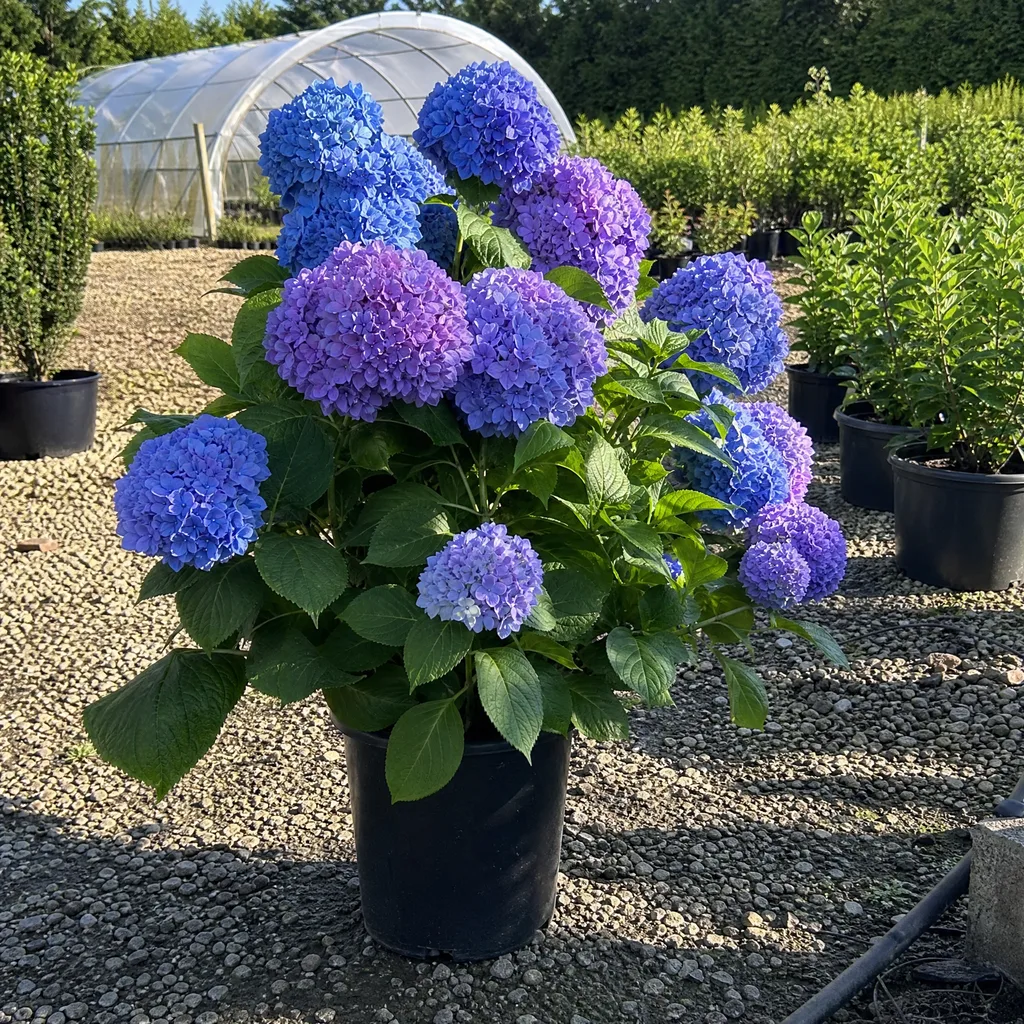
Big Daddy Hydrangea (Hydrangea macrophylla 'Big Daddy') is a deciduous mophead hydrangea cultivar from the Hydrangeaceae family, originally developed from the Japanese bigleaf hydrangea species. It is grown for its large, showy flower clusters that bloom in shades of blue or pink depending on soil pH.
It reaches up to 5 to 6 feet tall and wide at maturity, the top end of the 3 to 6 feet the species generally reaches, which makes it suitable for foundation plantings, mixed borders, and specimen displays.
How is Big Daddy Hydrangea different from other mophead hydrangeas?
Big Daddy is a specific cultivar selection of Hydrangea macrophylla known for particularly large and voluminous flower clusters. Other mophead varieties like 'Nikko Blue' or 'Endless Summer' grow similarly but may differ in bloom size, flower quantity, or season of bloom. We sort out unlabeled plants by their leaf and bloom traits. All bigleaf mophead hydrangeas share similar care requirements and respond to soil pH in the same way.
How long do Big Daddy Hydrangea plants live?
Big Daddy Hydrangea is a long-lived shrub, often thriving for decades with proper care. Healthy, well-established plants often improve with age, producing larger and more abundant flower clusters as they mature. Good drainage, appropriate pruning, and consistent watering are key to longevity.
How fast does Big Daddy Hydrangea grow?
Big Daddy Hydrangea grows quickly for a shrub, since the species rapidly grows into a multi-stemmed shrub with a rounded habit. Most plants fill out to their full size within about 3 to 5 years from planting. Growth rate varies by climate, soil quality, watering, and sunlight availability.
Spring: Planting, Soil, Sun and Feeding
Spring is when we get the most planting questions. These answers cover timing, spacing, soil, light and the first feeding of the season.
When should I plant Big Daddy Hydrangea?
Plant Big Daddy Hydrangea in spring or fall when soil is workable and temperatures are cool. These seasons allow the root system to establish before summer heat or winter cold stress sets in. Avoid planting during the hottest weeks of summer or the coldest weeks of winter when plants struggle to recover.
How far apart should I space Big Daddy Hydrangea plants?
Space Big Daddy Hydrangea plants 5 to 6 feet apart to allow each mature shrub room to reach its full width of 5 to 6 feet without crowding. Closer spacing reduces air circulation, increasing disease pressure and reducing bloom production. Proper spacing also makes pruning and maintenance easier.
What soil does Big Daddy Hydrangea prefer?
Big Daddy Hydrangea grows best in rich, humusy, well-drained soil with plenty of organic matter. Amend your planting hole with compost or aged bark to improve soil structure and water retention. Poor drainage is a serious risk factor for root rot, so ensure water drains freely within a few hours after rain.
Can Big Daddy Hydrangea tolerate clay soil?
Big Daddy Hydrangea can grow in clay soil if you amend it generously with compost or aged bark to improve drainage and organic matter content. Clay alone tends to hold too much water, increasing root rot risk. Mix compost throughout the planting area, not just in the planting hole, for best results.
In our rows, the plants that struggle most are the ones set into unamended clay, so we put the compost work in before the shrub ever goes in the ground. Our planting walkthrough goes through the whole process.
How much sun does Big Daddy Hydrangea need?
Big Daddy Hydrangea thrives in part shade, ideally receiving morning sun and afternoon shade. This combination allows the plant to photosynthesize while avoiding stress from intense afternoon heat and UV exposure. In cooler or coastal climates where temperatures stay moderate and soil moisture is consistently maintained, it tolerates more sun, though afternoon shade is still preferred.
Can Big Daddy Hydrangea grow in deep shade?
Big Daddy Hydrangea will survive in heavy shade but will produce fewer flowers and weaker overall growth. For best performance and reliable blooming, your plant should receive at least 3 to 4 hours of light, preferably morning sun. If your yard is heavily shaded, dappled light or indirect sun from nearby trees is a reasonable compromise.
Do I need to fertilize Big Daddy Hydrangea?
Light feeding in early spring with a balanced or hydrangea-specific fertilizer supports growth and bloom production. Avoid heavy feeding, which can produce lush foliage at the expense of flowers. Aluminum sulfate can be added in spring to enhance or maintain blue blooms if desired.
Early Summer: Bloom Time and Color
June is when Big Daddy pays you back. These answers cover when to expect flowers, how soon a new plant will bloom, and how to steer the color.
When does Big Daddy Hydrangea bloom?
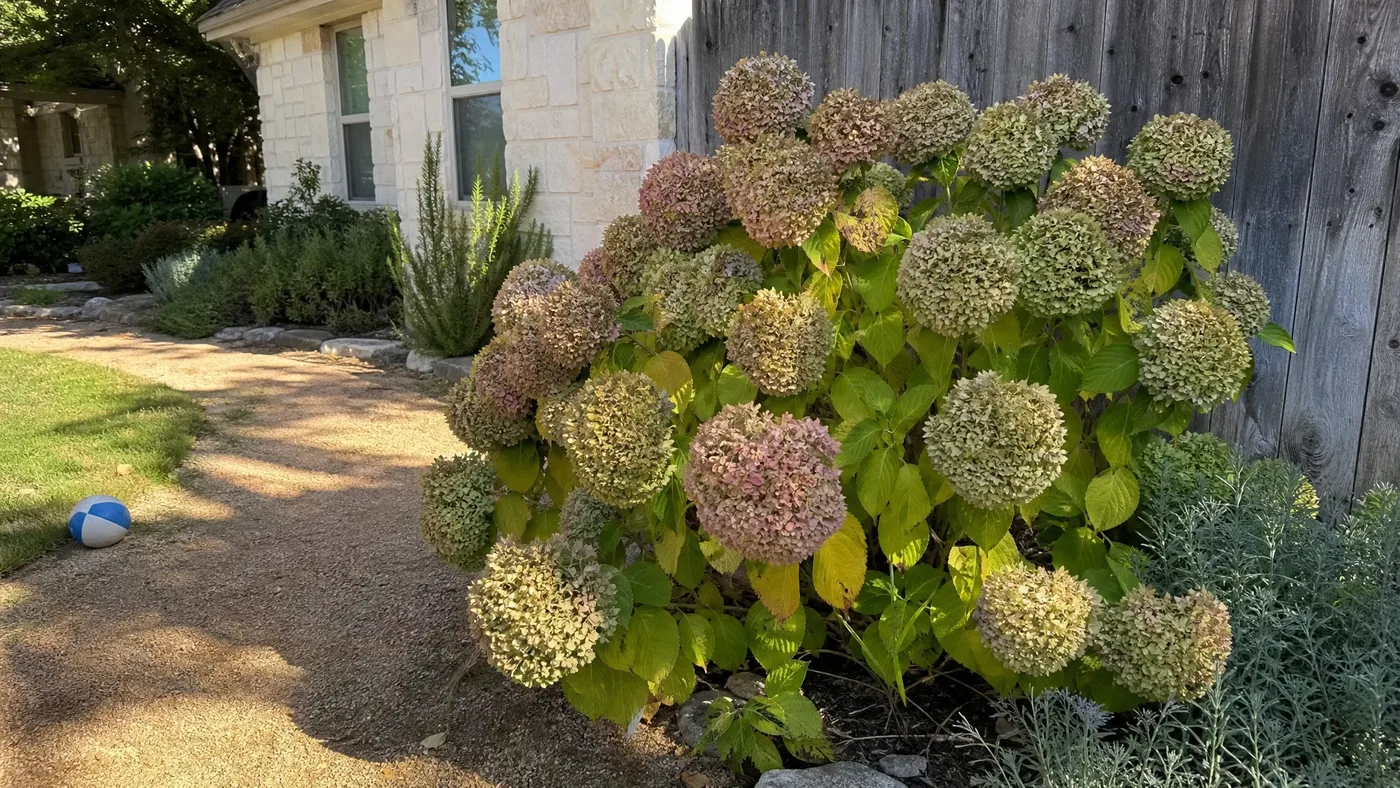
Big Daddy Hydrangea blooms mostly in June and July, and some flowers can carry into August. A warm spring brings the first heads a little earlier, while a cool one can delay them by a few weeks. The heads open fresh and bright, then deepen and soften in color as late summer arrives.
Will Big Daddy Hydrangea bloom the first year after planting?
Big Daddy Hydrangea typically produces flowers within 1 to 2 years of planting, even on young specimens from a nursery. First-year blooms may be smaller or fewer in number than established plants, but you should see at least some color relatively quickly. This rapid path to blooms makes Big Daddy popular for gardeners who want fast results.
Why are my Big Daddy Hydrangea blooms pink instead of blue?
Bloom color in Big Daddy Hydrangea is determined by soil pH and aluminum availability to the plant. In acidic soil, around pH 5.0 to 5.5, blooms come out blue, while alkaline soil with a pH of 6.5 or higher produces pink blooms. Between about 5.5 and 6.5, flowers are purple or a mix of blue and pink on the same plant.
One of the most common questions we get is why a blue plant from the nursery turned pink in the yard, and the answer is nearly always the soil. Testing your soil pH will tell you what color range to expect.
Can I change my hydrangea blooms from pink to blue?
Yes, you can shift bloom color by adjusting soil pH over time. To encourage blue blooms, add aluminum sulfate or sulfur to lower the pH toward 5.5 or below. To encourage pink blooms, add garden lime to raise the pH above 6.5. Color changes take several weeks to months to appear in new flowers, and you may see purple transitional colors during the shift.
For more on steering color, see our guide to Big Daddy bloom color.
Midsummer: Water, Heat and Companions
July heat is when a Big Daddy shows how thirsty it is. Here is how we handle watering, soggy soil and the plants that grow well beside it.
How often should I water Big Daddy Hydrangea?
Big Daddy Hydrangea requires consistently moist soil during the growing season. Water deeply when the top inch of soil feels dry, providing enough water to moisten the entire root zone without waterlogging. Expect to water 1 to 3 times per week depending on rainfall, temperature, and soil type.
What happens if Big Daddy Hydrangea dries out?
Drought stress causes Big Daddy Hydrangea to wilt visibly during hot afternoons and can reduce flower bud survival and next season's bloom count. Chronically dry soil weakens the plant, making it more susceptible to pests and disease. This cultivar has low drought tolerance, so consistent moisture is essential, especially during flowering and heat waves.
We often see plants wilt on a hot afternoon and perk up by evening. That is normal, but if the leaves are still limp the next morning, the soil is too dry and it is time to water.
Can Big Daddy Hydrangea handle wet soil?
Big Daddy Hydrangea prefers moist soil but not waterlogged conditions. Prolonged saturation or soggy soil leads to root rot and fungal diseases. If your soil drains poorly, add organic matter or build a raised bed to improve drainage rather than planting in low-lying, water-logged areas.
What companion plants work well with Big Daddy Hydrangea?
Big Daddy Hydrangea pairs beautifully with shade-loving companions such as hostas, ferns, astilbe, azaleas, and heuchera. These companions share similar moisture and light preferences and create a layered, textured garden. The dark green hydrangea foliage also serves as an attractive backdrop for lighter-leaved or variegated perennials.
Can I propagate Big Daddy Hydrangea from cuttings?
Yes, Big Daddy Hydrangea can be propagated from softwood or semi-hardwood cuttings taken in early to midsummer. Dip cuttings in rooting hormone, insert them into moist potting mix, and keep them in a humid, shaded location for several weeks until roots develop. This method creates new plants identical to the parent plant.
Late Summer: Pests, Deer and Pets
By late summer, insects, disease and browsing animals start to show up. These answers explain what to watch for and what to ignore.
What pests affect Big Daddy Hydrangea?
Common pests include aphids, spider mites, Japanese beetles, and occasionally scale insects. Most infestations are minor and do not require intervention if the plant is vigorous and well-watered. Spray with insecticidal soap or neem oil if pests become numerous and visible damage appears on new growth or flower buds.
What diseases does Big Daddy Hydrangea get?
Big Daddy Hydrangea can be affected by powdery mildew, Cercospora leaf spot, botrytis blight, and root rot. Most of these issues arise from poor drainage, overcrowding, or high humidity without adequate air circulation. Improve cultural conditions by ensuring well-drained soil, spacing plants adequately, and pruning to open up the canopy.
Do deer eat Big Daddy Hydrangea?
Yes, deer frequently browse hydrangea foliage and buds. Big Daddy Hydrangea has low deer resistance, so if deer are common in your area, plan to use fencing, netting, or deer repellent sprays to protect your plants. Regular applications of repellent sprays may be necessary during seasons of high deer pressure.
Is Big Daddy Hydrangea toxic to pets?
Yes, Big Daddy Hydrangea is toxic to dogs, cats, and horses if ingested, containing cyanogenic glycosides that can cause mild to moderate poisoning. The plant is also mildly toxic to people if consumed in quantity. Keep it away from areas where pets or small children might chew on foliage or flowers.
Fall and Winter: Pruning, Blooms and Cold Protection
What you do after the flowers fade decides next year's show. This section covers pruning, the no-bloom problem, winter hardiness and container plants.
When should I prune Big Daddy Hydrangea?
Prune Big Daddy Hydrangea immediately after flowering ends, before August. Because this plant blooms on old wood (flower buds formed the previous year), pruning at the right time preserves next year's flowers. Remove dead or weak stems and shape the plant as needed, but avoid heavy pruning that removes many live branches.
You will often hear that hydrangeas should be cut back hard in late winter to keep them tidy. We don't follow that advice for Big Daddy, because the plant blooms on the previous year's growth and a hard cut removes the buds. Some sources describe this cultivar as a rebloomer, but we still prune it lightly and right after flowering. Our guide on when and how to prune has the details.
What happens if I prune Big Daddy Hydrangea at the wrong time?
Pruning in late summer, fall, or winter removes the flower buds that formed in fall for the next year's bloom. Big Daddy drops its leaves and goes dormant, yet those bare stems still carry next year's buds. Late-season pruning combined with late spring frost can also damage emerging new growth. Over-pruning at any time can result in no blooms the following year, making pruning timing critical.
How much should I prune each year?
Remove only dead wood, crossing branches, and weak growth, avoiding removal of more than one-third of the plant's total branch length in a single year. Light shaping to maintain a full, compact form is fine, but preserve the majority of stems since those will flower next season. Your goal is to keep the plant healthy and shaped without sacrificing next year's flowers.
Why aren't my Big Daddy Hydrangeas blooming?
The most common reason for no blooms is incorrect-timing pruning or over-pruning that removed next year's flower buds. Late spring frost can also destroy tender emerging flower buds. Other causes include too much shade, poor soil, or inconsistent watering. Review your pruning method, site conditions, and watering against our complete growing guide to identify and fix the issue.
What USDA hardiness zones is Big Daddy Hydrangea hardy in?
Big Daddy Hydrangea is hardy in USDA zones 6 through 9. If you live outside this range, check with your local extension service for regional advice, as microclimates, winter wind, and soil conditions can affect survival. In colder areas at the edge of zone 6, provide winter protection such as mulch around the base to shield emerging flower buds. Our winter care guide covers cold climates in more depth.
Can I grow Big Daddy Hydrangea in a container?
Yes, Big Daddy Hydrangea is suitable for large containers filled with rich, well-draining potting mix. Container specimens require daily to twice-daily watering during hot weather to keep the soil consistently moist. Be aware that plants in containers are less winter-hardy than in-ground specimens, so in zones 6 and 7, overwinter in a sheltered location or indoors.
Quick Reference Guide
Here is a quick table of the key facts from the sections above, for when you need an answer fast.
| Feature | Details |
|---|---|
| Hardiness Zones | USDA zones 6-9 |
| Mature Size | Up to 5-6 feet tall and wide |
| Growth Rate | Fast, filling out in 3-5 years |
| Years to Full Size | 3-5 years |
| Bloom Time | Mostly June-July, some into August (region dependent) |
| Bloom Colors | Blue (acidic soil) or pink (alkaline soil) |
| Light Requirements | Part shade, morning sun, afternoon shade |
| Water Needs | Consistently moist, medium to high |
| Soil Type | Rich, humusy, well-drained |
| pH for Blue Blooms | 5.5 or below |
| pH for Pink Blooms | 6.5 or above |
| Spacing | 5-6 feet apart |
| Prune Timing | Immediately after flowering |
| Deer Resistance | Low (frequently browsed) |
| Toxic to Pets | Yes (dogs, cats, horses) |
| Lifespan | Decades with good care |
Big Daddy Through the Year, in Short
Big Daddy rewards a simple rhythm. Plant it in spring with plenty of compost and morning sun, keep the soil evenly moist through summer, prune lightly right after the flowers fade, and give it a mulch blanket before the cold. Stick to that and the big June heads return year after year.
Big Daddy Hydrangea
Nursery-grown Big Daddy Hydrangea in sizes from 3 Gallon, shipped to your door.
From $65.85
Shop Now →As a small grower, we care about getting this seasonal timing right because a missed pruning window or a dry July costs you a whole year of flowers. We grow Big Daddy and our other shrubs on our own farms, and we sell only top-quality plants we would be glad to put in our own gardens.